
A Practical Guide to Accessible Sports Venues
October 24, 2026 · Chris Palmer
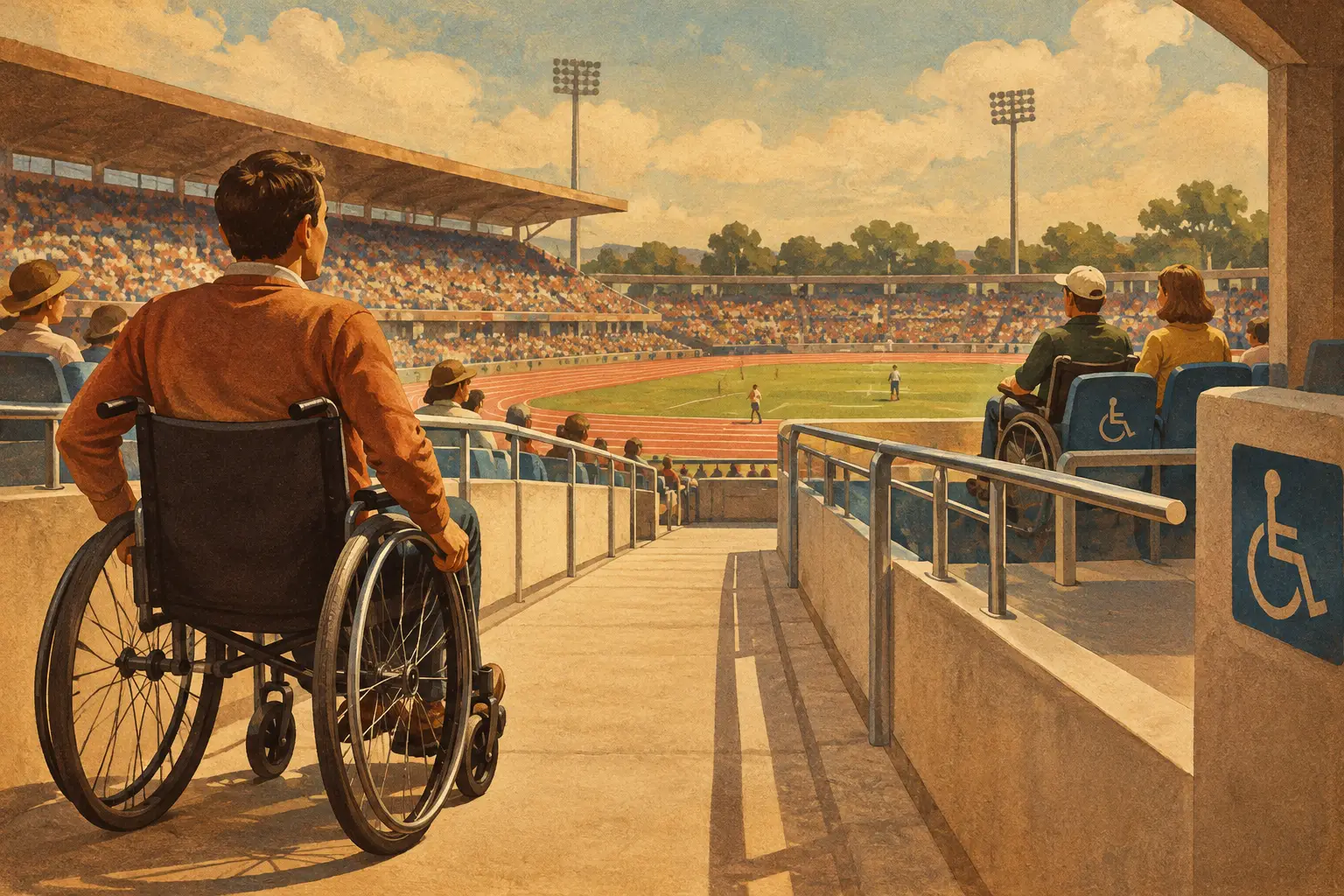
A good game can fall apart before the first whistle if someone cannot get through the entrance, reach the changing room or find a usable toilet. This guide to accessible sports venues is for players, organisers and teammates who want fewer barriers between people and the sport they came to play.
Accessibility is not a niche feature or a last-minute box to tick. It is what makes a venue genuinely social, competitive and welcoming. Whether you are organising five-a-side after work, bringing a new player to a basketball run or joining a tennis session while travelling, the details decide who gets to take part.
What makes a sports venue accessible?
An accessible venue lets people arrive, enter, move around, play, watch and leave with as much independence and dignity as possible. That includes disabled athletes and spectators, but it also benefits people with temporary injuries, parents with pushchairs, older players and anyone carrying kit.
The first mistake is assuming that step-free access at the front door answers the whole question. A venue may have a ramp into reception yet place its only accessible changing room at the other end of a long corridor, have an uneven route to the pitch, or offer seating that cannot accommodate a wheelchair user alongside friends.
Access also changes by sport. A sports hall may work brilliantly for wheelchair basketball but be difficult for a visually impaired player if signage is unclear or lighting creates harsh glare. A swimming pool may have a hoist, but its timetable might not leave enough space for a player who needs extra time to change. The practical answer is always: accessible for whom, and for which part of the visit?
Use this guide to accessible sports venues before you book
The venue website is a useful starting point, but it rarely tells the whole story. Look for specific information rather than broad phrases such as “disabled access”. Clear details are a good sign: dimensions of accessible parking bays, whether entrances are step-free, the location of changing facilities and how to request equipment.
If the information is vague, call or message ahead. This is not over-planning. It is how you avoid turning up to discover that the lift is out of service or that the entrance shown online is locked in the evening.
Ask about the complete journey, not just one feature. Can you get from parking or the nearest public transport stop to reception? From reception to the court, pitch, pool or track? From the playing area to toilets, changing rooms and any social space afterwards? A venue that works for the activity but not the post-game meet-up still leaves people out of the community.
When you contact staff, describe what you need in plain terms. For example, ask whether there is a level route wide enough for a sports wheelchair, whether a mobility scooter can be stored securely, or whether staff can make a visual announcement in addition to a tannoy call. You do not need to disclose more personal information than is useful.
The checks that matter most
Start with arrival. Accessible parking should be close, clearly marked and connected to the entrance by a firm, level surface. If you are using public transport, check the drop-off point, kerb cuts, crossing points and distance from the stop. A venue can have excellent facilities inside while the route from the station makes them unrealistic to use.
Then check the entrance and circulation. Doors need sufficient width and should be easy to open or have assistance available. Ramps should not be overly steep, lifts should be reliable, and corridors should be free from boxes, signs and temporary barriers. For busy fixtures, ask how the venue manages queues. A packed turnstile area can be a serious barrier even where the building is technically accessible.
Changing and toilet facilities deserve more than a quick glance. An accessible toilet should be unlocked, properly maintained and not used as a storage cupboard. Changing rooms need enough turning space, suitable seating and practical lockers. A changing bench and shower controls at an appropriate height can make the difference between a player joining in or heading home.
Finally, assess the activity area. Consider surface quality, lighting, acoustic conditions, seating, shelter and sightlines. For outdoor sport, ask about accessible routes in wet weather. Gravel paths, grass verges and muddy edges can change completely after rain, particularly at community grounds.
Accessibility is also about how a session is organised
The building matters, but the people running the game set the tone. A brilliant venue can still feel unwelcoming if teammates do not know who to speak to, the organiser rushes instructions, or a last-minute court change is not communicated clearly.
If you are creating an event, add access information from the start. State the exact entrance, meeting point, court or pitch number, nearest accessible toilet and whether there are steps anywhere on the route. Let players know if the session is relaxed, competitive, mixed ability or adapted for particular needs. Clear expectations help newcomers choose a game they will enjoy.
Build in a little flexibility. A strict arrival rule can penalise someone who has to use a different entrance or wait for lift assistance. Give participants a direct way to contact the organiser on the day, and make sure at least one person knows the venue layout. It is a small bit of preparation that prevents awkward explanations at the gate.
For competitive sessions, adaptations should be agreed before play starts rather than treated as a disruption. That could mean allowing a support worker at the sideline, using a brighter ball, adjusting a restart procedure or making space around a court. The right adaptation depends on the sport and the players. Fairness is not about forcing everyone through the same experience. It is about creating a meaningful chance to compete.
What venue teams can improve without a major rebuild
Big capital works matter, especially where entrances, toilets and spectator areas are inaccessible. But many improvements cost little and can start this week. Staff training is one of them. Front-of-house teams should know where accessible entrances, toilets, lifts, evacuation refuges and quiet spaces are, rather than having to hunt for an answer.
Information is another high-impact fix. Publish accurate access details, including temporary issues such as works or broken lifts. Use photographs of entrances and routes where possible. Describe distances and surfaces honestly. People can plan around a longer route; they cannot plan around missing information.
Venues should also review what happens during disruption. If the main lift fails, what is the alternative? If a pitch is moved, how will every participant be told? If a fire alarm sounds, are personal evacuation plans understood? These questions are operational, not decorative, and they show whether accessibility is built into everyday decision-making.
Listening is the fastest route to better facilities. Invite feedback after sessions and act on recurring issues. If players repeatedly mention heavy doors, inaccessible booking forms or confusing signage, that is a priority list created by the people using the space.
Make accessible sport part of your crew culture
Players can help too. Do not wait for somebody to ask for basic consideration. Choose venues with clear information, share practical details in group chats, and challenge organisers when access is treated as an afterthought. If a friend says a place was difficult to use, take that seriously rather than assuming the next visit will be different.
When you invite someone new, ask what would make the session work for them. Keep the question simple and private: “Is there anything about the venue or game we should plan for?” Then follow through. Inclusion is not a promise made in an event description. It is the effort to make sure everyone can actually get on court, onto the pitch or into the pool.
Crewters is being built around the idea that finding people and places to play should feel exciting, not exclusionary. As more players share honest venue details and organise better sessions, the standard rises for everyone across every sport.
Your next game is a chance to set that standard. Check the route, share the details, make room for questions and bring the whole crew into play.