
The App to Find Sports Partners and Play More
August 9, 2026 · Chris Palmer
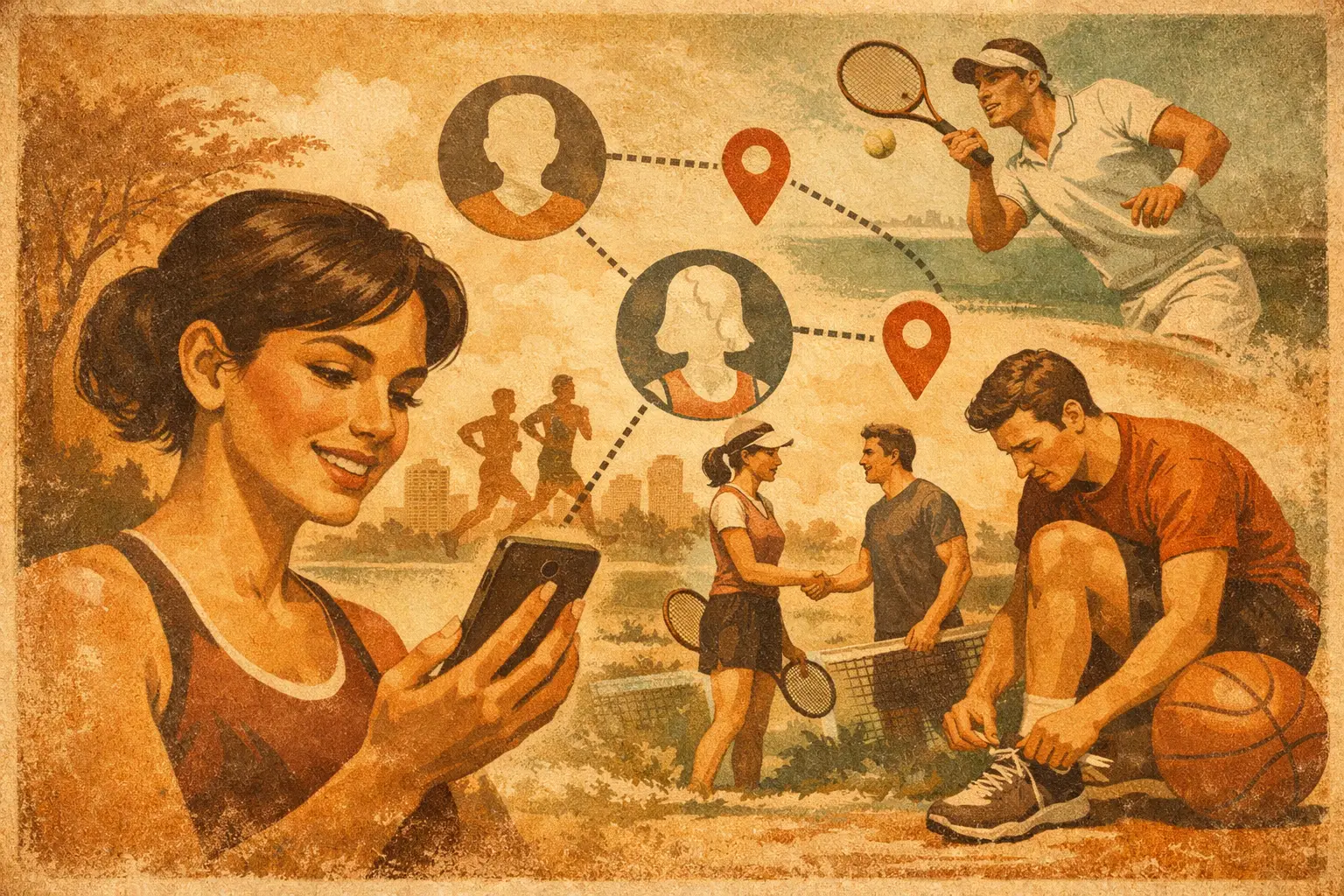
You have an hour free after work, your trainers are by the door, and the group chat has gone silent again. An app to find sports partners should solve that moment quickly: show who wants to play, where the action is, and how to turn a vague plan into a real fixture.
The problem is rarely a lack of people who enjoy sport. It is timing, confidence and coordination. Your usual five-a-side group loses two players. You have moved to a new area. You are travelling for a weekend and want a tennis hit rather than another evening in the hotel. Or you fancy trying basketball but do not know anyone who plays.
A useful sports app does more than collect profiles. It gives people a reason to show up, a clear place to meet, and enough context to make joining feel comfortable. That is how a one-off game becomes a regular crew.
What an app to find sports partners should actually do
Not every sports app is built for playing. Some log workouts; others only list clubs, sell bookings or follow professional scores. Those can be useful, but they do not answer the practical question: who is available for a game near me?
Start with sports and locations. You should be able to look for a casual football match, a padel partner, a running group or a badminton session without downloading a separate platform for each. A broad network matters because real sporting lives change. You might play tennis all summer, join a weekly five-a-side game in winter, then decide to try climbing with colleagues.
Events are the most direct route from intent to participation. Someone creates a session with the sport, venue, time, skill expectation and number of spaces. Other players join. Everyone can see whether the game is happening before they leave home. For organisers, this cuts down on chasing replies and last-minute confusion. For players, it replaces the awkward task of asking around with a simple decision: join the game or create your own.
Direct challenges add a different kind of energy. Perhaps you know another player from a previous match and want a rematch. Perhaps your local basketball crew wants to test itself against another group. Challenges turn friendly competitiveness into something organised, rather than a message that disappears under memes in a chat.
Then there are teams and leagues. Pickup sport is the easiest entry point, but not everyone wants to stay casual. A good app should leave room for a group to form an identity, track its fixtures and build towards structured competition. The best route depends on what you want that week: a no-pressure hit, a serious game or a team worth committing to.
Finding the right people, not just more people
More players is only useful if you can tell whether a session suits you. A newcomer may be looking for patient people and simple rules. A seasoned player might want a fast, competitive match. Both deserve a good game, and neither should have to guess.
Clear event details do much of the work. State the level honestly, explain the format and mention the cost if there is one. If boots, racquets, balls or indoor shoes are needed, say so early. Small details prevent a player from arriving unprepared or feeling that they have accidentally joined the wrong crowd.
Ratings and reviews can help build trust too, provided they are treated as useful signals rather than a popularity contest. After a game, players can recognise people who turned up, played fairly and made the session better. Over time, that gives newcomers more confidence when deciding whom to play with, while regulars earn a reputation they can take into future events.
Reliability matters more than a perfect skill match. A group that starts on time and welcomes new faces will usually outlast a technically brilliant group that cancels every other week. Look for people who communicate clearly, respect the venue and understand that recreational sport works because everyone contributes.
Build a crew that keeps you playing
The first match is not the hard part. The harder part is making sport a habit when work gets busy, daylight disappears, or motivation drops. Social accountability is a powerful answer. If your crew expects you at Tuesday football, you are more likely to make the effort than if your plan is merely to exercise "at some point".
Create repeatable events rather than starting from zero each week. A Thursday evening badminton session, a Saturday morning run or a Sunday basketball game creates a rhythm people can remember. Keep a few spaces open for new players so the group can grow without becoming a closed circle.
Recognition also changes how a community feels. Stats, goals, trophies and achievements might sound like extras, but they give participation visible momentum. They reward the player who joins their first event, the organiser who keeps a game alive for a month, and the teammate who returns after a break. Improvement is not only about winning. Sometimes it is about showing up five weeks in a row.
Live streaming can make events more social beyond the court or pitch. A crew can share a match with friends, celebrate a close finish and earn rewards for putting its sport in front of more people. It will not suit every session, and players should always agree before filming, but for groups that enjoy the spotlight it adds another layer to game day.
Make your first post easy to join
If you cannot find the session you want, make it. You do not need a polished club operation to organise one game. Be specific enough that others can say yes with confidence. A post such as "casual 6-a-side football, Wednesday at 7pm, two players needed, mixed ability" is far more useful than "anyone up for footy?"
Choose a familiar venue where possible and allow enough time for people to travel. In UK cities, evening availability can be tight and indoor courts can be costly, so confirm the booking before inviting people. If the cost is shared, be transparent about the amount and how it will be collected.
For a first event, aim for welcoming rather than perfect. Invite a mixture of friends, acquaintances and new players. Set an expectation that everyone gets involved. If someone is trying the sport for the first time, pair them with a supportive teammate and explain the basics without making a performance of it. Inclusive sessions build better communities and give organisers a stronger pool of returners.
Choose a network that grows with your sport
One-sport apps can be excellent for a deeply established scene. If you only ever play one activity and your area is already active, a specialist tool may fit. The trade-off is fragmentation. Your football contacts, tennis plans, venue searches and new-sport experiments end up scattered across different platforms and group chats.
An all-sports network gives you one sporting identity across the activities you actually do. It also makes it easier for venues, teams and local communities to connect in the same place. That is particularly helpful when you are new to an area or your usual sport is out of season.
Crewters is being built around that bigger picture: a free, iOS-first network for finding venues, joining pickup events, issuing challenges, forming teams and competing in leagues across 122 sports. It is not designed as another passive feed. The point is to create games, meet people and keep progressing.
The builder element matters as much as the feature list. Early users can test what is being made, vote on priorities and help shape what comes next. If a feature would make it easier for your club, campus group or local crew to play more often, say so. Sports apps become genuinely useful when the people arranging real games have a hand in building them.
Your next sporting partner may be a future teammate, a regular rival or the person who finally gets your weekly game off the ground. Put a clear event out there, join one that fits, and give your local sporting community something worth returning to.