
Free Outdoor Gyms in Islington Worth Using
September 21, 2026 · Chris Palmer
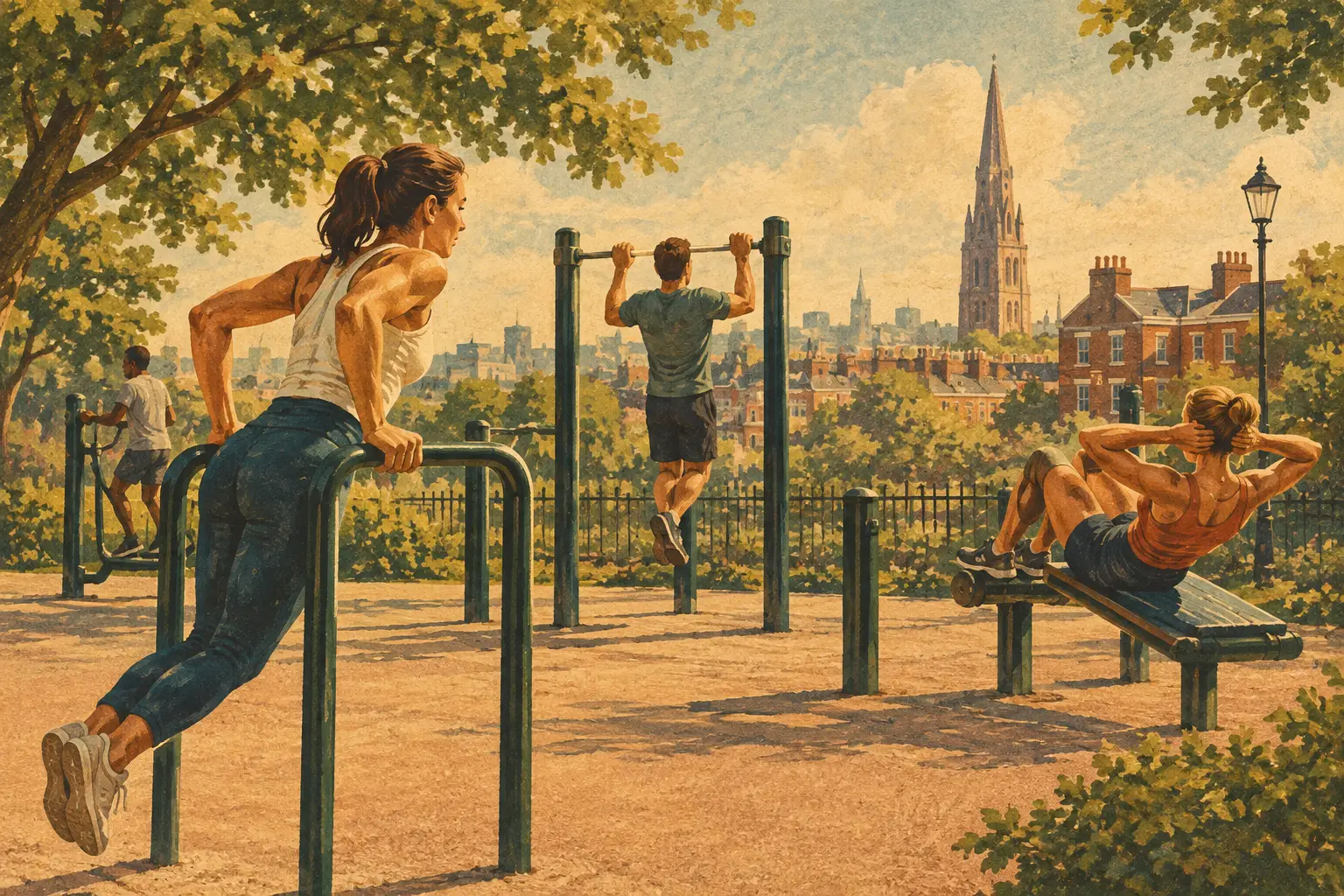
You do not need a monthly direct debit to get a proper session done. Free outdoor gyms in Islington give you a place to train before work, between lectures or after a five-a-side match - with fresh air, no booking desk and no excuse to spend the evening scrolling.
The equipment will not replace a fully stocked strength gym, and that is the point. Park training is about showing up, working with what is there and building a repeatable routine. Add a mate, a small challenge or a pickup game afterwards, and a quick solo workout becomes part of your week.
Where to find free outdoor gyms in Islington
Islington’s parks offer a mix of permanent outdoor fitness equipment, open green space and courts that make it easier to combine training with play. Equipment can be moved, repaired or temporarily unavailable, so check current park notices before travelling for a specific station.
Highbury Fields
Highbury Fields is one of the better options if you want to turn a bodyweight session into a social sports plan. The park has wide open space, nearby tennis facilities and enough room for a run, mobility work or a circuit around the field.
It is a strong choice for a simple after-work routine: warm up with a lap, use the outdoor equipment for pushing and pulling movements, then finish with short hill or sprint efforts if conditions allow. Because the park is busy, it also suits people who prefer training where there is a bit of energy around them rather than in a quiet corner alone.
Caledonian Park
Caledonian Park is a useful north Islington training stop, particularly for short sessions that need to fit around a busy day. Outdoor fitness equipment here makes it possible to cover the basics without carrying much more than water and a layer for the weather.
Do not expect every machine to suit every body or training goal. Use what feels stable and comfortable, then fill the gaps with squats, lunges, press-ups and brisk walking or jogging. A 30-minute session done twice a week beats an ambitious plan that never leaves your notes app.
Barnard Park
Barnard Park has the open-space feel that makes outdoor training easier to stick with. It works well for people who want an uncomplicated circuit: equipment-based strength work, bodyweight exercises on the grass or hard standing, then a few fast intervals to raise the intensity.
If you are new to outdoor gyms, go at a quieter time first. You can work out how each station moves without feeling rushed, test your range of motion and choose exercises that feel controlled. Once you know the layout, inviting a friend becomes much easier.
Wray Crescent and smaller local spaces
Smaller green spaces can be ideal when your real barrier is time. Rather than planning a cross-borough mission, look for the closest outdoor station or park space and make it your default. A local spot you can reach in ten minutes is more valuable than a perfect facility you visit once a month.
The exact mix of equipment differs by site. Some parks are better for bars, steps and bodyweight work; others have fixed resistance machines designed for straightforward pressing, pulling and leg movements. Treat the park as your training base, not a checklist of machines you must use.
How to build a park workout that actually works
The smartest outdoor gym sessions are simple enough to repeat. Start with five to eight minutes of movement: a fast walk, easy jog, leg swings, arm circles and a few controlled squats. In cold weather, take longer to warm up. In wet conditions, check that grips, platforms and handles are not slippery before putting your full weight through them.
Then choose one movement from each pattern: a lower-body exercise, a push, a pull and a core or carry-style movement. The fixed equipment may cover some of these, but bodyweight fills the rest. For example, you might pair step-ups or squats with incline press-ups, rows on a low bar where suitable, and a plank or dead bug on a clean, dry patch of ground.
Aim for two to four rounds at an effort that leaves one or two good repetitions in reserve. Going flat out on every set can make a park session feel impressive, but it is a poor trade if it leaves you too sore to play football, shoot hoops or train again for a week.
Progress does not require adding weight every time. You can add a round, slow the lowering phase, shorten your rest or improve the quality of each repetition. Keep a note of what you did and give yourself a small target for next time. That is how free equipment becomes a genuine training plan.
Train for your sport, not just the machine
Outdoor gym equipment is most useful when it supports the sport you actually want to play. Runners can use it for single-leg strength and core stability. Footballers can build stronger hips, calves and hamstrings. Basketball players can work on landing control, squats and upper-body strength without turning every session into a max-effort workout.
For tennis, padel and racket sports, prioritise controlled pulling, shoulder mobility and trunk rotation rather than smashing through endless presses. If you play contact sport, focus on good movement, posture and gradual conditioning. The objective is to arrive at your next game feeling more capable, not to collect an injury from a rusty machine.
This is where training with other people changes the experience. One person can time intervals, another can count clean reps, and everyone is more likely to finish the final round. You do not need matching kit or a formal club. You need a time, a park and a crew willing to show up.
Make the outdoor gym social
A public fitness area can feel intimidating when you arrive alone, especially if you are unsure how the equipment works. Remove the pressure by making the first session about movement rather than performance. Bring a friend, agree on a 25-minute circuit and finish with a walk, a coffee or a nearby casual game.
Once that becomes normal, add a little competition. Set a team target for total rounds completed, see who can hold the best-quality plank, or challenge each other to attend two sessions in the same week. Keep it friendly and keep technique ahead of bragging rights. The best challenge is the one that brings everyone back next Tuesday.
Crewters is built for that next step: finding people who want to play, creating a simple event and turning individual intent into a plan on the calendar. Outdoor gyms are not only a place to exercise. They can be the meeting point before a match, the recovery session after one, or the start of a new local sports group.
Use shared equipment with a bit of common sense
Outdoor gyms are shared spaces, not private training studios. Wipe or sanitise your hands when practical, do not monopolise a station while resting on your phone, and give others room to use the equipment. If someone is waiting, offer to alternate sets.
Inspect equipment before you use it. Avoid anything loose, damaged or excessively wet, and report faults through the relevant park or council channel where possible. Wear trainers with decent grip, bring water, and adjust your session for heat, rain or fading light. If you have an existing injury or are returning after time away, start conservatively and get professional advice when you need it.
The equipment is free. The routine, confidence and local crew you build around it are what make it valuable.