
What a Pickup Basketball App Should Do
May 18, 2026
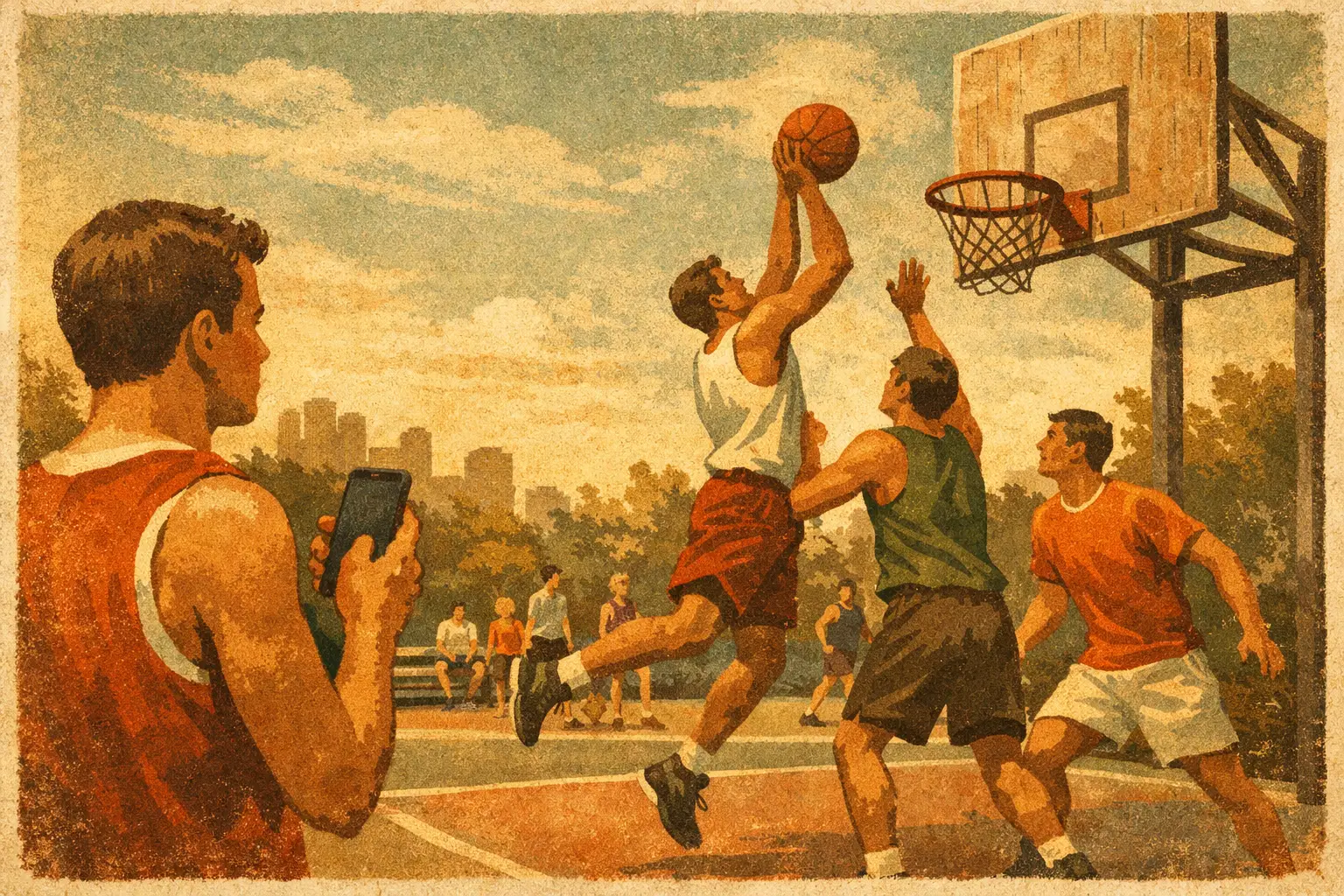
You do not need another group chat that dies by Thursday, a half-updated spreadsheet, or a friend-of-a-friend texting “we need one more” ten minutes after tip-off. A good pickup basketball app should fix the part that actually breaks the run - finding the right court, the right people, and a game that is still happening when you show up.
That sounds simple, but most tools in this space stop at basic scheduling. They might help you post a game. They might show a nearby gym. What they often miss is the social layer that makes pickup basketball work in real life. People want consistency, accountability, and a way to know whether a run fits their level before they spend an hour getting there.
If we are building a better sports network, that is the bar. A pickup basketball app should not just help you locate a game. It should help you build a basketball routine, find your crew, and keep the momentum going after one good session turns into three weeks of regular runs.
Why most pickup basketball app experiences fall short
The biggest problem is not a lack of players. In most cities, there are plenty of people who want to hoop. The problem is coordination. Games get posted without enough details. Courts look active online but are empty in person. Skill levels are all over the place. New players have no idea whether they are walking into a chill shootaround, a beginner-friendly 4-on-4, or a hyper-competitive full-court run where nobody rotates fairly.
That friction matters because pickup is fragile. One bad experience can knock someone out of the habit. If a player drives across town for a game that never forms, that is not just one wasted evening. It makes them less likely to trust the next invite.
The better approach is to treat pickup like a living community, not a one-off event post. That means giving players context before they commit and giving organizers tools that keep games reliable.
What a pickup basketball app should actually help you do
First, it should make discovery fast. If you want to hoop tonight, the path from idea to confirmed run should be short. You should be able to open the app, see nearby courts or venues, check active games, and understand the basics right away - time, format, headcount, level, and whether the run is indoor or outdoor.
Second, it should make trust visible. Pickup basketball runs on reputation. Players want to know who shows up, who flakes, who plays hard without being reckless, and who helps create a good game environment. Ratings, reviews, attendance history, and organizer credibility all matter here. Not to turn recreation into a corporate dashboard, but to cut down on guesswork.
Third, it should support different motives. Not everybody opens a basketball app for the same reason. Some people want a casual after-work run. Some want to sharpen their game with stronger competition. Some are traveling and just need one decent session while they are in town. Others are new and do not want to get frozen out by established circles. A strong product has room for all of them.
That is where feature design starts to separate useful from forgettable.
The best pickup basketball app features are about momentum
A lot of apps focus on the first action - join game, post game, message players. That part matters, but what keeps people coming back is momentum.
Momentum means the app helps players move from occasional hooping to repeat participation. If you had a good run on Tuesday, the app should make it easy to see the next one, reconnect with that group, challenge people you just met, or join a team if the chemistry is right. It should feel like one session naturally opens the next.
This is also where stats and progression can help, if they are done well. Some players love tracking wins, attendance, streaks, or personal milestones. Others do not care about advanced numbers but still like seeing that they have stayed active for five straight weeks. Recognition matters because it reinforces the habit. Trophies, achievements, and personal goals can sound small on paper, but they give recreational sports the same stickiness that keeps people engaged in fitness apps and games.
There is a trade-off, though. Too much gamification can feel fake if the actual run quality is poor. The best app gets the real-world part right first, then layers motivation on top.
A pickup basketball app should know that location is only half the story
Showing a map of courts is useful. It is not enough.
Anyone who has played pickup for a while knows the same court can mean totally different things depending on the hour, the day, and the people there. A park might be empty at 5 p.m. and packed by 7. A rec center may have great floors but inconsistent turnout. A college gym can be perfect for students and awkward for outsiders.
That is why venue discovery has to connect with live community signals. Is there an actual event attached to that location? How many people joined? Who is hosting? Have players reviewed the experience? Can you tell whether this is a recurring run or a random one-off?
For travelers, this matters even more. If you are landing in a new city for work or school and want to find basketball fast, you are not just looking for a court. You are looking for a credible entry point. The best products make local sports feel legible in minutes.
Community beats utility every time
This is where many sports apps think too small. They act like the job ends once a game gets scheduled.
But basketball culture is not transactional. People come back for familiar faces, competitive balance, trash talk, rematches, and the sense that they belong somewhere. The app should help create that social fabric. Direct challenges, recurring groups, teams, and league pathways all matter because they turn pickup into a real network.
That network effect is powerful. A casual player might start by joining one open gym run. A few weeks later, they are in a group chat with regulars, tracking results, and signing up for a league team. That kind of progression is much more valuable than a static listing app.
It also lowers the barrier for newcomers. If someone is sports-curious but intimidated by established basketball scenes, an app that offers beginner-friendly events, transparent formats, and social proof can make the first game feel possible instead of risky.
Why the future pickup basketball app will be built with players, not just for them
Sports apps usually launch like finished products. Then they wonder why users leave after the novelty wears off.
A better model is building in public with the community that uses the product. Players know where coordination breaks. Organizers know which tools save time. Venue partners know what increases repeat attendance. If users can test features early, vote on priorities, and shape what gets built next, the app gets better faster and the community gets more invested.
That builder mindset also fits sports culture. Athletes are competitive, opinionated, and quick to tell you when something is broken. Good. That feedback loop is a strength if you actually use it.
This is part of why an iPhone-first product can work well early on. A tighter platform focus can mean better polish, fewer weird edge cases, and faster iteration. The trade-off is reach. If your entire crew uses mixed devices, platform limitations matter. But for early-stage product quality, focus often beats trying to be everywhere at once.
Where a broader sports network changes the game
A basketball-only app can work if all you want is basketball. But there is a strong case for a larger sports network that includes pickup basketball as one part of a bigger ecosystem.
Real people do not always stay in one lane. Someone might hoop twice a week, join a rec soccer game on Sundays, and look for tennis while traveling. A unified network creates more reasons to stay active in the app, more social overlap, and more opportunities to keep users engaged between basketball runs.
That is one reason platforms like Crewters are interesting. The vision is bigger than a scheduling tool. It is about helping people discover venues, create events, issue challenges, join teams, compete in leagues, and track progress across sports while building with the community in public. For basketball players, that means pickup does not live in isolation. It becomes part of a wider sports identity.
Still, there is a balance to strike. If an all-sports app spreads itself too thin, basketball users may feel underserved. The product has to keep each sport usable and specific, not generic.
What players should expect next
The next wave of pickup basketball app experiences will be less about static listings and more about context. Better player profiles. Better event reliability. Better progression from one game to a recurring crew. More visibility into venues, attendance, and fit. More ways to compete without making casual players feel excluded.
And yes, more community ownership. The apps that win will not just ask users to sign up. They will ask them to build with us, test what is next, and help shape a better way to play.
If you are choosing a pickup basketball app, expect more than a court finder. Expect something that helps turn “who is trying to run tonight?” into a real answer you can trust - and then helps you come back next week with the same crew, a stronger game, and one more reason to keep playing.