
How to Find Travel Sports Partners Fast
May 1, 2026
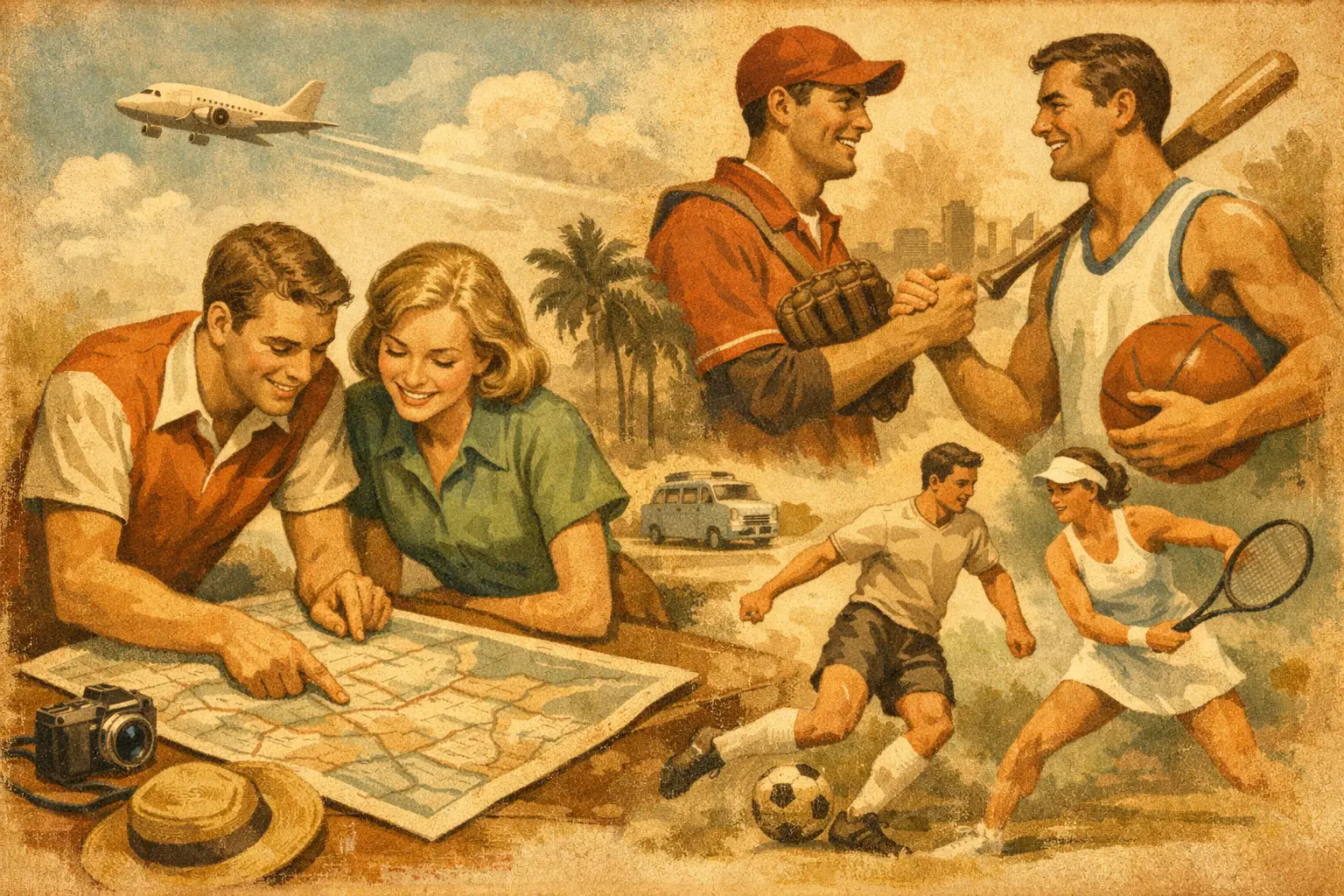
You land in a new city, check into your place, and realize the hardest part of the trip is not the flight or the hotel - it’s finding people who actually want to play. If you’re figuring out how to find travel sports partners, the real challenge is not access to sports. It’s trust, timing, and finding the right level of competition before your free window disappears.
That’s why the best approach is not to search randomly and hope for the best. You need a system that helps you find active players, read the room fast, and turn one open afternoon into a real game, run, ride, hit, or match. Whether you play basketball, soccer, tennis, pickleball, volleyball, or something more niche, the same rule applies: the easier you make it for people to say yes, the more likely you are to find your crew on the road.
How to find travel sports partners without wasting time
Most travelers start too broad. They search for courts, fields, gyms, or clubs, but a venue alone does not solve the problem. A perfect court with no active community is still an empty court. Start by looking for the overlap between three things: a place to play, people who are already active there, and a format that fits your schedule.
That usually means prioritizing pickup games, open play blocks, drop-in sessions, and casual challenges over formal leagues. Leagues can work if you’re staying for weeks or traveling repeatedly to the same city, but for short trips, flexibility wins. The fastest path is usually to find existing activity rather than trying to build from zero.
It also helps to be honest about what kind of partner you want. Some travelers just want reps - a tennis hit, a running partner, a climbing buddy. Others want competition. Those are different asks, and people respond better when your intent is clear. “Looking for an intermediate tennis hit near downtown Tuesday evening” gets better results than “Anyone want to play?”
Start with active communities, not generic searches
The strongest travel sports connections usually come from communities that already organize around participation. That can include sport-specific groups, venue-based communities, campus rec networks, local player chats, and all-sports social platforms where users create events, issue challenges, and join teams.
This matters because activity beats directory listings. A static list of gyms or parks is useful, but it doesn’t tell you who actually shows up, what time people play, or whether the vibe is competitive, beginner-friendly, or closed off to newcomers. Communities with event creation, attendance signals, and player profiles give you real proof of movement.
If you use a platform like Crewters, the advantage is that you’re not locked into one sport or one type of play. That matters when travel plans shift. Maybe the basketball run is full, but there’s an open futsal session nearby, a volleyball group looking for one more, or a tennis player ready for a same-day challenge. When you’re traveling, flexibility is not settling - it’s strategy.
Lead with a specific ask
A lot of people fail here because they post like they have unlimited time. Travelers do not. Local players do not either. The best outreach is short, direct, and easy to answer.
Include the sport, your level, your availability, your area, and the format you want. If equipment matters, say that too. If you can travel to a venue, mention your radius. If you are open to mixed skill levels, that can increase responses, especially for pickup formats.
A good ask sounds like this in plain language: in town through Thursday, looking for intermediate pickup basketball near Midtown after 6 PM, can join existing runs or help fill a squad. That tells people exactly how to plug you in.
A vague ask creates work for everyone else. And when people have to ask four follow-up questions, they often move on.
Use venues as filters, not the finish line
Finding a venue still matters. It just works better as a signal than as the solution. A busy public park with regular evening traffic is more promising than a pristine court hidden behind a hotel. A tennis center with open challenge boards is better than a random court with no local culture around it.
Look for signs that a venue supports repeat play. That can mean posted schedules, open gym hours, organized drop-ins, active reviews from players, or evidence that people use it for pickup sessions instead of private bookings only. Venues that attract recurring communities make it easier for travelers to join without awkwardness.
There is a trade-off here. The most popular spots give you better odds of meeting people, but they can also be more competitive or crowded. Smaller neighborhood spots may be easier socially, but less predictable. If your trip is short, choose reliability. If you have a week or more, you can afford to test a couple of scenes.
Match the level and the vibe
Skill matters, but social fit matters too. You can find available players and still have a bad experience if expectations are off. Some groups want high-intensity competition and tight rotations. Others are there to meet people, sweat a little, and keep things loose.
When you’re trying to figure out how to find travel sports partners who actually fit, ask yourself two questions: do I want intensity or accessibility, and do I want structure or spontaneity? Those answers shape where you should look.
For example, a player training seriously for a tournament may prefer direct one-on-one challenges, stats, and repeat sessions with the same level of opponent. A casual traveler may do better with open community events where joining is low pressure. Neither is better. It depends on what success looks like for this trip.
Build trust quickly
Travel adds uncertainty, so people look for signals before they commit. A complete profile, a clear message, and visible sports history help. If a platform includes ratings, reviews, attendance history, or stats, those features reduce friction because they show that you actually play and follow through.
That is a big deal. Most players are not worried about meeting new people. They are worried about flakes, no-shows, weird vibes, or wasting a prime time slot on someone who misrepresented their level. The more proof you provide, the easier it is for locals to say yes.
You should also return the favor. Check whether the person or group seems active, responsive, and consistent. If they have event history, recurring sessions, or mutual connections, that’s a strong sign. If everything feels last-minute and unverified, be more cautious.
Be useful to the group
Travelers often think like guests when they should think like contributors. If you want better responses, make yourself easy to add and helpful to have around. Offer to fill a final spot, bring an extra ball, split court costs, or adapt to the group’s format.
This mindset works because local communities are always solving small coordination problems. They need one more for 5-on-5. They need a doubles partner. They need someone willing to sub, stream a game, keep score, or join a team for one session. If you show up as someone who makes the run happen, you stop feeling like an outsider fast.
That builder mentality is what stronger sports communities run on. The best networks are not just places to browse. They are places where players create momentum together.
Have a backup plan
Even with a solid system, travel is messy. Weather changes. Work dinners appear. A court gets booked. The local organizer ghosts. That doesn’t mean your approach failed. It means you need a second option.
Try to line up one primary plan and one lighter-touch backup. Maybe the first plan is a scheduled soccer pickup, and the backup is a public track session where you can still meet local runners. Maybe your top choice is a tennis hit, but your fallback is an open gym with multiple sports happening. Optionality keeps you moving.
This is another reason all-sports communities can be stronger than fragmented apps. If one lane closes, another one might still be open that same day.
Safety and common sense still matter
Meeting sports partners while traveling is usually straightforward, but basic caution applies. Stick to public venues, especially for first meetups. Tell someone where you’re going if you’re meeting at an unfamiliar location. Be careful with private invites that skip normal community channels.
Money is another area where clarity helps. If there are court fees, guest passes, or equipment rentals, ask upfront. Small misunderstandings can sour an otherwise good session.
And if the energy feels off, leave. A good sports community should feel competitive and welcoming, not sketchy or pressured.
The best travel sports partners often become your repeat crew
A one-off game can turn into a standing connection if you approach it right. If you travel often for work, school breaks, tournaments, or family visits, keep the people and venues that worked. The second time in a city should be easier than the first.
That’s where sports networks become more than convenience. They become infrastructure for your routine. You are not starting over every trip. You are building a map of places, players, and formats that already fit your style.
And that is the real answer to how to find travel sports partners: stop treating every trip like a cold start. Show up clearly, join active communities, contribute to the run, and keep the connections worth repeating. Your next game away from home should feel less like luck and more like part of the system we’re all building together.