
The Future of Sports Communities Is Active
May 12, 2026
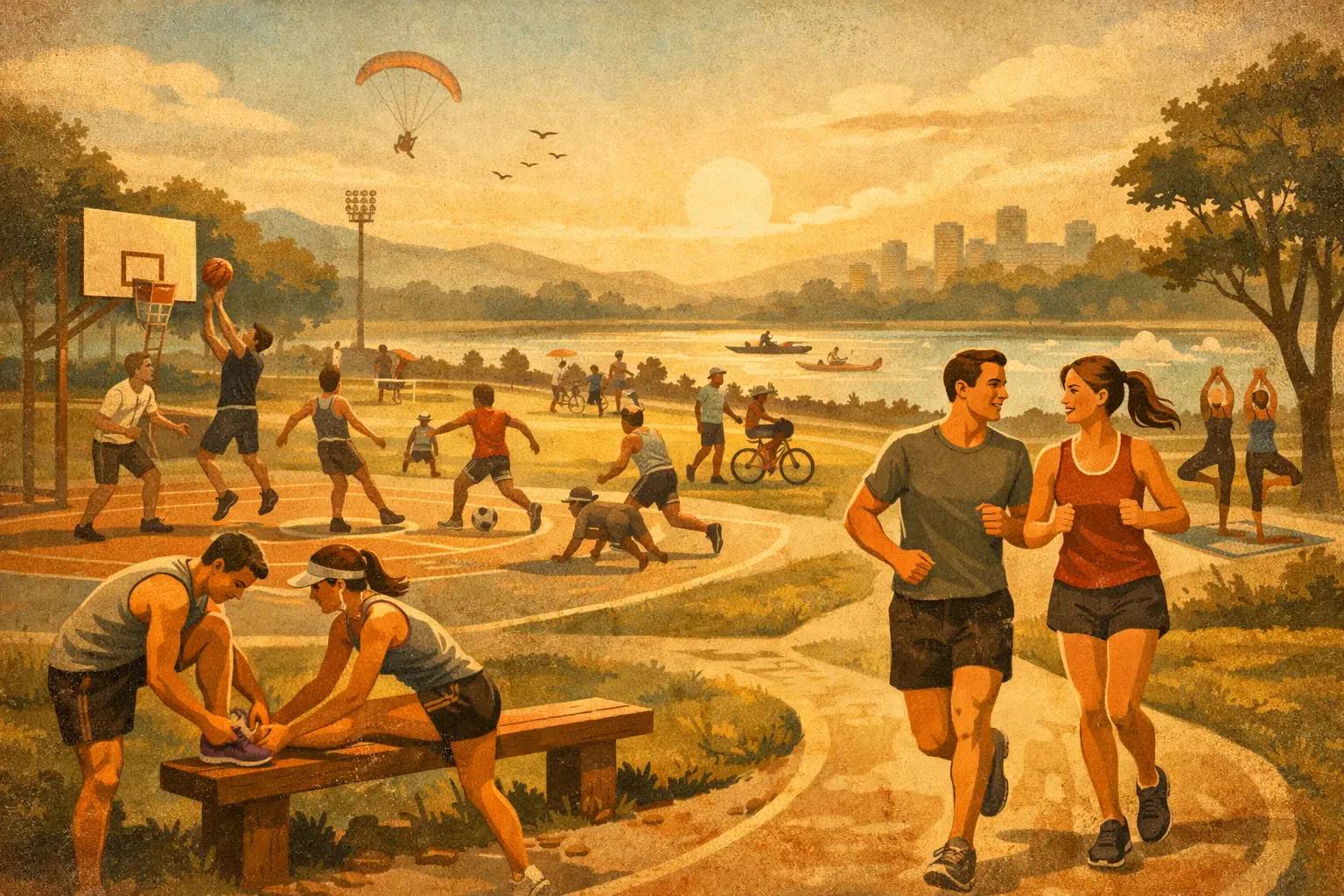
A court with lights on and no group chat is just empty space. A field with players, a posted run time, a few competitive storylines, and someone willing to organize it starts to feel like a real community. That gap is where the future of sports communities is being decided - not in big speeches about fandom, but in the small moments that turn I want to play into we’re running at 7.
For years, sports apps treated participation like a side feature. You could follow pro teams, watch highlights, buy gear, or maybe book a facility. Actually finding people near you, setting a game, keeping momentum going, and building trust over time often felt patched together. One app for messages, another for schedules, another for standings, and a lot of last-minute cancellations in between.
That model is running out of room. Players want more than fragmented tools. They want one place where discovery, competition, progression, and belonging work together. They want sports apps to feel alive.
What the future of sports communities actually looks like
The future of sports communities will be shaped less by passive audiences and more by active participation. That means fewer products built around watching and more built around showing up. The strongest communities won’t just be collections of users. They’ll be systems that make it easier to find venues, create pickup events, challenge other players, join teams, and stay engaged after the final whistle.
That shift matters because most people don’t quit sports from lack of interest. They stop because of friction. They can’t find a game that fits their level. Their old group fell apart. They moved cities. The league fee is too high. They want to try a new sport but don’t know anyone. Community, in practice, is the layer that removes those blockers.
The next generation of sports platforms will be judged on one basic question: can this product create more actual games? If the answer is yes, everything else starts compounding. New friendships form. Rivalries develop. Teams become consistent. Venues get used more often. Players improve because they keep coming back.
Local first, but not limited by location
A lot of social products claim to build community when what they really build is content distribution. Sports works differently. Local density still matters. If you play basketball, tennis, soccer, volleyball, or something more niche, you need nearby people, nearby places, and enough structure to trust that showing up is worth it.
That is why the most important layer in modern sports communities is local coordination. Who is playing this week? Where? Is it open to beginners, intermediate players, or serious competition? Can someone join solo? Is this a recurring run or a one-off event? These are not minor details. They determine whether someone participates at all.
But local doesn’t mean closed. One of the biggest shifts ahead is that sports communities will become easier to carry with you. If you travel for work, move for school, or spend a summer in a new city, you should be able to plug into games quickly instead of starting from zero. The future belongs to networks that make sports feel portable.
That creates a better experience for regulars and newcomers alike. Established players get more reliable turnout. New players get a lower barrier to entry. Communities grow without becoming cliques.
Multi-sport beats siloed apps
Most sports products still think in silos. A tennis app for tennis players. A running app for runners. A league tool for one format only. That sounds organized until real life gets involved. People are not as single-sport as product teams assume.
Someone might play pickup basketball on Tuesdays, join a soccer league on Sundays, and try padel or pickleball when friends invite them. College students bounce between sports based on season, schedule, and budget. Young professionals want flexibility. Families mix structured leagues with casual play. The future of sports communities is broader than one identity per user.
This is where multi-sport platforms have a real advantage. They match how people actually live. They also create stronger network effects. A player who joins for one sport may stay because they discover three more. A venue can reach more audiences. A community organizer can build momentum across different formats instead of starting over every time.
There is a trade-off, of course. Going broad only works if discovery stays sharp. Nobody wants a noisy feed full of irrelevant activity. The best products will balance range with precision, letting users find their lane while still giving them room to expand it.
Community needs progression, not just scheduling
Scheduling gets people into one game. Progression gets them into the next ten.
This is where many sports communities have left value on the table. If all a platform does is help people coordinate, it may solve the first problem but not the second. Players also want a sense of movement. They want to see their streaks, their stats, their wins, their improvements, and the small milestones that make effort visible.
That does not mean every recreational sport needs to become hyper-serious. It means motivation matters. Some people are driven by leaderboards. Others by consistency. Others by trophies, achievements, ratings, or simply proof that they are getting better. The future is not one-size-fits-all competition. It is layered motivation.
That nuance matters because sports communities include different kinds of participants. A former varsity athlete may want structured leagues and player ratings. A beginner may prefer low-pressure pickup and personal goals. A good platform can support both without making either group feel out of place.
When progression is built well, it strengthens community instead of replacing it. Stats give people something to talk about. Achievements create recognition. Ratings can help set fair matchups, though they need care and context to avoid becoming toxic. The point is not to reduce sports to numbers. The point is to give participation a memory.
Trust will matter more than reach
As more sports platforms compete for attention, the winners will not just be the ones with the biggest user counts. They will be the ones that feel dependable.
Trust in sports communities is practical. If someone joins an event, are people actually there? If a player has a certain rating, does it mean something? If a venue is listed as available, is it accurate? If a challenge is accepted, is there enough accountability for it to happen?
This is why reputation systems, reviews, attendance patterns, and verified activity will become more important. Not because people want more bureaucracy, but because reliability is what turns occasional use into habit. Nobody wants to keep gambling their evening on flaky coordination.
There is a balance to strike. Too much gatekeeping can make a community feel rigid. Too little structure can make it chaotic. The best sports communities will feel open at the front door and accountable once you step inside.
The product roadmap is part of the community now
One change that gets overlooked in conversations about the future of sports communities is that users no longer want to be treated as passive recipients of product decisions. Especially in sports-tech, people want to help shape what gets built.
That makes sense. The organizer who runs a weekly soccer game knows where coordination breaks. The tennis player who travels knows what discovery needs to look like. The recreational hooper who wants fair runs can spot weak matchmaking faster than any abstract product brief.
We think this is one of the most exciting shifts ahead. Community is no longer just the thing a sports app serves. Community can become part of how the app evolves. When users test features early, vote on priorities, and push the roadmap forward, the product gets closer to the reality of play.
That builder mindset also changes the energy of the platform. It stops feeling like another utility and starts feeling like something we’re creating together. For a category that should be fun, competitive, and social, that matters more than most companies realize.
Why the future of sports communities is still up for grabs
None of this is automatic. Better tools do not guarantee better communities. A platform can add events, challenges, teams, leagues, stats, trophies, and live features, then still miss the mark if the experience feels empty or over-engineered. Sports culture is sensitive to friction. People can tell when something helps them play and when it just gives them more screens to manage.
The products that win will likely share a few traits. They will reduce coordination work, make discovery feel immediate, support different skill levels, reward participation, and stay grounded in real local activity. They will also understand that community is not built by branding alone. It is built by repeat play.
That is the opportunity in front of all of us building in this space. Make it easier to find your crew. Make it easier to start something. Make it easier to come back next week. If we get that right, sports communities won’t just grow online. They’ll get louder at parks, fuller at venues, and stronger in every city where someone decides to stop waiting and post the game.