
The Future of Recreational Sports Communities
July 2, 2026
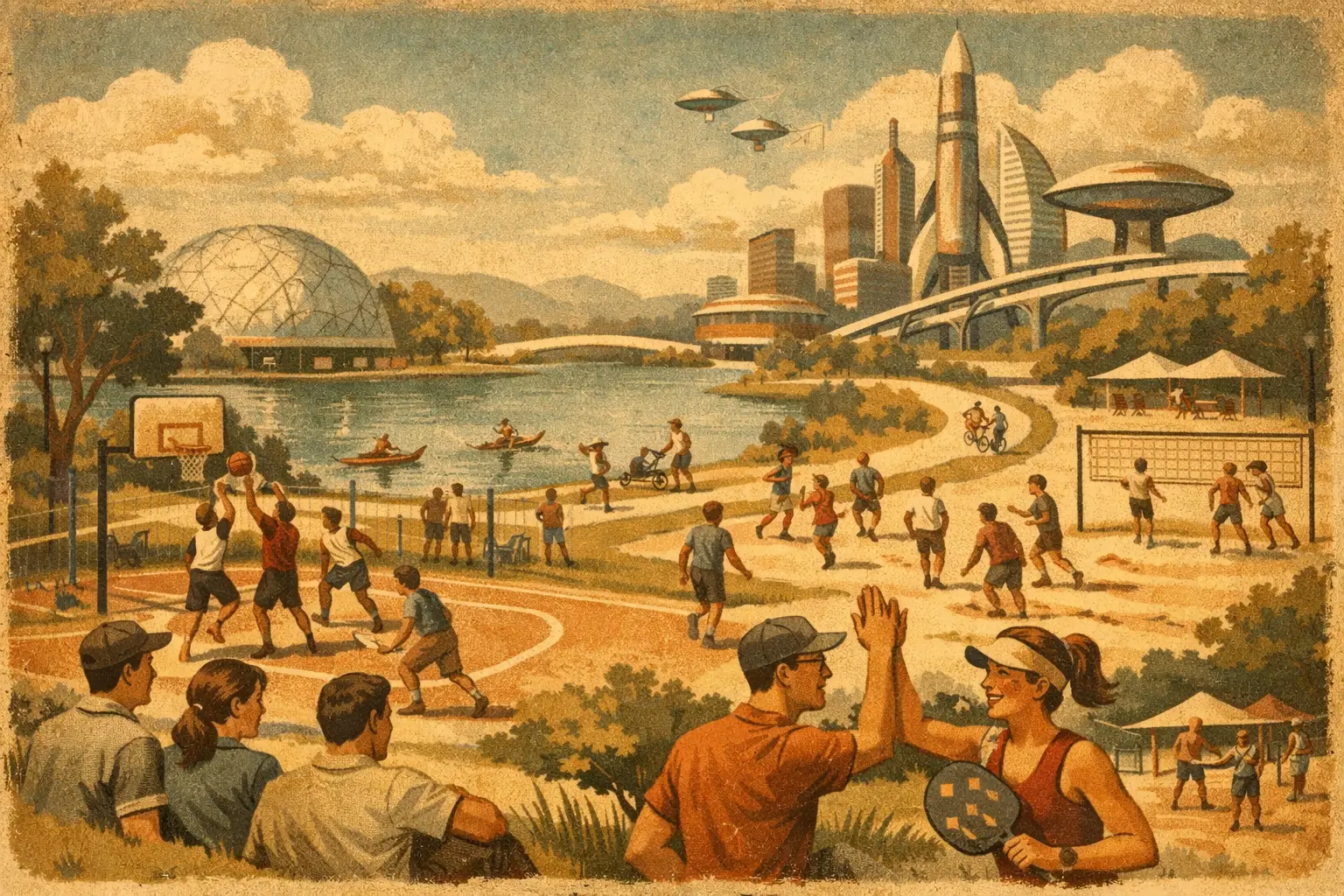
Saturday at 9am used to depend on a group chat, one reliable mate, and a lot of crossed fingers. Half the players would drop out, somebody would forget the venue, and newcomers had no clear way in. The future of recreational sports communities looks very different. It is faster to join, easier to organise, more welcoming to beginners, and much better at turning casual intent into actual play.
That shift matters because recreational sport has never really had a clean operating system. Serious athletes have clubs, fixtures and governing bodies. Casual players have usually had patchy WhatsApp chains, closed Facebook groups, and whatever local knowledge they could gather. For people who want to play regularly without committing to a traditional club structure, that model is no longer good enough.
What the future of recreational sports communities actually looks like
The next version of community sport will not be built around one team, one venue, or even one sport. It will be built around participation. That means flexible ways to discover games, join sessions, challenge other players, track progress, and move between formats depending on time, skill level and goals.
For some players, that will mean a weekly five-a-side match and the occasional league. For others, it will mean finding a tennis partner after work, joining a mixed-ability basketball run on a Sunday, or trying a niche sport for the first time because the barrier to entry is lower. The common thread is simple: fewer dead ends between wanting to play and getting on court, pitch or track.
This is where digital community starts to matter in a very practical way. The best platforms will not just list venues or host chat groups. They will connect the full chain - people, places, events, teams, stats and reputation - so the whole experience feels alive rather than fragmented.
Why old community models are losing ground
Traditional sports communities still work brilliantly for many people, especially where clubs are well-run and deeply local. But they can also be rigid. Fixed schedules, closed groups and long sign-up processes do not suit everyone. If you work irregular hours, travel often, or simply want more freedom, structured clubs can feel like too much commitment.
There is also an access problem. Established groups often rely on familiarity. If you know someone, you get invited. If you are new to an area, new to a sport, or returning after years out, it can feel like there is no obvious door in. Recreational communities that grow over the next few years will win by reducing that social friction.
That does not mean clubs disappear. It means the ecosystem gets broader. The future is less about replacing existing sports culture and more about adding layers around it - pickup play, short-format competition, social discovery and easier routes into teams and leagues.
Technology will shape the future of recreational sports communities
Technology on its own does not build community. It can, however, remove the admin and guesswork that stop communities from forming.
Discovery is the first big shift. Instead of relying on local hearsay, players increasingly expect to find nearby venues, active groups and upcoming sessions from their mobile phone. That matters even more when travelling, moving city, or trying a new sport. A sports network that spans multiple activities is especially powerful here, because real life rarely fits into one sporting identity. Plenty of people play football one week, padel the next, then join a social run or basketball game when schedules line up.
Coordination is the second shift. Recreational players do not need more chat noise. They need clear attendance, match details, player slots and simple ways to commit. Communities grow when people trust that a game is actually happening. If attendance is visible and the format is lightweight, participation rises.
Then there is progression. This is one of the most underused parts of recreational sport. Not every player wants elite competition, but most people do want momentum. Stats, streaks, ratings, trophies and milestones can all help if they reward consistency and improvement rather than ego alone. Done badly, gamification becomes gimmicky. Done well, it gives casual players a reason to come back next week.
The communities that grow will be more open, but not less competitive
There is a lazy assumption that recreational sport must choose between being welcoming and being competitive. In practice, the strongest communities do both.
Beginners need low-pressure entry points. That might be open sessions, mixed-ability events, simpler formats or the ability to join without already knowing the organiser. More experienced players need challenge, level-appropriate matchups and some sense that results matter. The best recreational ecosystems will handle both by making skill signals more visible.
Ratings and reviews can help here, although they need careful design. They should make games fairer and more reliable, not turn every casual run into a tribunal. If player reputation improves attendance, sportsmanship and match quality, it strengthens community. If it becomes cliquey or punishing, it does the opposite. The trade-off is real.
That is why future-facing platforms need to think like community builders, not just software teams. Rules, moderation and incentives shape culture. You cannot bolt that on later.
Multi-sport identity will beat siloed platforms
A big change coming to the market is the move away from single-sport isolation. Recreational players do not live in neat categories. Someone might be serious about tennis, casually play five-a-side, and want to try pickleball because friends keep mentioning it. If every sport lives on a different platform with a different social graph, people end up rebuilding their network from scratch each time.
The future belongs to communities that understand sport as a wider lifestyle. That creates stronger network effects. A venue is not just a football venue or a basketball venue. A player is not just one thing either. The more connected the ecosystem, the easier it is for users to stay active across seasons, injuries, changing friend groups and shifting schedules.
This is also where niche sports get a real lift. They often struggle not because interest is missing, but because discovery is poor. Put them in the same network as mainstream sports and suddenly the path from curiosity to first session becomes much shorter.
Built-in-public products will have an edge
The future of recreational sports communities will not be decided only by features. It will be shaped by whether users feel ownership.
People are tired of apps that treat them as passive accounts. In community sport, that approach makes even less sense. Players and organisers know where the friction is. They know what kills attendance, what creates commitment, and what makes a feature useful rather than decorative. The strongest sports products will act more like living communities - releasing, testing, getting feedback, and letting users help shape what comes next.
That builder mindset is especially relevant in sport because habits are local and social. What works for a university basketball group may not suit a tennis community in Manchester or a travelling player looking for a quick run in London. A roadmap that listens to real usage will beat one built from assumptions.
We believe that is where the category gets exciting again. Not just more software, but sports products built with the people who actually turn up and play.
Real-world venues will become community hubs, not just bookable spaces
Venues are often treated as the final step - a place to reserve and leave. That will change. The smartest recreational communities will make venues part of the social loop.
A venue with visible activity, recurring games, trusted organisers and active teams is more valuable than a venue that is merely available. Players want context. Is this court usually busy? What level is the Tuesday session? Is there a regular social match here? Can I join solo? Those details reduce hesitation and help people commit.
For venue operators, this creates a different opportunity. Instead of depending only on one-off bookings, they can become anchors for repeat participation. Communities form where there is rhythm, identity and an easy route back in.
What players should expect next
Over the next few years, expect recreational sport to feel more responsive. Finding a game will get quicker. Joining as a solo player will feel less awkward. Cross-sport discovery will become normal. Community trust signals - attendance history, player ratings, event quality - will help people choose where to spend their time.
Expect more blended formats too. Pickup games will feed into teams. Teams will feed into leagues. Casual sessions will generate stats and milestones that make progress visible. Some communities will lean hard into competition; others will prioritise consistency and social connection. Neither approach is automatically better. It depends what the group is for.
What matters is that community sport stops feeling like an afterthought. For millions of people, it is the version of sport that actually fits adult life. Flexible, social, competitive enough to care, and open enough to keep growing.
If the next generation of sports communities gets that right, more people will not just say they want to play. They will know exactly where to go, who to join, and how to keep showing up.