
Where Can I Find Open Courts Near Me Today?
July 21, 2026 · Chris Palmer
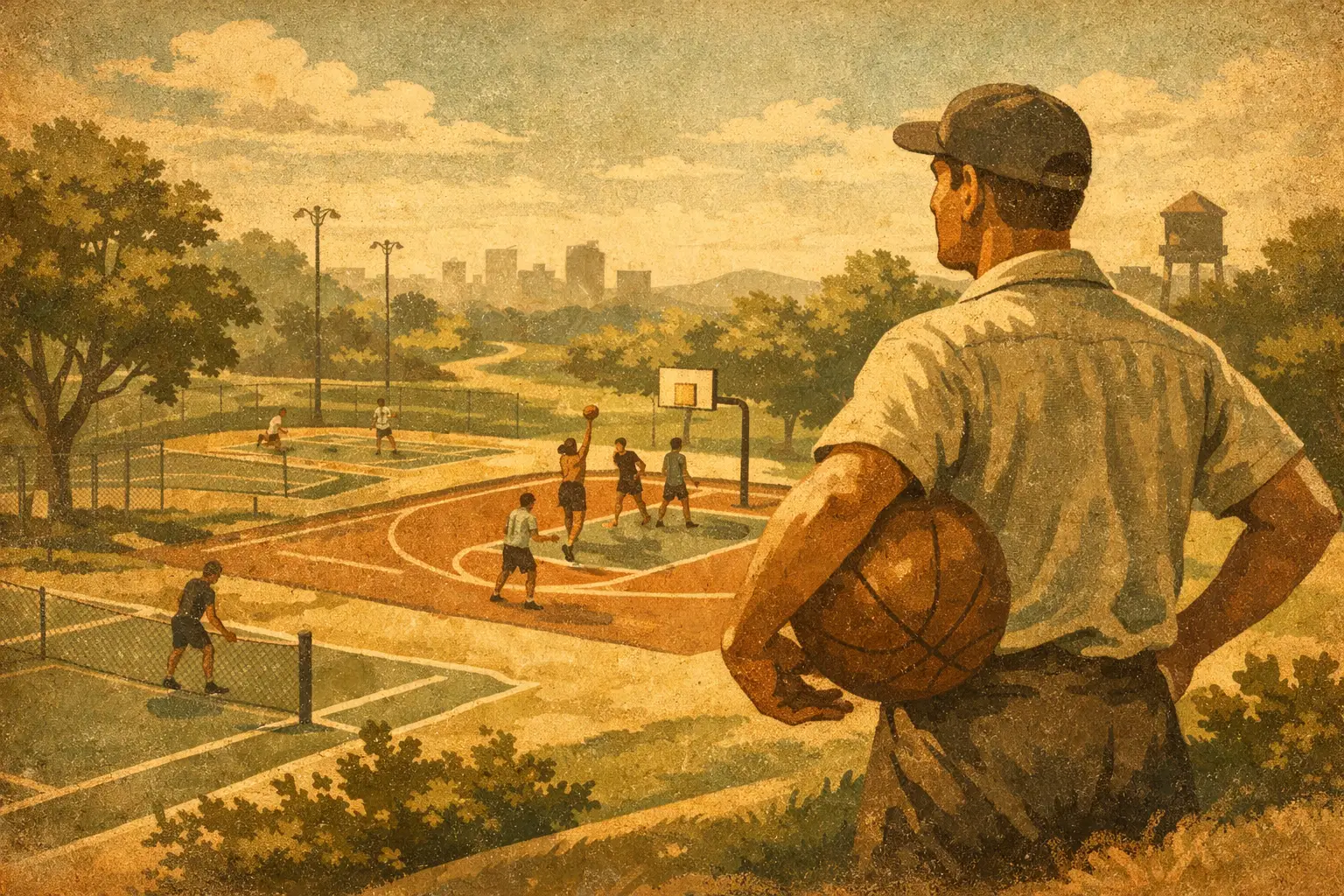
You have trainers on, a ball in the boot and an hour free. The only thing stopping a game is the question: where can I find open courts without spending half that hour checking locked gates, full bookings and dead group chats? The answer is rarely one place. Open courts are found by combining live information, local knowledge and a way to gather people quickly when you find a good slot.
Where can I find open courts nearby?
Start by getting clear on what “open” means for the sport you want to play. A public basketball half-court may be physically open but already claimed by a regular group. A tennis court at a park might look empty yet require a free booking through the council. A 5-a-side pitch may have space later tonight, but only if you can bring enough players.
That difference matters because the best search method changes with it. For a spontaneous solo shootaround, public parks and multi-use games areas are usually your quickest route. For tennis, padel, badminton or football, venue booking systems and leisure centres tend to give a more reliable answer. If your actual goal is a proper game, availability is only half the job - you also need a crew.
Check parks, MUGAs and school-community facilities
Local parks are the obvious first stop for outdoor basketball, tennis, football cages, skate spaces and multi-use games areas. Search your council’s parks and leisure pages, then use the venue details to check opening hours, surface type and whether the courts are freely accessible. Do not assume a court is available simply because it appears on a map. Some are inside fenced parks, shared with clubs or closed for resurfacing.
Multi-use games areas, often called MUGAs, can be especially useful. They are built for flexible play: football one evening, basketball the next, a casual netball session after that. They are not always bookable, which makes them ideal for pickup sport, but that can also mean a first-come, first-served scramble at peak times.
Community schools and sports halls are another overlooked option. Many open their courts outside school hours, particularly in the evenings and at weekends. Their availability is often better than the busiest commercial venues, though advance booking is more likely.
Use venue booking pages for certainty
When you are organising around other people, guessing is expensive. Check the venue’s own booking page or call reception before sending messages. This is the best route for indoor courts, artificial pitches and facilities with changing rooms, lighting or equipment hire.
Look beyond the first venue in your area. A leisure centre close to the station may be packed after work, while a smaller centre ten minutes away has a court free at the same time. Students, shift workers and anyone travelling across the UK will recognise the pattern: the most visible venue is not always the best one for a last-minute game.
Pay attention to the practical details. Ask whether the price covers the full court, whether floodlights cost extra, whether balls or racquets are available and how late the facility stays open. For football or basketball, confirm court dimensions too. A free half-court is perfect for shooting or 2v2, but not for the 10-person run your group has in mind.
Find an open court, then make it playable
An empty court without players is just a good photo opportunity. The fastest way to turn availability into sport is to post the details clearly: sport, venue, time, standard, format and how many spaces remain. “Basketball at 7” creates questions. “4v4 basketball, outdoor court by the park, 7pm, intermediate, two spots left” gets decisions.
Crewters is built around that exact jump from intent to action. You can discover venues, create pickup-style events, challenge another player or pull a team together across basketball, football, tennis and far more. Rather than waiting for the same WhatsApp group to wake up, you can put a game in front of people who are already looking to play.
There is a social trade-off here. Open invitations can bring fresh faces and stronger local connections, but they also need basic expectations. Say whether beginners are welcome, whether the session is competitive, if there is a fee and what happens if rain stops play. Clear information makes sport more welcoming and cuts down on no-shows.
Choose the right time, not just the right court
If you want a court to yourself, avoid the obvious rush. Weekday evenings from roughly 5pm to 8pm are usually the toughest window, especially in cities and around well-lit outdoor spaces. Saturday mornings can be busy with clubs and junior sessions. Sunday afternoons may be quieter at formal venues but popular in parks when the weather is good.
Early mornings, lunchtime slots and late weekend afternoons can be the sweet spot. That will not suit every group, but it is a useful option for people working flexibly, studying, or wanting to train before the day gets away from them. In winter, outdoor availability can improve while quality drops - darkness, wet surfaces and limited lighting change what is realistic.
For recurring games, book or agree a regular slot before your group grows. Consistency builds attendance. People are far more likely to protect “Thursday tennis at 7” than a vague plan to play sometime next week.
What to do when every court looks full
A full court does not have to mean a cancelled session. First, switch the format. A football cage can host short rotating games; a basketball half-court can become 1v1, 2v2 or a shooting session; tennis players can practise serves and rallies if a full match court is unavailable. The session still counts, especially if you are building a habit rather than chasing a perfect fixture.
Second, widen the radius intelligently. Do not search every venue across town. Pick places near a train line, a cycle route or where several players already live. A court that is technically free but impossible for half the group to reach will create last-minute dropouts.
Third, use the waiting time. If a popular court is occupied, ask respectfully how long the group expects to play and whether they are open to sharing, rotating teams or running a winner-stays-on format. Public courts work best when everyone treats access as shared. Turning up with entitlement is a quick way to make a local sports space feel less welcoming.
Know the rules before you arrive
Public does not always mean unrestricted. Some parks prohibit organised commercial coaching, amplified music, glass bottles or play after a set hour. Indoor venues may require non-marking shoes, specific clothing or an adult booking holder. Tennis courts might have a maximum session length when others are waiting.
Respecting those rules protects the spaces everyone relies on. It also helps your group become welcome regulars rather than the people staff remember for the wrong reasons. Leave the court as you found it, take litter home, report damaged nets or hoops and do not block access for other users.
Safety deserves the same common sense. Check outdoor surfaces for standing water, broken glass and loose fencing. Bring water, especially for summer sessions on exposed hard courts. If you are meeting new players, choose a visible public venue and make the session details transparent. Competition is better when everyone feels comfortable turning up.
Build a local court routine
The best answer to “where can I find open courts?” gets better over time. Save a short list of reliable venues: one close outdoor option, one bookable indoor backup and one place with good lighting for darker months. Learn their quiet periods, booking habits and weather limitations. Share that knowledge with your playing community rather than keeping it locked in a private chat.
Then make the court useful beyond one game. Track who turns up, set small goals, organise rematches and welcome the person who has never played before. A regular court can become the place where your five-a-side side forms, your tennis rival improves your game, or your first pickup session turns into a weekly fixture.
The next time you spot an empty court, do not just wonder whether someone else will use it. Set the time, call your crew and make the space matter.