
Sports Venue Directory vs Google Maps
April 22, 2026
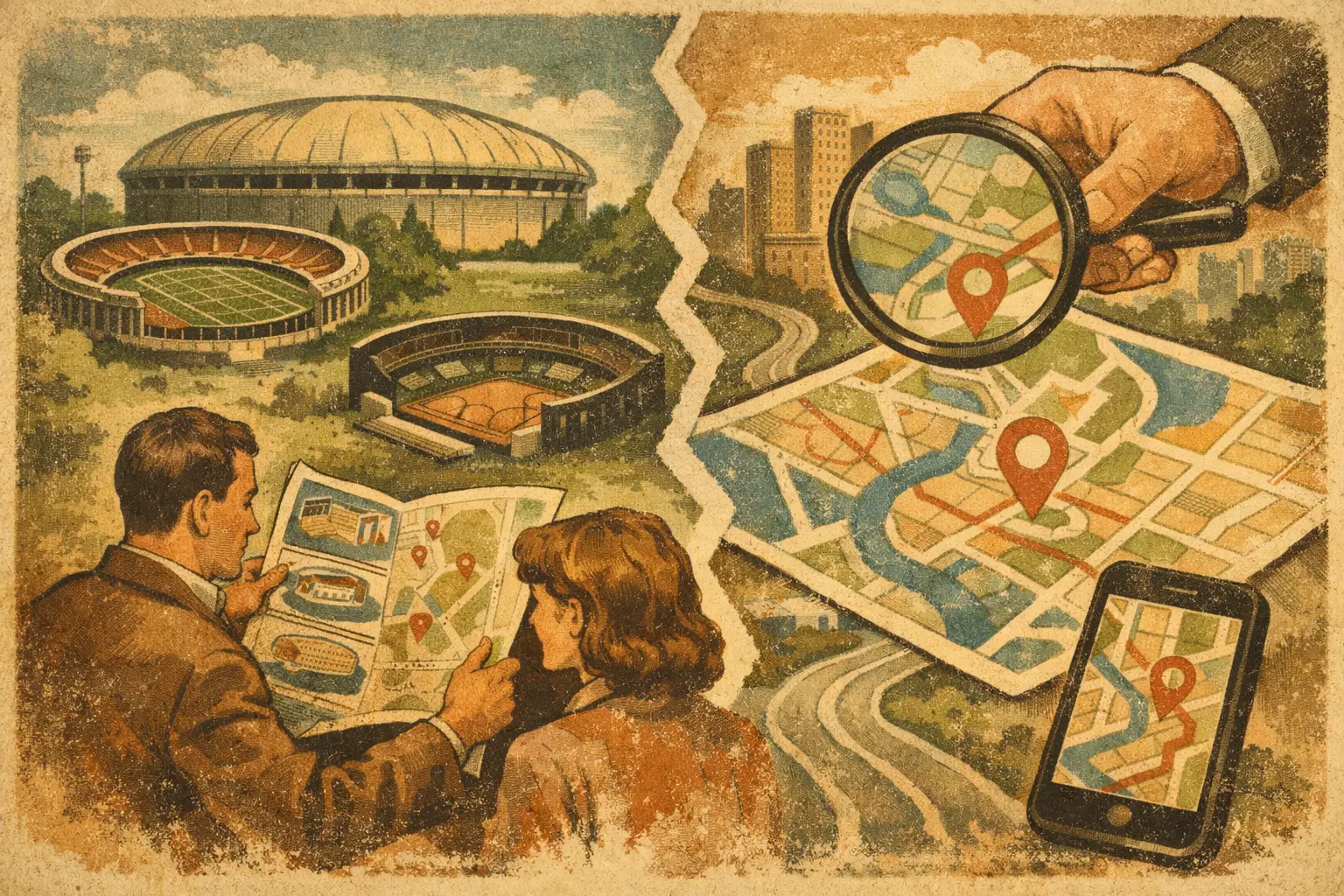
You can find a basketball court on Google Maps in seconds. Actually figuring out whether it has playable rims, lights that work, open run times, and people who show up is a different job. That gap is the real story in sports venue directory vs Google Maps, and it matters if your goal is not just locating a place, but getting a game going.
For casual players, organizers, and anyone trying to build a routine around sports, the difference comes down to intent. Google Maps is built to help you get somewhere. A sports venue directory is built to help you play. Those sound close, but they solve very different problems once you move past the address.
Sports venue directory vs Google Maps: what changes?
Google Maps is broad by design. It covers everything from coffee shops to hospitals to public parks, and that scale is its strength. If you are traveling, moving to a new neighborhood, or just need the fastest route to a tennis center, it is hard to beat for reach, navigation, and basic business details.
A sports venue directory starts narrower and gets more useful inside that niche. Instead of asking, "Where is the place?" it asks, "Is this place right for the sport, the format, and the level I want to play today?" That means the best directories organize venues around actual player behavior: surface type, court count, sport lines, lighting, access rules, membership requirements, pickup activity, leagues, and the kind of community attached to the venue.
That shift matters because sports are social and time-sensitive. A runner can usually run anywhere. A volleyball player cannot just show up to any park and expect nets, lines, and enough people for a real session. The more coordination a sport requires, the less a generic map is enough on its own.
Where Google Maps wins
Google Maps still deserves credit because it solves the first layer extremely well. If you need quick orientation, business hours, photos, directions, and nearby options, it is the fastest mainstream tool. For one-off decisions, it is often good enough.
It also performs well for established venues with strong business profiles. A major gym, golf club, climbing gym, or indoor soccer complex may have accurate contact details, recent reviews, and enough photos to tell you what you are walking into. If your only question is whether a place exists and how to reach it, Google Maps is efficient.
There is also a trust factor. People already use it every day. They do not need to learn a new interface or create a new habit to search for "tennis courts near me." That convenience is real, and any sports product pretending otherwise is missing the point.
But convenience has limits. Google Maps can tell you there is a court. It usually cannot tell you whether locals actually use it for pickup, whether beginners feel welcome, whether a challenge group meets there on Thursdays, or whether the venue supports the kind of progression players care about.
Where a sports venue directory pulls ahead
A sports venue directory becomes more valuable the moment your question gets specific. Not "Where can I play?" but "Where can I play tonight, with people around my level, without wasting an hour guessing?"
That is where sport-specific structure matters. A strong directory can separate indoor from outdoor, grass from turf, free access from reservation-only, casual play from organized competition. It can also reflect how people really choose a venue: by game quality, consistency, community, and fit.
This is especially true across multiple sports. Most platforms fragment people by one activity at a time. Real users do not live like that. Someone might hoop twice a week, play pickup soccer on weekends, and try padel while traveling. A sports venue directory built around one connected network makes cross-sport discovery much easier than forcing users to restart their search every time they change activities.
There is another edge too: player context. In sports, the venue is only half the equation. The other half is whether you can find people, events, teams, or challenges tied to that place. When a directory connects venues to actual participation, it stops being a static database and starts becoming a layer of sports infrastructure.
The real weakness of Google Maps for active players
The biggest issue with Google Maps is not that it is bad. It is that its incentives are generic. Reviews tend to reflect customer service, parking, and broad impressions. Those things matter, but they do not fully answer sports questions.
A five-star park review does not tell a basketball player whether games are competitive. A nice tennis center photo does not tell a traveler whether drop-in play is realistic. A soccer field pin does not reveal whether the local community organizes small-sided runs or if the field sits empty most evenings.
For active players, stale information is another problem. Sports conditions change fast. Nets break. Access rules shift. Groups migrate to different time slots. Seasonal leagues take over courts. A venue can look available online and be functionally useless for your actual plan.
That is why sports data works better when the community around it is active. Players update details because they use the space, not because they passed by once and left a general review two years ago.
Sports venue directory vs Google Maps for organizers and communities
If you organize pickup games, rec teams, or local leagues, the difference gets even sharper. Maps help people arrive. Directories help people assemble.
Organizers need more than location data. They need a system that lets players discover the venue, understand what happens there, join a session, and build repeat participation. A map listing is passive. A sports directory can be participatory.
That has real downstream effects. Better venue discovery means better attendance. Better attendance means more reliable games. More reliable games create habit. Habit is what turns a random run into a real community.
This is also where startup-style sports platforms have room to build something more useful than another search layer. When venues are connected to events, challenges, teams, leagues, stats, and reputation, you create continuity. People stop asking, "Where is the court?" and start asking, "Who is playing there this week, and how do I get in?"
It depends on what you need right now
If you are passing through a city and need a fast answer, Google Maps may be enough. Search, tap, drive, done. For low-coordination activities or polished commercial venues, that workflow is still strong.
If you are trying to build a weekly sports routine, find your level, meet people, or discover places that are actually active for your sport, a sports venue directory gives you better odds. It reduces friction that maps were never designed to solve.
The smartest users will probably use both. Maps for navigation and broad discovery. A sports directory for context, quality, and community signal. This is not always an either-or decision. It is often a stack.
Still, the more serious you are about consistent play, the more a generic tool starts to feel generic. That is not a knock on Google Maps. It is just a reminder that sports have their own workflows, and players need products that respect them.
Why this matters for the future of sports apps
The sports products people stick with do one thing well: they shorten the distance between intent and action. You want to play. You find the right place. You find the right people. You get on the schedule. You show up. You track progress. You come back.
A basic map only covers one slice of that chain. A true sports venue directory can support the whole journey, especially when it is built with the community instead of dropped on top of it. That is the bigger opportunity. Not replacing maps, but building the layer maps never aimed to own.
That is also why this category should feel more alive than a standard directory. Players should be able to shape what is useful, flag bad info, spotlight hidden gems, and connect venues to actual competition and improvement. We are building toward sports tools that feel like part of the game, not just a pin on a screen.
If all you need is directions, use the map. If you want a better shot at finding your crew, your court, and your next game without the usual guesswork, use something built for play.