
How to Live Stream Your Sports Games
May 24, 2026
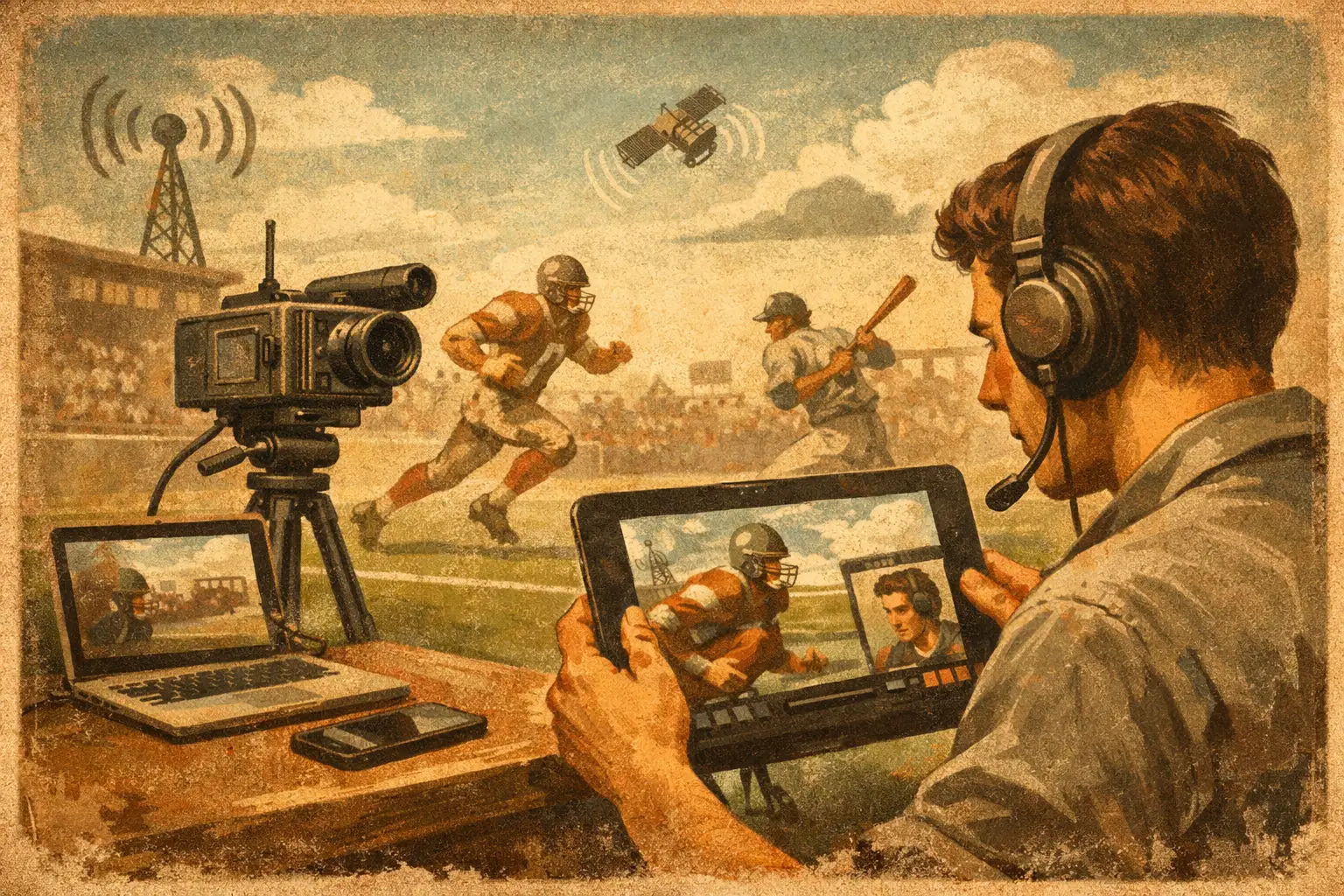
A close game deserves more than a blurry camera pointed at half the court. If you want to live stream your sports games, the goal is not just to go live. It is to make the match watchable, replayable, and worth sharing with teammates, friends, and the next people you want to play with.
That matters more than ever for pickup runs, amateur leagues, school clubs, and local communities. A live stream can turn a one-off game into proof you showed up, a highlight for your crew, a way to track progress, and a reason for more people to join the next event. Done right, it builds momentum around your game instead of letting it disappear the second the final point is scored.
Why live stream your sports games at all?
Most players start with one simple reason: someone could not make it and still wants to watch. That is valid, but it is only the starting point.
When you live stream your sports games, you create a record of how your group plays. Players can review positioning, effort, chemistry, and big moments. Organizers can show that their games are active and consistent. New players can get a feel for the level before they join. If you are building a local sports community, streaming helps people trust that the run is real.
There is also a social layer that should not be ignored. Sports are better when they feel alive beyond the field, court, or gym. A stream gives your community something to react to in real time. Trash talk stays friendly when everybody can see the same play. Big moments travel. A game that looked small in person can feel much bigger when people are watching, commenting, and showing up for the next one.
What makes a sports live stream worth watching
The best streams are not always the most expensive. They are the ones that respect the viewer.
That starts with camera placement. If the action keeps leaving the frame, the stream becomes frustrating fast. A stable wide angle usually beats a shaky close-up, especially for basketball, soccer, tennis, volleyball, and other sports where spacing matters. People need to understand what is happening before they can care about who is winning.
Audio matters too. A stream with average video and clear ambient sound often feels better than a sharp picture with harsh wind noise or muffled voices. Viewers do not need broadcast-level commentary, but they do want to hear the rhythm of the game. Sneakers, whistles, sideline reactions, and the occasional call all add texture.
Then there is continuity. If your stream cuts out every few minutes, your audience stops trusting it. That is where many players get tripped up. They think streaming is about the camera, when it is often about signal strength, battery life, heat management, and choosing a setup that matches the environment.
The easiest way to live stream your sports games
If you are just getting started, keep the first version simple. Use a smartphone with a solid data connection, place it high enough to capture the full playing area, and test your framing before the game starts.
For most community games, a tripod is the first real upgrade worth making. It instantly improves watchability because it removes hand shake and frees somebody from being the full-time camera operator. If your sport covers a large area, you may need to choose between seeing all the action and seeing enough detail. That trade-off is normal. For pickup and rec play, full context usually wins.
You should also arrive early enough to test one short private stream. This catches the obvious problems: bad angle, weak signal, low battery, and sound issues. Five minutes of prep can save an entire game.
If you are streaming outdoors, sun position matters. A camera pointed straight into bright light can flatten players into silhouettes. If you are indoors, check whether the lighting flickers or leaves dark zones on the floor. You do not need perfect conditions, but you do want a setup that gives viewers a fair chance to follow the action.
Gear matters, but only after the basics
People love talking about equipment because it feels like progress. Sometimes it is. Sometimes it is just shopping.
A better phone, a mounted power bank, a stronger tripod, and a simple external mic can improve your stream more than a complicated multi-camera setup you cannot manage consistently. The right gear is the gear your group will actually use every week.
There is also a sport-by-sport reality here. Tennis and pickleball can work well with a fixed angle because play stays in a defined frame. Full-field soccer is tougher from a single phone unless you have elevation. Basketball sits somewhere in the middle. You can capture a lot from center court, but if the camera is too low, bodies and benches can block the view.
That is why builder-minded sports communities should think in systems, not gadgets. What setup can your organizer repeat? What can your team set up in three minutes? What still works when one person is late and another forgets the charger? The repeatable stream beats the fancy stream that happens twice.
How to make viewers care about the stream
A live game is content, but it still needs context. If people do not know who is playing, what the format is, or why the matchup matters, they are less likely to stay.
Before you go live, give the game a basic identity. Name the teams. Mention the location. Note whether it is pickup, league play, a challenge match, or a playoff game. If there is a record on the line, a rivalry, or a player returning from injury, that helps too. Sports get sticky when there is something at stake.
You do not need polished media production to do this. A simple pregame caption or spoken intro can frame the whole match. During breaks, a quick score update keeps late joiners connected. After the game, save and share the replay if the platform allows it. Highlights and postgame reactions often pull in more people than the live broadcast itself.
This is also where community platforms have an edge. When your stream sits alongside player profiles, stats, events, challenges, and ratings, it becomes part of a bigger sports identity instead of a random video. That is one reason products like Crewters feel interesting right now. The stream is not isolated. It can feed recognition, rewards, and future play.
Common mistakes when you live stream your sports games
The biggest mistake is trying to do everything at once. If you are also playing, reffing, organizing teams, answering messages, and fixing the camera, something will slip. The solution is not more hustle. It is clearer roles. Even having one person own setup and another own score updates can make the whole stream feel more intentional.
Another mistake is ignoring the audience angle. Players on the court know the score and context already. Viewers do not. A few small cues go a long way.
There is also the issue of consent and comfort. Not every venue, league, or player will want to be streamed the same way. If minors are involved, or if you are in a more formal organized setting, check the rules first. Community grows faster when people feel respected, not exposed.
And then there is the classic technical error: trusting bad connectivity. If your service is unreliable at the park or gym, test alternatives before game time. Sometimes moving ten feet or switching sides of the venue changes everything.
Turning streams into stronger sports communities
The real upside is not the video file. It is what the video helps create.
A consistent stream gives your group memory. It gives newcomers proof. It gives regulars recognition. It gives competitive players tape to learn from and social players a reason to show up even when they are not on the field. Over time, that kind of visibility helps games fill faster and communities feel more active.
It can also change how people participate. Some players want stats. Some want highlights. Some want accountability. Some just want their friends to watch. Streaming supports all of that when it is treated as part of the experience, not an afterthought.
If you are organizing local sports, think bigger than one broadcast. Build habits around it. Stream the weekly run. Save key moments. Tag standout performances. Let players react. Invite feedback on what should improve next. That is how a simple live feed starts helping shape a real sports network.
The best part is that you do not need pro production to get there. You just need a setup your community can repeat, a reason for people to care, and the willingness to keep improving week after week. Start with the game you already have, make it watchable, and let the stream help your next game happen faster.