
When Should Teams Use Substitutes in Sport?
October 27, 2026 · Chris Palmer
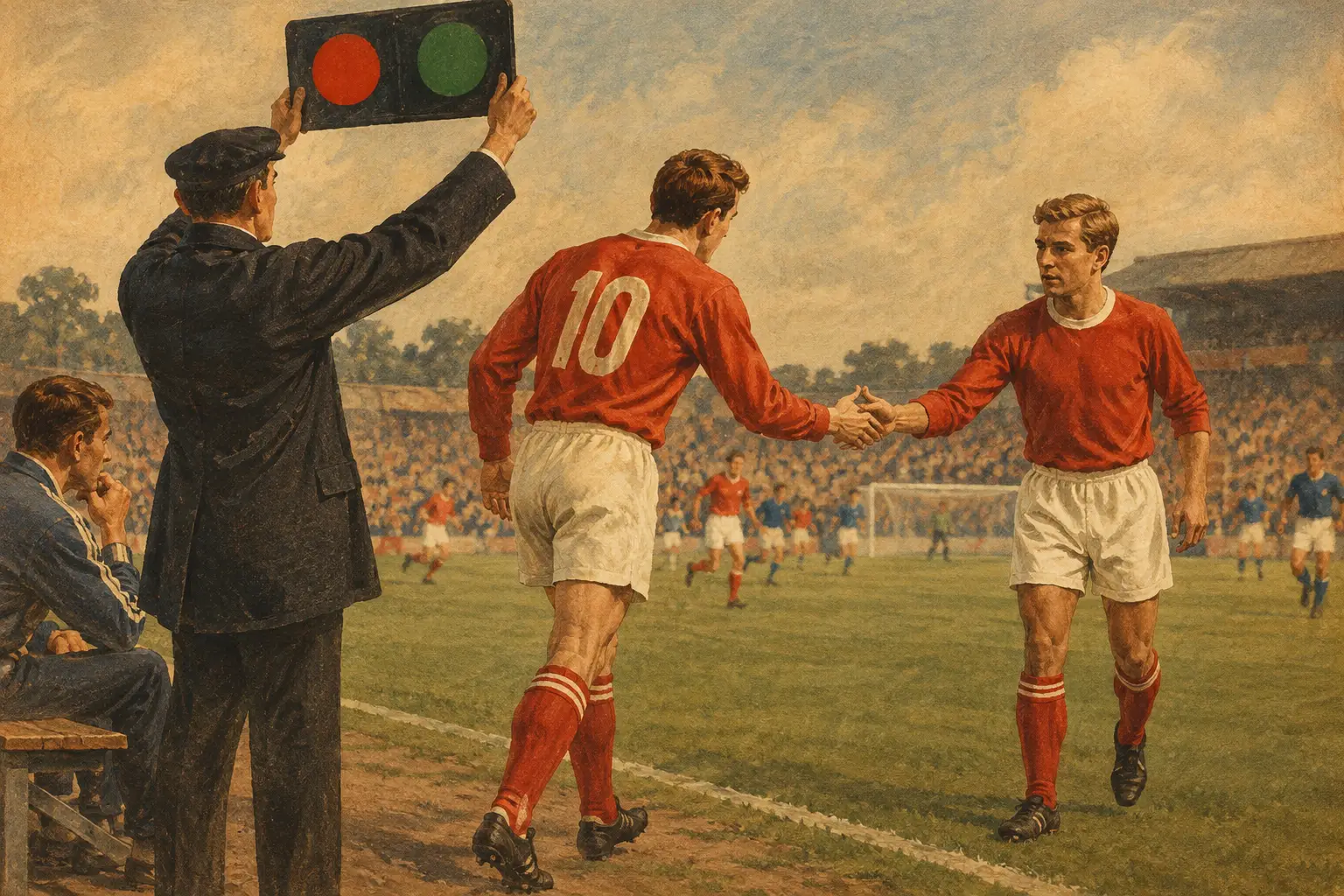
A close match can turn on one tired sprint, one mistimed tackle or a player who has stopped communicating because they are running on empty. When should teams use substitutes? Not simply when someone looks exhausted. The best changes protect the group’s energy, respond to what the game is asking for and give every player a genuine role in the result.
For pickup football, five-a-side, basketball, hockey, netball and dozens of other sports, substitutions are part tactics and part people management. Get them right and the team stays connected, competitive and keen to come back next week. Get them wrong and even a win can leave players frustrated on the sidelines.
When should teams use substitutes during a match?
The obvious answer is when performance drops, but waiting for a player to be completely spent is often too late. Fatigue affects decision-making before it affects effort. A player may still be chasing every ball, yet take an extra second to track a runner, lose their first touch or force a risky pass. A planned change can prevent those moments rather than merely react to them.
Look for a pattern, not one mistake. Everyone misplaces a pass or loses a duel. But if a player is repeatedly late to recover, avoiding movement they would normally make, or struggling to communicate, the team may need fresh legs. In fast, informal games with short benches, rotating earlier and more regularly is usually fairer and more effective than leaving one person on until they can barely move.
Game state matters too. If your side is protecting a narrow lead, a composed defender or a player who can keep possession may be more valuable than outright pace. If you are chasing a goal, a direct runner, a strong rebounder or someone willing to shoot can change the rhythm. The substitute should solve a clear problem, not be a random switch made because it feels like time.
That said, avoid treating substitutes as a punishment. Taking off the player who made the last error can create anxiety across the team, particularly in recreational sport. Unless there is a tactical or safety reason, explain the change in a way that keeps confidence intact: fresh legs, a different match-up, or a planned rotation.
Put player safety ahead of tactics
Some changes are not debatable. A suspected concussion, chest pain, breathing difficulty, severe cramp, dizziness or pain that changes how someone moves needs attention, not encouragement to push through. Follow the rules of your sport and venue, and seek appropriate medical advice where needed. Winning a local game is never worth making an injury worse.
In contact sports, watch for players who are repeatedly taking heavy impacts or losing focus in dangerous situations. In heat, cold or wet conditions, fatigue arrives differently and can make a normal workload feel much harder. A substitute is not a sign of weakness. It is often the sensible call that lets a player return safely another day.
Use substitutes to manage the whole game
Strong teams do not only make better changes. They make changes with a shared plan. Before the first whistle, agree how rotation will work. Will everyone get roughly equal minutes? Are there set change points? Does the team have a goalkeeper or specialist position that needs a different approach? A two-minute conversation prevents the awkward sideline guessing that drains the mood from casual sport.
For a social game, equal opportunity should usually be the default. People have made time, travelled across town and turned up to play. If minutes will be uneven because the game is competitive or a league fixture has specific demands, be clear about it before the match begins. Nobody enjoys finding out halfway through that they have become the permanent substitute.
For a more competitive side, plan rotations around intensity. In basketball, short bursts can keep defensive pressure high. In football or hockey, changes may be timed for transitions, set pieces or a period when one flank is being overloaded. In racket sports with team formats, a substitute may bring a better style match-up rather than simply more energy.
The key is to think beyond individual ability. A brilliant player may not be the right player for the next phase. Perhaps the team needs someone to organise the back line, win second balls, slow the game down or bring quieter teammates into play. Good substitutions improve the unit, not just the talent on the pitch or court.
Read the energy, not just the score
A team can be leading and still be in trouble. If players are bickering, gaps are appearing and nobody is offering an easy pass, the momentum has shifted even if the scoreboard has not. A calm substitution can reset communication. Bring on someone who talks, presses with purpose or offers a simple outlet, then give the group one clear instruction.
Equally, do not disrupt a combination that is working only because a clock says it is time. If two players have just found a rhythm, wait for a natural break where possible. There is always a trade-off between fairness, freshness and flow. The right decision depends on the format, the rules and the commitment everyone agreed to before playing.
Give substitutes a job before they enter
Players waiting off the field should not feel disconnected from the game. Tell them what you want them to notice: an opponent who is tiring, a space that keeps opening, a shooter who needs closing down, or the moment your team loses possession. That turns the bench into part of the team rather than a holding area.
When a player comes on, give them one or two specific actions. “Stay high and stretch them” is more useful than “make an impact”. “Pick up their quickest runner” gives a defender a clear starting point. Too many instructions create hesitation, especially for newcomers who are still learning the pace of the group.
The player coming off also has useful information. A quick handover can reveal that an opponent cuts inside, a surface is slippery near one touchline, or a teammate needs more support. Keep it constructive. A substitute who enters with context can influence the game from their first involvement.
Rotation builds better teams over time
Substitutions are also a development tool. If the same players always get the biggest moments while others only enter when the match is settled, the group stops growing. People need meaningful minutes to learn how to handle pressure, make decisions and build trust with teammates.
This matters especially for new players and mixed-ability groups. A welcoming team does not pretend every player has identical experience. It creates situations where people can contribute while improving. Pair a newer defender with a vocal organiser. Give an inexperienced attacker a defined pressing role. Rotate positions in friendlies, then use what you learn when the games become more serious.
Recognition matters after the change as well. Praise the player who tracked back, kept possession or lifted the team’s energy, not only the scorer. Those moments are what make people feel seen and willing to turn up again. Stats, ratings and post-match feedback can help reveal effort that a final score misses, provided the culture stays constructive.
Crewters is built around that fuller picture of participation: finding a game, joining a team, taking on a challenge and building a record of progress across the sports you play. A good substitute appearance counts. So does showing up, supporting teammates and helping make the next event better.
Avoid the common substitution mistakes
The first mistake is changing too late. Waiting until a player is visibly struggling can expose the whole team. The second is changing without communicating, which leaves the incoming player unsure of their role and the outgoing player feeling singled out.
Another common issue is using the strongest players as a permanent rescue plan. It may win one game, but it can make everyone else passive and overwork the same few people. Finally, do not forget the rules. Rolling substitutions, re-entry limits, goalkeeper changes and minimum playing-time expectations vary across leagues and competitions. Check before the whistle, not during an argument.
A simple team rule helps: make changes with a reason, say that reason out loud, and review how it worked afterwards. The review need not be formal. On the walk home or in the group chat, ask whether the rotations felt fair and whether the team had enough cover in key positions.
The best substitute is not always the fastest or most skilful player waiting to come on. It is the player whose energy, role and attitude meet the moment. Build that clarity into your next game, and every person in your crew has a better chance to contribute when it matters.