
Social Network for Athletes That Gets You Playing
August 7, 2026 · Chris Palmer
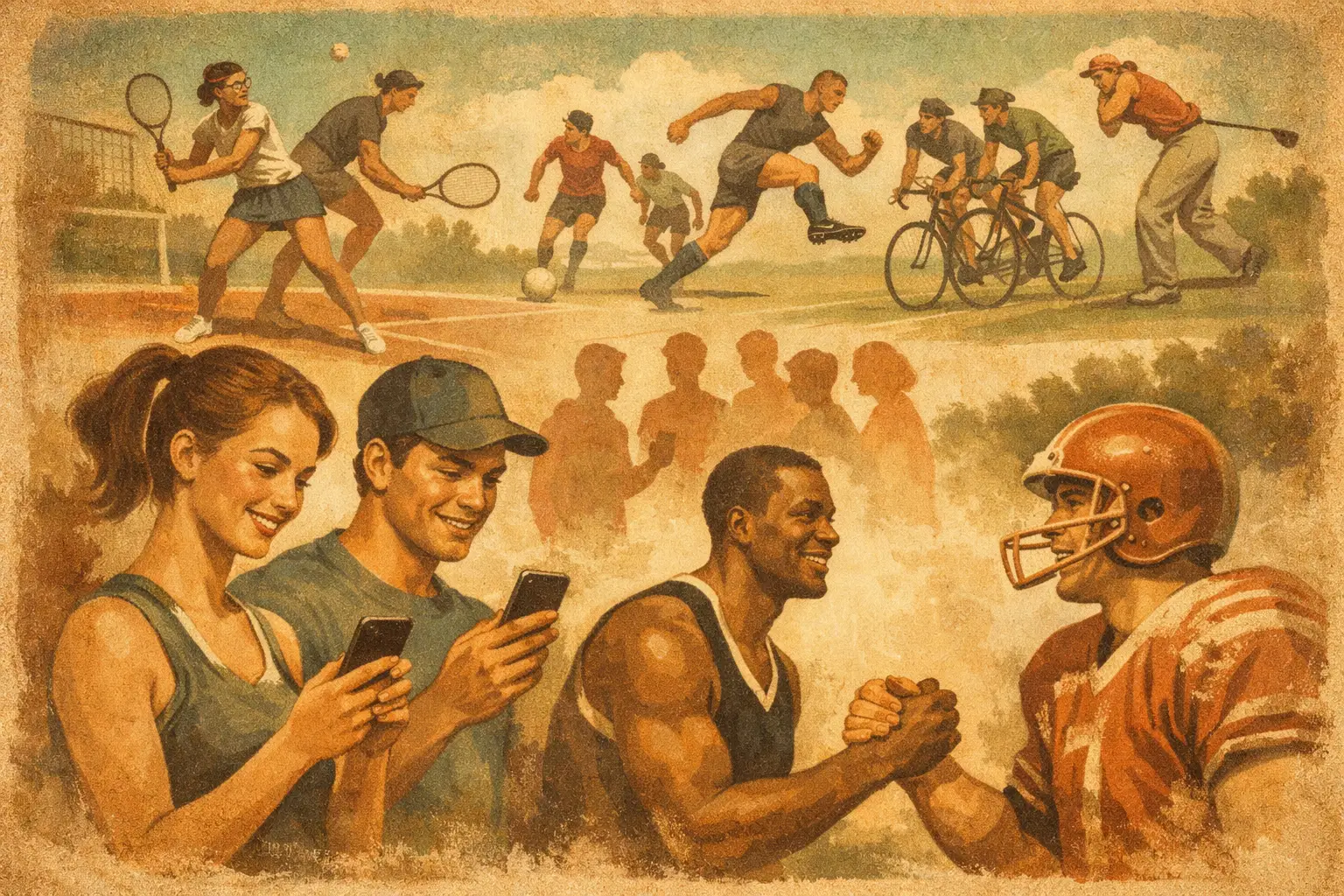
It is 6.30pm, you have your trainers in the boot, and your group chat has gone silent again. A social network for athletes should not give you another feed to scroll. It should get you onto a court, pitch, track or climbing wall with people who are ready to play.
That is the difference between a sports app that looks busy and one that creates actual sporting habits. For casual players, students, league regulars and people returning to sport, the hardest part is often not motivation. It is finding the right people, place and time before the evening disappears.
A social network for athletes should lead to a game
Most social platforms are built around attention. You post, react, watch and move on. Sport works differently. It needs coordination. Someone needs to know where the local 5-a-side pitch is, who can make Tuesday, whether there are enough players, and if the session welcomes beginners rather than only the usual established group.
A useful sports network turns those moving parts into a clear next action. Find a venue. Join an event. Create a game. Challenge a mate. Build a team. The social side matters because showing up is easier when people know who they are playing with and feel accountable to a crew.
That is especially useful when your routine changes. You may have moved to a new area, started university, changed jobs or landed in a new city for the weekend. Search results alone cannot tell you whether a game is active, friendly, competitive, full of newcomers or exactly your level. A living community can.
The real gap is between wanting to play and playing
People rarely say they do not want to exercise. More often, they say they could not find anyone, did not know where to go, or assumed every local team was already closed off. Those small barriers create weeks without a game.
A social network designed for sport lowers that barrier without making every session feel like a formal league commitment. Pickup events give people a low-pressure route in: choose the sport, see the location and time, then join the game. If you are organising, you can create the session and bring the right number of players together without chasing replies across five different chats.
This matters for more than football and basketball. A player looking for tennis partners has a different problem from someone assembling a Sunday cricket side. A person trying padel for the first time may need a social session, while a competitive runner may want a challenge that adds purpose to their training. One all-sports community can support those different routes into play rather than forcing people to switch platforms every time they try something new.
Crewters is building that kind of network across 122 sports, with venues, players and organised competition in the same place. The goal is simple: make it easier to turn spare time into a real session with your crew.
Start local, but keep your sporting world portable
Your favourite place to play may be five minutes from home, but your sporting community should not vanish when you travel. Whether you are visiting another UK city for work, heading home from university or taking a holiday, finding a nearby venue and players can turn an unfamiliar evening into a game.
Venue discovery is not just a map feature. It is the starting point for participation. Once you find the right court, gym, pitch or club, you need to know what happens there. Are there events this week? Is anyone looking for another player? Can you bring a friend? Is there a team to join?
The best communities make venues more useful too. A facility with visible activity becomes easier to choose than one that simply appears in a directory. Players get more opportunities, while venues become part of the local sporting conversation instead of a place you only remember when somebody sends a postcode.
Events make playing less dependent on group chats
Group chats are good for friends who already play every week. They are less useful when the group is short on numbers, when a regular drops out, or when you are the new person trying to get involved. Messages get buried. Plans stay vague. The person who always organises gets tired of doing the admin.
Events give the game a home. Players can see the sport, venue, timing and who else is taking part before they commit. That visibility makes joining less intimidating and organising less of a chore. It also creates a more reliable rhythm: the Thursday badminton session can become something people expect, not an idea somebody remembers once a month.
There is a trade-off. Open events need enough detail to feel welcoming while still protecting the organiser's standards. A relaxed beginner session should say so. A high-intensity match should say that too. Clear expectations are not exclusionary - they help people find games they will genuinely enjoy.
Challenges add a reason to come back
A friendly challenge can do more for consistency than another generic fitness reminder. Challenge a friend to a tennis rematch, set a target for your running crew, or call out a rival five-a-side team before next week's game. Competition gives ordinary sessions a story.
The point is not to make every interaction serious. It is to give players options. Some people want a casual kickabout after work. Others want a score to settle, a ranking to improve or a trophy to chase. A strong network lets both groups coexist, because sport can be social and competitive on the same night.
Direct challenges also help players move from passive interest to action. Instead of liking a post about playing more, you can invite someone to prove it on court. That small prompt often gets the match booked.
Teams and leagues create belonging that lasts
Single events are a great first step. Teams and leagues are where many players find their sporting identity. You learn who always turns up, who delivers under pressure, who brings the snacks, and who needs a lift after an away game. That shared history is why people keep coming back through wet evenings and busy weeks.
Joining or forming a team should not require knowing the right person in advance. A social network can make discovery more open by showing teams that need players and giving individuals a route into structured competition. For organisers, it creates a clearer way to manage participation than a constantly changing chain of messages.
Leagues add a longer arc to the experience. Fixtures, results and standings make individual games feel connected. They also suit players who want competition without the commitment or closed-door culture that can come with traditional clubs. The right level depends on the player. A newcomer may prefer a social division, while a regular may want the pressure of a title race.
Progress deserves to be visible
Sport is addictive because improvement is tangible. You make one more save, run a little farther, land a better serve or finally beat the player who has had your number for months. Yet those moments are easy to forget if your sporting life is spread across separate chats, notebooks and apps.
Stats, goals, trophies and achievements give players a record of their effort. Used well, gamification does not replace the game. It rewards the behaviour that keeps communities alive: showing up, trying a new sport, completing a challenge, joining a team and improving over time.
Live streaming can make an event feel bigger too, particularly for players who want to share a match with friends or earn rewards for bringing the action to the community. Ratings and post-game reviews can help establish trust, but they need a fair culture. They should reward respect, reliability and good sporting behaviour, not turn every social session into a popularity contest.
Build the network you actually want to use
The most useful sports communities are not handed down from a product team and left unchanged. They are shaped by the people arranging games, finding venues, testing new features and saying what is missing. If a challenge format is not working, say so. If your sport needs better event options, vote for it. If you have ideas that would make organising easier, bring them forward.
That builder mindset matters because no two local scenes work exactly alike. The needs of a London basketball crew may differ from a coastal running group or a university netball society. A platform can provide the tools, but the community gives them their value.
Find your crew, create the game you keep hoping someone else will organise, and make your next session the start of a stronger local sporting community.