
Pickup Games Versus Clubs for Every Player
October 25, 2026 · Chris Palmer
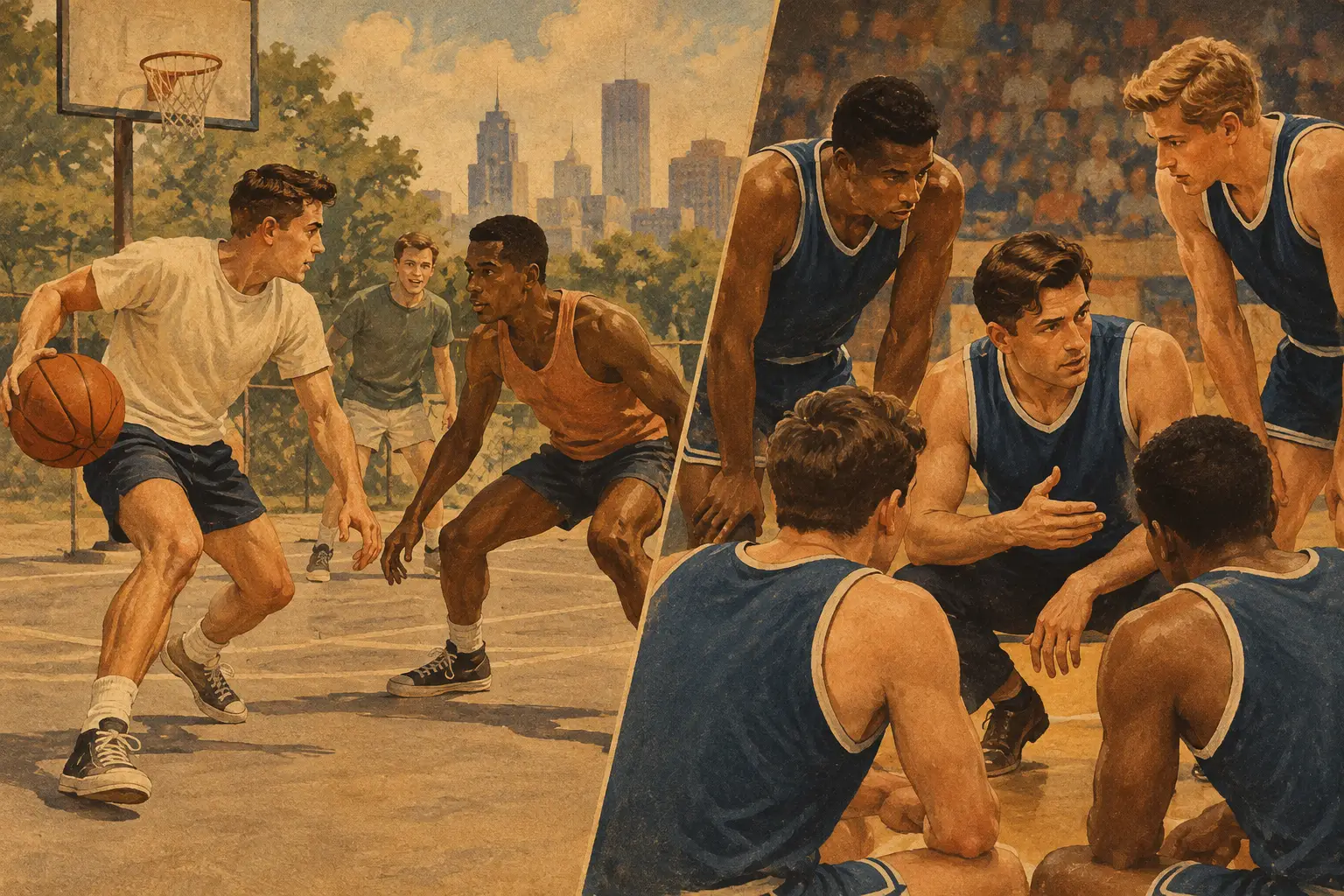
A five-a-side pitch is free at 7pm. Your group chat is quiet. Then one message lands: “Need two more.” Within an hour, strangers, mates and one player who has brought the wrong boots are playing under the lights. That instant possibility is the appeal of pickup games. But when you compare pickup games versus clubs, the better choice is not always the quickest one. It depends on what you want sport to give you next.
Pickup sessions and clubs solve different problems. One makes it easier to play now. The other gives you a place to develop, compete and belong over time. Neither route is more legitimate, and plenty of the most committed players use both.
Pickup Games Versus Clubs: The Real Difference
Pickup games are usually player-led, flexible and low-commitment. Someone finds a court, books a pitch or posts that they need players, and the session happens when enough people join. You might play basketball with a new group on Tuesday, tennis with a colleague on Thursday and casual football on Sunday. The format can be as relaxed or competitive as the people who turn up.
A club is built around continuity. There is normally a regular venue, named organisers, a membership structure and planned training or fixtures. You may join a squad, pay subs, wear a kit and represent the same team across a season. That structure creates accountability, but it also asks more of your time and wallet.
The key question is not, “Which is better?” It is, “What friction is stopping me from playing, and what will keep me coming back?” If your biggest barrier is finding people for a game this week, pickup wins. If you want coaching, a recognised league and teammates who know your game, a club is often the stronger fit.
Why Pickup Games Get More People Playing
The best pickup game removes the awkward middle stage between wanting to play and actually getting on court. There is no long trial process, no pressure to know a formation and no need to promise every Saturday for the next six months. For newcomers, returning players and people with unpredictable work patterns, that low barrier matters.
It also gives you variety. A casual player can try padel, badminton, volleyball or a new football group without treating the first session as a major commitment. That is especially useful if you have moved area, started university, changed jobs or are travelling within the UK. Your sporting routine does not have to pause because your usual group is unavailable.
Pickup is not automatically less competitive, either. Some games are social and mixed ability; others are fast, physical and full of players who expect everyone to defend. The difference is that the standard is shaped in real time. Before joining, ask what level the game is, whether substitutes rotate fairly and whether the organiser expects players to pay in advance. A clear event description prevents the classic frustration of turning up for a relaxed kickabout and finding a win-at-all-costs semi-final.
There is a social upside too. Repeated casual games create familiar faces without demanding an instant commitment. You learn who is reliable, who plays your position well and who is up for another session next week. That is how a loose group becomes your crew.
The limits of playing casually
Flexibility can become inconsistency. A game can be cancelled when numbers drop, and the quality can swing wildly from week to week. You may also spend too much time chasing confirmations, sorting payments or wondering whether anyone will actually turn up.
Improvement can be slower without a shared plan. Playing more is valuable, but a regular game rarely pauses to correct your technique, explain positioning or build tactics over several weeks. If you want targeted development, pickup alone may leave you wanting more.
What Clubs Offer Beyond a Weekly Fixture
Clubs give sport a rhythm. Training has a time, matches have a calendar and people notice when you are missing. That structure is powerful for players who struggle to protect time for exercise once work, study and social plans fill the week.
Good clubs also create a clearer pathway. Coaches can spot patterns in your performance, teammates understand your strengths and you get used to playing within a system. In football, that might mean learning when to press and when to hold shape. In basketball, it could mean reading screens rather than simply chasing the ball. Even recreational clubs can offer the focused repetition that makes progress visible.
Competition is another major pull. League tables, cup ties and promotion races give ordinary weeknights a bigger purpose. Winning with a team that has trained together feels different because everyone has invested in the result. You share the difficult losses as well, which is part of what makes a club community stick.
A well-run club can be one of the easiest places to make friends as an adult. The same people turn up, chats continue after training, and new members have a reason to return before they know anyone well. For players seeking routine and a genuine local connection, that is hard to beat.
The trade-offs are real
Clubs are not always beginner-friendly, despite what their social posts suggest. Trials can feel intimidating, established squads may have limited space, and the commitment can be difficult for shift workers, parents or anyone whose weekends change often. Costs can add up too: membership, match fees, travel, kit and fundraising are all possible.
Culture matters more than badge size. A club may have excellent facilities but poor communication, cliques or an environment that treats recreational players as an afterthought. Ask whether they have a social squad, how selection works and what support exists for new members. The right club should challenge you without making you feel like an inconvenience.
Choose the Format That Matches Your Goal
If you want to play more often with minimal planning, start with pickup. Create or join a session at a convenient venue, then play with enough different groups to learn what atmosphere suits you. This is the fastest route from intention to participation.
If you want coaching, a dependable calendar and competitive progression, explore clubs. Commit to a trial period rather than assuming one training night tells you everything. Pay attention to the organiser, the welcome you receive and whether the level genuinely matches yours.
If you want both freedom and progress, combine them. A weekly club session can anchor your routine, while pickup fills the gaps, gives you extra touches on the ball and introduces you to players outside your usual circle. Many players use casual games to stay sharp during the off-season or to keep playing when league fixtures are sparse.
Your sport changes the balance as well. Tennis and basketball can work brilliantly through open sessions because smaller numbers make it easier to organise a game. Football and rugby often benefit more from club structure once tactics, safety and squad depth matter. But no sport has one correct route. The best option is the one you will attend consistently.
Make Either Option Work Harder for You
Do not just show up and hope sport becomes a habit. Set a simple target: two games a month, one new venue, or a rematch against the player who pushed your level. Track the sessions you attend and the skills you want to improve. Progress is more motivating when you can see it.
Be the person who helps a game happen. Confirm early, invite one more player, respect the venue and communicate if you need to drop out. That reliability earns trust quickly, whether you are joining a casual event or trying to settle into a club side.
Tools built around events, challenges, teams, leagues and personal stats can make this easier. Crewters is being built for players who want to find people, create games, test themselves and help shape what sports technology should do next. The useful feature is not the one with the flashiest screen; it is the one that gets your crew playing again next week.
Try one format without writing off the other. Join the open game, attend the club trial, then judge the experience by a simple standard: did it make you want to play again? Follow that feeling, bring someone with you, and help build the sporting community you wanted to find.