
London Sports Communities Need More Open Play
August 1, 2026 · Chris Palmer
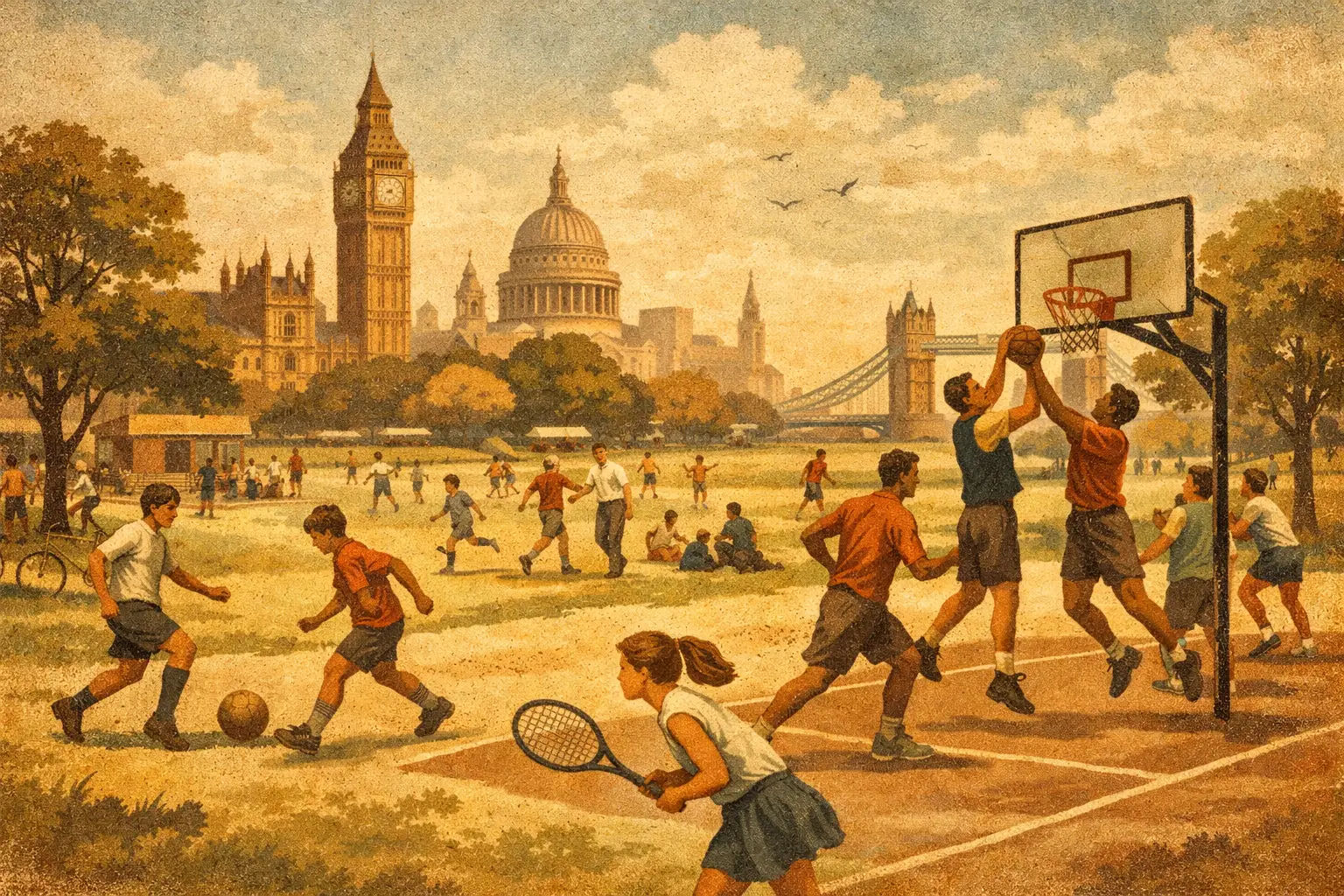
A cancelled five-a-side pitch booking. A tennis court with one player waiting for an opponent. A basketball hoop where everyone arrived with friends and nobody knows how to join in. These are familiar London problems, and they show why London sports communities need more than great venues. They need easier ways for people to turn spare time into actual play.
The capital has extraordinary sporting energy, from after-work football in Shoreditch to early-morning runs along the Thames. Yet plenty of people still sit out. They may be new to an area, returning after an injury, travelling for work, or simply bored of sending messages that never become a fixture. The barrier is rarely motivation. It is coordination.
The strongest communities solve that problem without making sport feel exclusive, over-organised or reserved for the already confident.
London sports communities start with a low-stakes yes
Joining an established club can be brilliant, but it is not the right first move for everyone. League registrations, fixed training nights and a room full of people who already know one another can feel like a lot when you just want to hit a few balls, play a friendly game or see whether a sport is for you.
Open play creates a better entrance. A clear invitation - mixed ability, one hour, bring trainers, everyone welcome - gives people permission to show up. That matters for newcomers as much as experienced players. The person who has played football for years may want a competitive match; the person trying padel for the first time may need a patient partner. Both belong in the same wider community, provided expectations are clear.
This is where organisers earn trust. Say what the session is, who it suits and what people need to bring. If it is competitive, say so. If it is social and beginner-friendly, say that too. Ambiguity leads to no-shows, awkward mismatches and people deciding that the scene is not for them.
A good event description is not admin. It is the first piece of community-building.
Make the venue part of the crew
London is full of places to play, but availability and access vary wildly. One area has a leisure centre, a public court and a park within walking distance. Another relies on expensive private bookings, long journeys or a mate who knows someone. That makes venue knowledge valuable social currency.
The best local groups share it. They know which floodlit pitches are worth booking, when the free courts are busiest, whether the changing rooms are usable and which venue works for a post-game drink. They also understand the practical details that can derail a session: travel time, late opening, equipment hire, weather plans and the exact meeting point inside a large park.
Venues benefit when regular players feel ownership too. A community that books reliably, respects the space and brings new people through the door is more likely to sustain itself. Players should rate facilities honestly, flag useful details and celebrate the places that make participation easier. That creates a living local map, rather than another forgotten list of addresses.
It also helps people play beyond their usual postcode. A student moving to London for term, a young professional changing flats, or someone visiting for a weekend should not have to start from zero. Sport is one of the quickest ways to learn a city because it puts you in the same place, at the same time, with people who already share an interest.
Build routines, not one-off attendance
A packed first event is encouraging. A group that still plays six weeks later is a community.
That difference comes down to rhythm. Weekly basketball on a Wednesday evening, a Sunday morning run, fortnightly tennis doubles or a monthly women’s football session gives people something concrete to protect in their diary. Routine reduces the effort of deciding. Instead of asking, “Should I do something active this week?”, players know where they are meant to be.
There is a trade-off. Fixed sessions can exclude people with changing shifts, childcare or irregular work hours. Open pickup events keep the door wider, especially in a city where schedules move fast. The answer is not choosing one model forever. A strong group usually has an anchor session people can rely on, alongside flexible games for those who can join at short notice.
Social accountability does the rest. It is easier to skip a solo gym visit than a game where seven people are expecting you. That is not pressure for its own sake. It is the useful kind of commitment: somebody notices when you improve, asks where you were last week and saves you a place next time.
Competition works best when it stays welcoming
London players are competitive. That is part of the fun. A direct challenge can turn a casual tennis hit into a proper rematch, while teams and leagues give a season structure, rivalries and a reason to keep improving.
But competition has to be matched to the room. A hard-fought five-a-side game is brilliant when everyone has opted into that intensity. It is miserable when a beginner arrives expecting a relaxed kickabout and gets blamed for every misplaced pass. Communities grow when people can see the level before they commit.
Use divisions, ability tags or separate social and competitive sessions where demand allows. Let teams form naturally, but avoid cliques that make every newcomer feel like a substitute. Rotate sides in open games. Introduce people by name. Give first-timers an obvious way to return.
Recognition helps as well. Stats, goals, trophies and achievements can make progress visible beyond winning. A player who has attended ten sessions, organised their first event or improved their personal best has contributed something real. For many people, that small signal is the nudge that turns occasional play into a habit.
Ratings and post-game feedback need care. Used well, they encourage reliability, fairness and good sportsmanship. Used badly, they can make recreational sport feel like an audition. Keep feedback specific and respectful, and remember that a great teammate is not always the person with the sharpest technique.
One network should not force one sporting identity
People do not live in single-sport boxes. The person playing basketball on Tuesday may run on Thursday, try climbing at the weekend and want a casual badminton game when the weather is miserable. Fragmenting every activity into a separate group makes discovery harder and weakens the connections that keep people active.
That is why an all-sports network has real potential. Crewters brings venues, pickup events, challenges, teams and leagues into one place across 122 sports, so your sporting life does not have to be rebuilt every time you try something new. You can find a crew for your main sport and still follow the curiosity that gets you onto a different court, pitch or trail.
For organisers, this matters too. Someone who joins a social volleyball event may be exactly the person needed for a midweek running group. Cross-pollination makes local communities more resilient. If one regular session pauses for winter, venue works or low numbers, the relationships do not disappear with it.
Let members shape what happens next
The best sports communities are not broadcast channels where one organiser does all the work. They are built by members who suggest formats, invite friends, share venue knowledge and say when something is not working.
Ask practical questions. Is the start time too early? Do people want mixed doubles or singles? Would a smaller pitch produce better games? Is there demand for a beginners’ session? These choices seem minor, but they decide whether people feel the group is theirs.
Technology can make this participation visible. Players should be able to create an event when they spot a gap, challenge another crew, form a team and vote for what they want improved. The goal is not to replace the human side of sport with screens. It is to remove the boring friction between wanting to play and having a confirmed game.
If you are starting a group, begin smaller than you think. Get six reliable people for a repeatable session before chasing a crowd of fifty. If you are joining one, do more than attend once: introduce yourself, respond promptly and offer the next invitation. Communities are built by the second message, the rematch and the person who says, “Same time next week?”
London does not need more people saying they should play sport. It needs more open doors, clearer invitations and crews willing to make the first move. Find your people, make the booking, and leave room for the next player to join — or start on Crewters.