
How to Find Sports Partners in Islington (2026)
September 5, 2026 · Chris Palmer
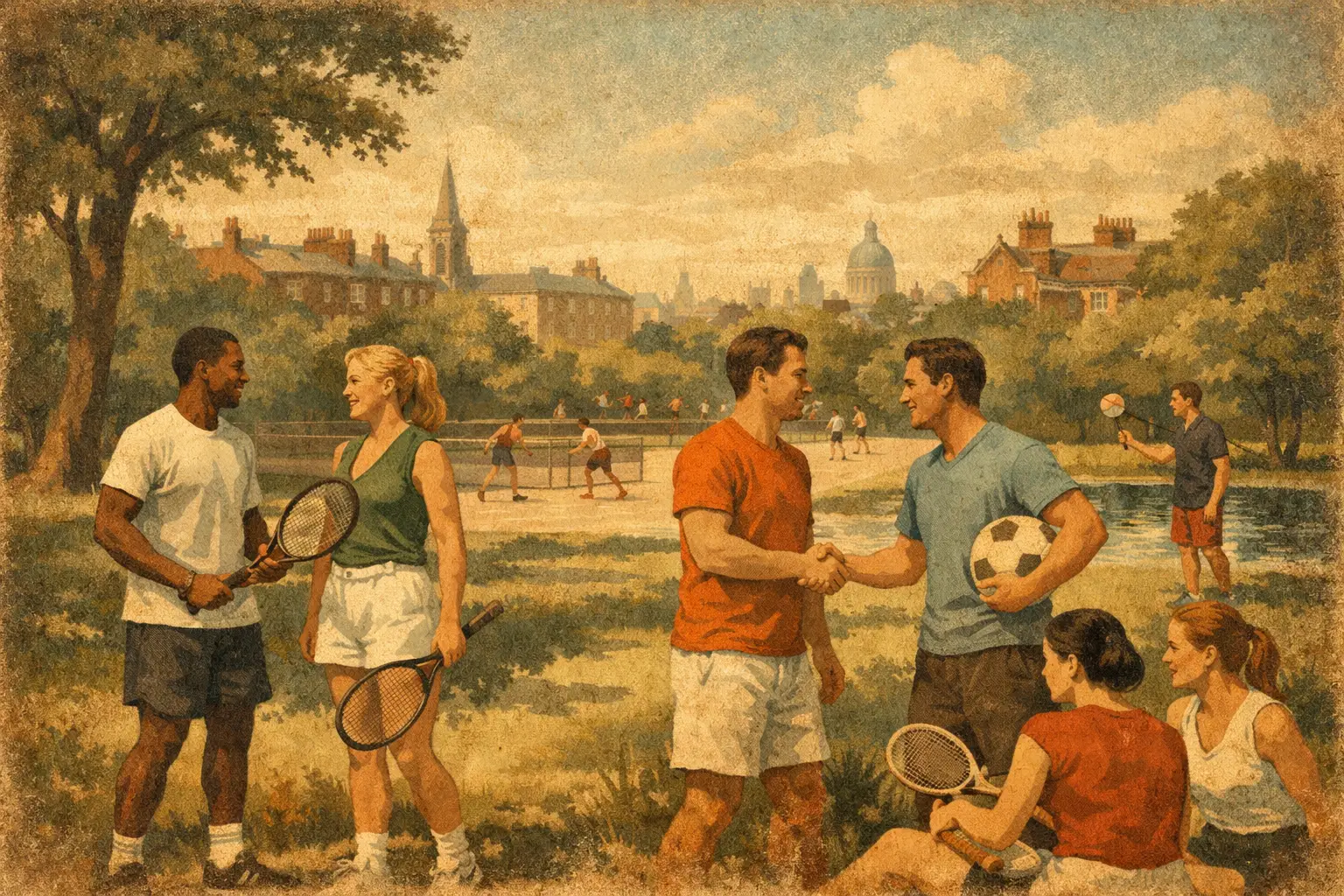
A free court at Highbury Fields can be the hardest part of the plan. The second hardest is finding someone who will actually turn up. If you are searching for how to find sports partners in Islington (2026 guide), the answer is not to post once, wait for a perfect squad and give up. It is to make playing easy to say yes to, visible to the right people and regular enough that strangers become your crew.
Islington has dense neighbourhoods, good transport links and no shortage of active people. What it does not always have is a ready-made group at your exact level, available at your exact time, for your exact sport. A better approach is to build momentum through venues, repeat sessions and straightforward invitations.
How to find sports partners in Islington: start where play happens
The fastest way to meet players is to spend time around the places where your sport already happens. For football, that could mean local pitches and five-a-side centres. For tennis, basketball or running, it may be public courts, parks, leisure centres and informal training groups. Highbury Fields, Market Road and local leisure facilities can be useful starting points, but check current booking rules and availability before setting plans.
Do not arrive with the vague question, “Does anyone want to play sometime?” Make a specific offer. “I’m looking for two intermediate players for tennis on Thursday at 7pm” is much easier to answer. People are busy, and specificity removes the work of organising from their side.
The same principle applies after a game. If someone is a good fit - they communicate, show up, play fairly and match the pace - ask whether they want to be included next time. One decent conversation after a session is more valuable than dozens of silent follows in a group chat.
Choose the right level before you choose the sport
A common reason pickup plans fall apart is not lack of interest. It is a mismatch in expectations. Someone seeking a relaxed kickabout may not enjoy a highly competitive game where everyone tracks scores and argues over every call. A beginner trying a new sport needs encouragement, not an audition for a league side.
State the level in plain language: beginner-friendly, social, regular recreational, intermediate, competitive or training-focused. Add the session format too. Is it 60 minutes of drills, a casual doubles rotation, a 5v5 match, or a long run with coffee afterwards? Clear expectations attract better partners and make first sessions less awkward.
Turn one-off interest into a weekly fixture
The best sports partner is rarely the most talented person you meet. It is the person who can reliably play at a time that works. That is why a repeating slot beats endless availability polls.
Pick one realistic time each week, ideally close to work, university or home. A Wednesday evening football game, a Saturday morning run or a Sunday afternoon basketball shootaround gives people something concrete to join. If the group is new, keep the first sessions small. Two people for tennis, four for badminton and six to ten for small-sided football are enough to create energy without making organisation painful.
Consistency also solves the attendance problem over time. Not everyone can make every week, but a regular fixture develops a pool of players. Start with four names, and you may soon have eight regulars, a few occasional players and enough cover for late cancellations.
A useful organiser habit is to confirm early and close sign-ups before the session. Ask players to commit by a sensible deadline, particularly where a booked court or pitch costs money. Be direct about payment, cancellation and what happens if numbers drop. It may sound formal for a casual game, but clarity protects the fun.
Use digital tools without making it feel like admin
Local social groups can work well, especially for broad discovery, but they often become noisy and unreliable. A dedicated sports network is more useful when it lets you see the activity, location, level and time before you join. That is the difference between scrolling through vague messages and finding a game you can genuinely attend.
Crewters is built around that practical moment: discover venues, create or join pickup events, challenge another player, find teams and progress through stats, trophies and achievements. It supports 122 sports, which matters if your usual game is not one of the obvious choices or if you want to try something new with people who are also starting out.
Use any platform thoughtfully. A good event post includes the sport, exact venue area, start and finish time, expected level, cost if there is one, and how many spaces remain. Add one line on the atmosphere: “social doubles, rotating pairs” or “competitive 5v5, bring a dark and light top”. That short description filters out confusion before it reaches the court.
If you are an early adopter who likes building as much as playing, give feedback on what would make organising easier. Better sports communities are not made by an app alone. They are made by players who say what is missing, test new ideas and bring their mates into the next session.
Make the first game comfortable for new people
Joining established groups can feel intimidating, especially in a borough where many players already have friends, former teammates or work colleagues. If you are creating the session, you set the tone.
Welcome new players when they arrive. Explain the format in a sentence or two, introduce people by name and make sure teams are balanced. For competitive games, agree the rules before play starts - score limits, substitutions, late arrivals and whether the match is social or serious. These small decisions prevent the kind of friction that makes someone decide not to come back.
For individual sports, create a simple rotation. In tennis or padel, mix partners rather than letting the strongest two players pair up all evening. In running, publish the distance and pace range, then make it clear whether anyone will wait at turns. In basketball, rotate teams after a set number of points so nobody spends half the session standing at the side.
There is a trade-off here. Open sessions create more opportunities for newcomers, but they can be less consistent in quality. Invite-only groups are easier to manage, but they can become cliquey. A smart middle ground is to run an open session once or twice a month while keeping a regular core group for dependable games.
Build trust after the final whistle
Your follow-up message is part of the game. Send it while the session is still fresh: thank people for coming, share the next time and ask one simple question such as, “Same slot next week?” Avoid writing a long recap or opening five separate polls. People respond to momentum.
If someone cancels late, do not make it personal. Life happens. Notice patterns instead. Players who communicate early are usually worth keeping in the group, even if their schedule is uneven. Players who repeatedly disappear without a message make planning harder, so stop building the session around them.
Ratings, match results and personal progress can add motivation when used in the right spirit. Track scores if your group enjoys competition, celebrate a first win or a fitness milestone, and keep the banter fair. The aim is accountability, not making casual players feel like they have failed a trial.
A practical first-week plan
Give yourself one week to get a game on the calendar rather than waiting until you have the ideal group. Start by choosing a sport and a venue area you can reach easily. Then set one date and a realistic number of spaces. Share the plan in the places where local players already look, and invite one person directly instead of relying entirely on a public post.
On game day, arrive early, bring the essentials and be the person who makes introductions. Afterward, save the names of players you would gladly play with again and propose the next session before the chat goes quiet. That is how an occasional plan becomes a regular habit.
Your next sports partner in Islington may be a future teammate, rival, training buddy or organiser. Give them a clear invitation, make the first game easy to join, and keep showing up. The crew is built one fixture at a time.