
A Practical Guide to Team Captains Who Lead
November 6, 2026 · Chris Palmer
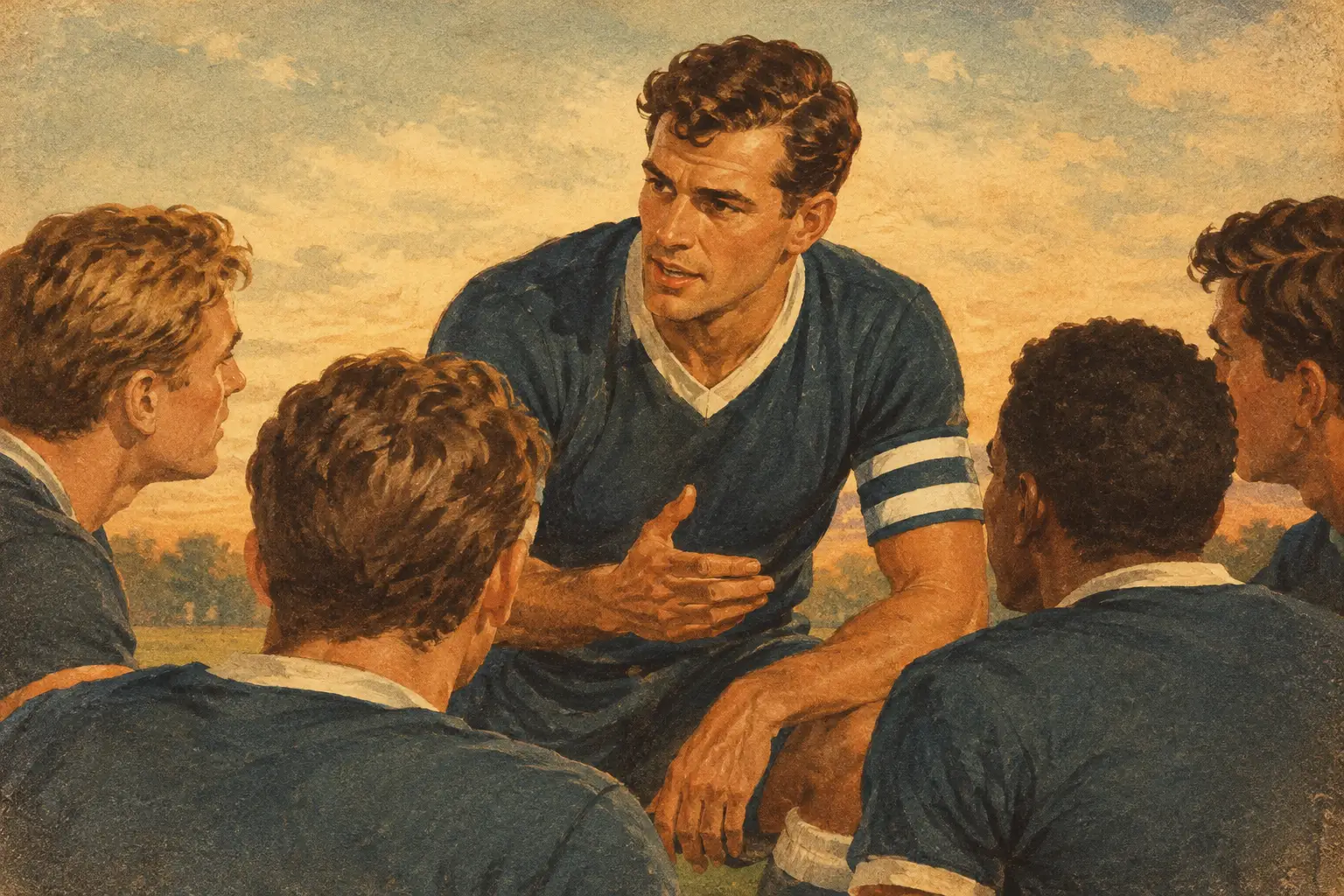
A captain is often the reason a promising side becomes a team that actually turns up, improves and enjoys competing together. This guide to team captains is for the player who has been handed the armband, volunteered to organise the group chat, or wants to lead without becoming everyone’s unpaid assistant.
The job is bigger than winning the toss or giving a loud team talk. A great captain creates clarity before a game, calm during it and connection after it. That matters whether you play five-a-side after work, organise a university basketball crew or lead a tennis team through a local league.
What a team captain is really responsible for
Captains are not miniature managers, and they do not need to be the best player on the pitch or court. Their real role is to make it easier for the team to perform together. They set the standard for effort, communication and respect, while helping everyone understand what happens next.
In recreational sport, the practical side can be substantial. Someone needs to confirm availability, sort the venue, welcome new players and make sure no one is left guessing whether the game is on. In competitive leagues, captains may also handle officials, substitutions, tactics and fixture details. The balance depends on the sport and level, but the principle stays the same: remove friction so the team can focus on playing.
That does not mean doing every task alone. Captains who try to carry everything usually burn out, then start resenting teammates for not reading their minds. Share jobs early. Ask one person to track availability, another to bring kit, and a reliable player to step in if you cannot attend. Leadership is not heroic overwork. It is building a group that can function without constant chasing.
A guide to team captains starts with the right standard
Your standard is what the team sees you do repeatedly, not the speech you give once. If you ask teammates to arrive ten minutes early but stroll in at kick-off, the instruction has no weight. If you complain to the referee after demanding discipline, you have made the team’s real rule obvious.
Be specific about the basics from the first session. Confirm when players should arrive, how late cancellations are handled, whether everyone gets equal time, and what good communication looks like. A casual side may simply agree that anyone dropping out on the day must help find a replacement. A league team may expect committed training and clear notice for absences. Neither approach is automatically better. Problems start when expectations are assumed rather than agreed.
The best standards are firm without turning social sport into military camp. People have work, studies, family commitments and bad weeks. Hold the line on respect and reliability, then leave room for real life. A player who misses one match after giving notice needs a different response from someone who repeatedly vanishes an hour before kick-off.
Select for trust, not just talent
When choosing a captain, teams often default to the strongest player. Skill helps, especially when someone can demonstrate the right decision under pressure, but it is not enough. Look for a person who communicates clearly, knows the group, keeps their head after a setback and follows through on small promises.
A quieter captain can be excellent. Some players lead through preparation, one-to-one check-ins and well-timed comments rather than volume. Equally, a naturally vocal player can energise a group if they listen as well as speak. The key question is simple: when the game gets messy, do people trust this person to make it clearer?
Build communication that people will actually use
Most team tension begins off the field. A vague message asking, “Who’s about?” creates uncertainty. A clear message saying, “Tuesday, 7pm, Riverside Sports Centre, reply by Sunday evening,” gets decisions. Captains should make the next action obvious and set a deadline before the panic begins.
Keep match communication short and consistent. Players need the time, location, cost if relevant, kit colour and expected arrival time. For a competitive fixture, add the opposition, format and any tactical focus worth knowing beforehand. Save long tactical discussions for a team meeting or pre-game huddle. Group chats are poor places for arguments and even worse places for paragraphs no one reads.
For teams that play often, use one dependable place to organise events and attendance rather than scattering details across several chats. Crewters can help players create games, bring a crew together, track activity and keep the route from “we should play” to “we have a game” much shorter.
Communication also means checking in beyond logistics. If a regular suddenly stops coming, a simple private message works better than calling them out publicly. They may be injured, short of money, overloaded at work or simply unsure whether they still fit the group. Captains build retention by making people feel noticed, not monitored.
Lead on matchday without trying to control everything
Before the game, give the team one or two priorities. “Keep our shape when we lose the ball” is useful. “Play better” is not. The target should be memorable enough to survive the first fast break, missed chance or disputed call.
During play, captains need to manage emotion as much as tactics. If your team is rattled, slow the moment down: get people talking, reset positions and focus on the next phase. If someone makes an error, respond with useful information or encouragement. Shouting blame may feel satisfying for three seconds, but it makes teammates hide from the ball afterwards.
There are times to be direct. If effort drops, if a player is disrespectful, or if a tactic is clearly failing, say so. The difference is that good captains address the behaviour rather than attacking the person. “Track your runner on the next one” gives a player a route back into the game. “You’re useless” gives them nothing.
When speaking to officials or opponents, be the team’s pressure valve. Ask questions calmly, make your point once and move on. Not every call will go your way. Your reaction teaches newer players how far they can take their own frustration. Protect the team’s reputation, especially in local leagues where you will meet the same people again.
Make substitutions and roles feel fair
Fair does not always mean identical. In a casual session, equal playing time may be the clearest and most inclusive approach. In a knockout match or a high-level league fixture, you may need to make decisions based on form, fitness and the game situation. Be honest about which environment your team is entering before the match starts.
Explain roles in advance wherever possible. A player can accept a smaller role more easily when they understand the reason and know what is expected of them. Avoid promising everyone the same minutes if you cannot deliver that promise. False certainty causes more friction than a straightforward conversation.
Turn results into progress, not drama
After a win, give credit widely. The scorer may get the highlight, but the player who covered a position, organised the defence or kept morale up may have made the result possible. Recognition changes what the group values.
After a loss, do not launch into a forensic review while everyone is still annoyed. Start with one thing the team did well, then name one practical change for next time. Keep it collective unless a private conversation is genuinely needed. Public criticism can be necessary for serious standards issues, but it should be rare and factual, never performative.
Stats, clips and player ratings can support development when used carefully. They are useful for spotting patterns, setting goals and celebrating improvement. They become harmful when teammates use them as ammunition. The captain sets the culture: data is there to help the crew get better, not to rank people’s worth.
Create a team people want to come back to
The strongest teams have a competitive edge and room for people to belong. Welcome new players properly. Introduce them, explain the format, give them a simple role and avoid leaving them on the fringe while established mates run the game. A newcomer who touches the ball, receives encouragement and knows when the next session is happening is far more likely to return.
Make space for different motivations too. One teammate may be chasing promotion, another may be rebuilding fitness, and another may just need a reliable hour of sport after a long week. You do not have to lower standards to include all three. You just need to be clear about the team’s purpose and create ways for people to contribute.
A captain’s best legacy is not a perfect record. It is a crew that communicates, competes hard and still wants to book the next game together. Set the standard, share the responsibility and give people a reason to feel that this is their team too.