
A Guide to Sports Event Safety for Every Crew
October 23, 2026 · Chris Palmer
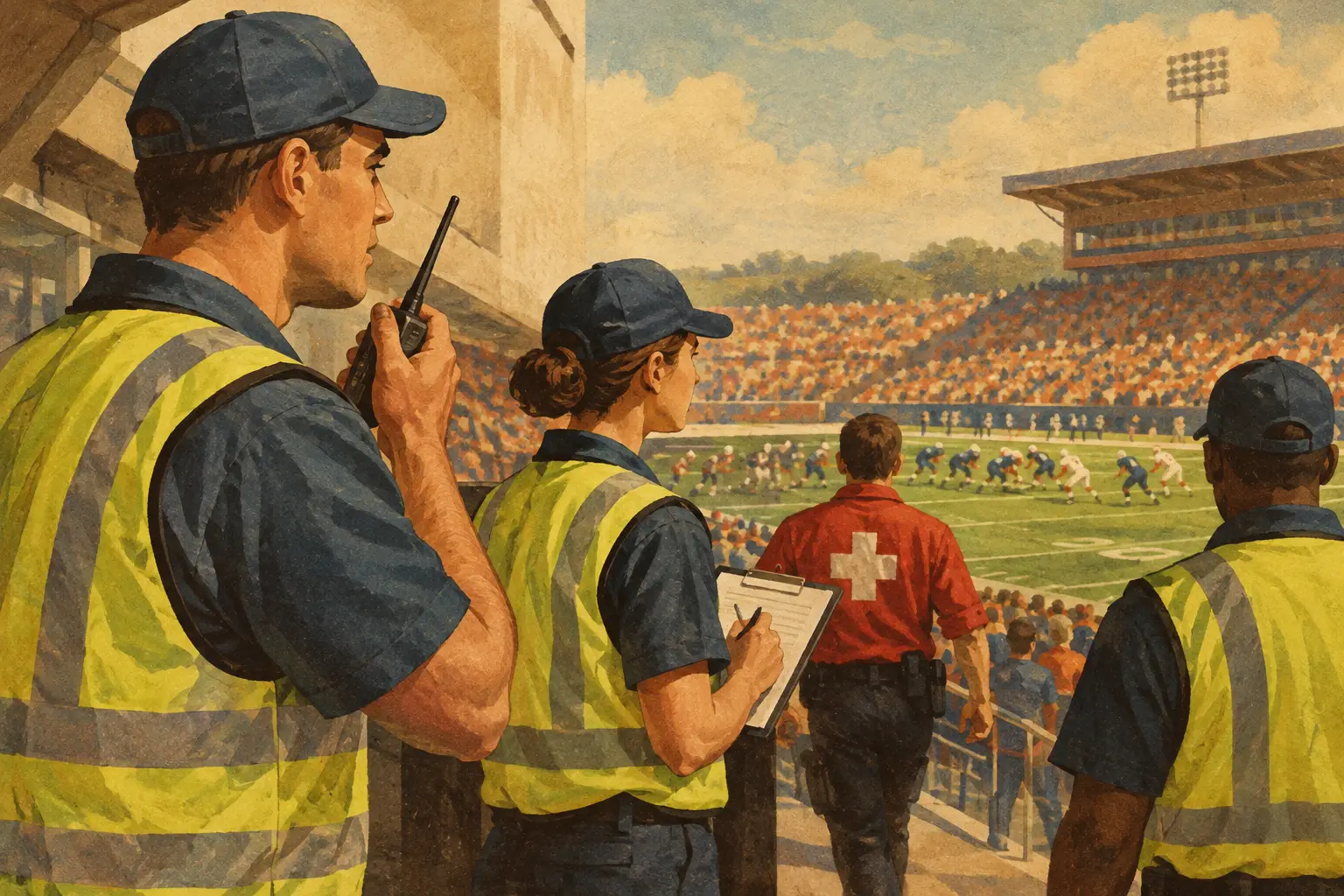
A last-minute five-a-side game can be the best part of someone’s week - until a slippery surface, unclear rules or one bad tackle turns it into a problem. This guide to sports event safety is for the people who create, host and join games: the mate booking the court, the organiser filling a team, and the player turning up to a new venue for the first time.
Good safety does not make casual sport feel formal or over-managed. It removes the avoidable friction that stops people playing again. When everyone knows where to go, what standard of play to expect and what happens if something goes wrong, the game feels more welcoming, competitive and worth returning to.
Start with the venue, not the fixture
The venue sets the floor for everything else. Before confirming an event, check that the playing area is suitable for the sport, the group size and the expected conditions. A damp outdoor tennis court, a poorly lit basketball court or a football pitch with exposed holes can turn a normal session into an unnecessary injury risk.
Arrive early enough to make a quick visual check. Look for wet patches, loose goals, damaged nets, broken glass, poor lighting, blocked exits and anything that could affect play. For indoor sessions, notice whether the floor is dusty or slippery. For outdoor events, check the forecast and decide in advance what conditions mean the event will be cancelled, delayed or moved.
Do not assume a venue’s booking confirmation means every surface is ready for play. Most are well run, but conditions change. If something looks unsafe, raise it with venue staff and be prepared to call the game off. Losing an hour of sport is frustrating. Asking someone to risk a serious injury to save a booking is not competitive spirit.
Make arrival details easy to find
Safety begins before the first whistle. Players should know the exact venue, meeting point, start time, parking or public transport options, changing arrangements and what equipment to bring. If a sports centre has multiple entrances or pitches, say which one.
This matters even more for pickup events where people may not know each other. Clear information prevents players wandering around unfamiliar grounds, arriving late and rushing straight into high-intensity play without warming up. It also makes it easier for someone to leave safely if they need to.
Set the standard of play before people turn up
A friendly game can still be serious. The issue is not whether players compete - it is whether everyone has agreed on what competitive means for this session.
State the sport, format, ability level and contact expectations clearly. A mixed-ability social basketball run needs different boundaries from a high-level football match between established teams. If sliding tackles, hard screens, physical challenges or aggressive serving are not appropriate, say so before the event begins rather than debating it after someone gets hurt.
A simple pre-game briefing works well: introduce the organiser, confirm the format, point out any hazards, agree the rules and remind everyone that reckless conduct ends with a player sitting out or leaving. Keep it direct. You are not delivering a lecture; you are protecting the session for everyone.
Fairness is part of safety too. Rotate substitutes where possible, avoid putting complete beginners into mismatched contests, and adapt teams if one side is being overwhelmed. A 12-0 scoreline can encourage desperate tackles, arguments and players who never come back. Competitive balance keeps energy high without making the game hostile.
Bring the right people and the right equipment
Not every event needs a full kit bag and a clipboard. Every event does need enough preparation for its risk level. A casual badminton session in a staffed leisure centre requires less planning than a remote trail run or a contact rugby training session. The principle is simple: match your preparation to the activity, venue and people involved.
For most organised community games, make sure there is a charged mobile phone, access to a basic first-aid kit, drinking water, a way to contact venue staff and a clear understanding of the site address. If you are using goals, check they are secure. If players need shin pads, mouthguards, helmets or other protective equipment, make that expectation explicit when the event is created.
Players have responsibilities too. Wear footwear that suits the surface, avoid playing through a significant injury, bring water, and tell the organiser about any relevant medical issue if they are comfortable doing so. Nobody needs to share private details with a whole group. The organiser simply needs enough information to respond properly in an emergency.
Do not treat warm-ups as optional
The fastest way to lose a player for weeks is to go from sitting on the bus to a full sprint. Build in ten minutes for a warm-up, especially for football, basketball, tennis and any event involving acceleration, jumping or sudden changes of direction.
The best warm-up reflects the activity. Start with light movement, then add mobility and sport-specific actions at an increasing pace. Save long static stretches for after play if they suit the individual. The aim is not to make people tired before the game. It is to prepare muscles, joints and reactions for the demands ahead.
Have a calm plan for injuries and emergencies
When someone goes down, the group takes its cue from the organiser. Stay calm, stop play and give the injured person space. Do not rush to move them, especially after a head impact, neck pain, severe pain or a suspected fracture. Ask whether they are okay, contact venue staff or emergency services when needed, and keep other players from crowding around.
Head injuries deserve particular care. A player who has taken a blow to the head, seems confused, has a headache, feels sick, is unusually drowsy or reports visual changes should stop playing. Do not let scorelines, team shortages or personal determination overrule that decision. If in doubt, they should not return to the session and should get appropriate medical advice.
It also helps to nominate one person to make calls and another to meet staff or emergency responders at the entrance. In a busy sports complex, those small roles save time. After the immediate situation is handled, record what happened while details are fresh. Keep it factual: time, location, incident, action taken and any relevant follow-up.
Build a culture that stops problems early
Most sports-event issues are not freak accidents. They are predictable moments that escalate because nobody steps in: a player repeatedly fouling, an argument over a call, someone filming others without agreement, or a teammate being mocked for their ability.
Set a clear line: respect opponents, teammates, officials and venue staff. No abuse, intimidation, discrimination or unwanted physical contact. That should apply in the group chat, on the sidelines and after the final point. A strong community does not ignore poor behaviour because the player happens to be talented or brings numbers to the event.
Organisers should act early and privately where possible. A quick word after a reckless challenge may be enough. If behaviour continues, pause play, change teams or ask the person to leave. It depends on the seriousness of the incident, but consistency matters. People need to trust that the rules apply to everyone.
For younger players, safeguarding needs extra attention. Confirm who is responsible for supervision, avoid one-to-one situations that could place either adult or child in an uncomfortable position, and make sure parents or guardians understand timings, collection arrangements and any changes. If something does not feel right, do not brush it off.
Use the event format to make safety social
The best safety systems are built into how people play together. Ask players to confirm attendance so you know who is expected. Share updates early if weather or venue conditions change. Encourage players to flag injuries, low numbers or concerns without feeling like they are letting the group down.
Crewters is built around that same idea: finding your crew should make sport easier to join, not harder to navigate. Whether you are creating a casual event, challenging friends or building a team for league play, clear expectations give every player a better chance to compete with confidence.
Ratings and post-game feedback can also shape better behaviour when used fairly. Focus on reliability, sportsmanship and communication, not just who scored the most. The player who welcomes a newcomer, calls out a hazard and helps an injured opponent may be doing more for your local sports community than the top scorer.
Make the safe choice the normal choice
A great event is not one where nothing unexpected happens. It is one where the group knows how to respond, nobody feels pressured to take a foolish risk, and every player leaves feeling respected. That is how casual games become regular fixtures, strangers become teammates and a local sports community earns people’s trust.
Set the standard before the match starts, back each other when decisions are difficult, and keep building the kind of game you would be proud to invite someone new into.