
Gamification in Sports That Gets People Playing
September 2, 2026 · Chris Palmer
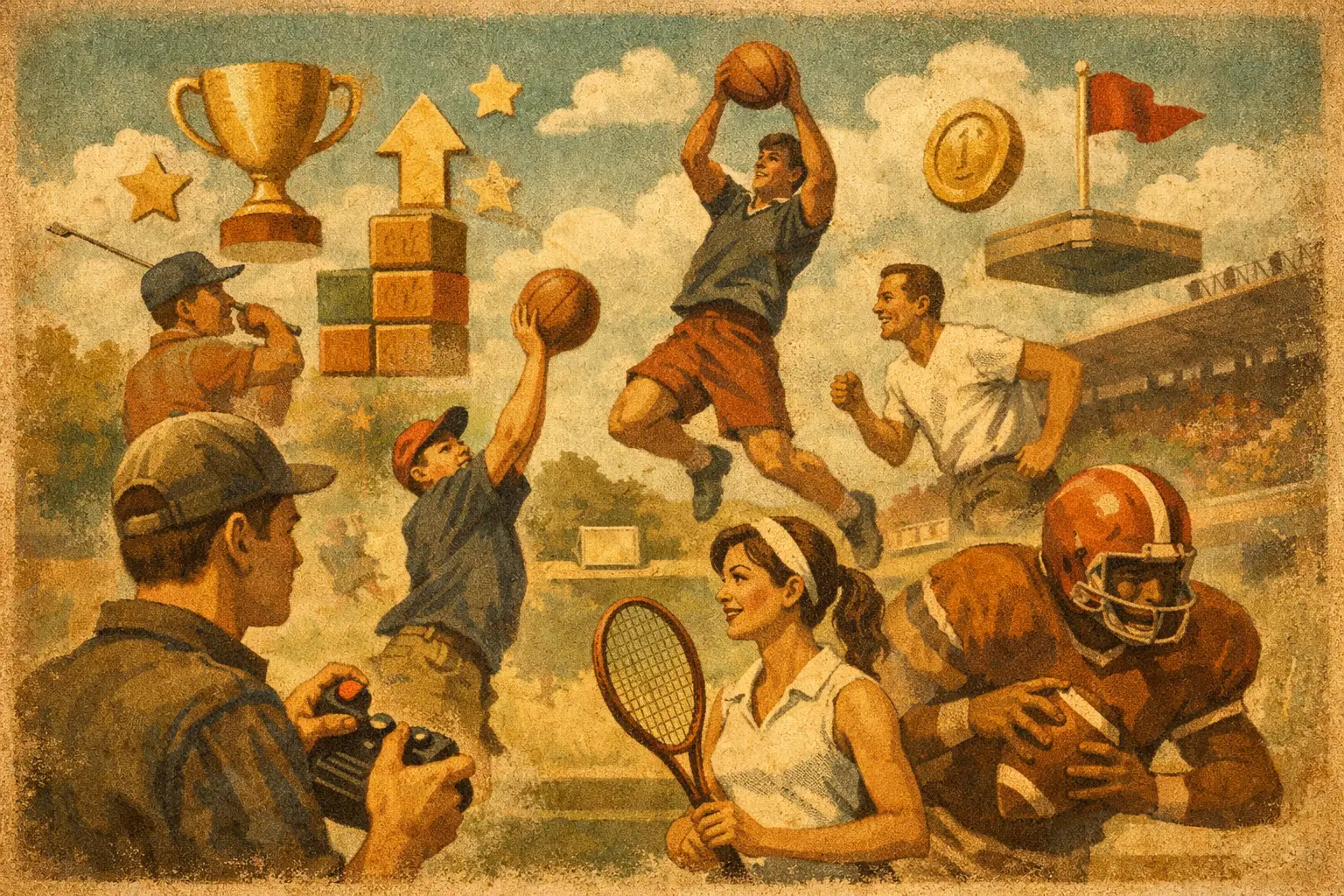
A five-a-side group chat can be full of good intentions on Monday and completely silent by Thursday. The difference between “we should play soon” and a regular weekly game is often not talent, facilities or even free time. It is momentum. Gamification in sports gives that momentum a shape: a visible next goal, a reason to show up, and recognition when you do.
For recreational players, this is not about turning every kickabout into a professional contract. It is about making participation feel rewarding from the first session onwards. A new player who joins a social tennis game, a basketball regular chasing a personal best, and a team building towards a local league all need different things. Smart game mechanics can support each of them without making sport feel like homework.
Why gamification in sports works
Sport already contains the raw material of a great game: challenge, progress, teamwork, rivalry and a clear outcome. Gamification simply makes more of that progress visible between the final whistle and the next fixture.
A scoreline gives instant feedback, but it rarely tells the full story. Maybe your football side lost, yet you completed your first full 90 minutes. Maybe you did not win your badminton match, but you played three times this month after months away. Stats, streaks, milestones and achievements give people credit for the behaviour that builds a sporting habit, not only the result.
That matters because most people are not driven by one thing. Some want to compete. Others want an easy route into a new community. Plenty want the social accountability of knowing their crew expects them at the court at 7pm. A well-designed system gives each motivation a place.
The payoff is bigger than screen time. When participation is recognised, players are more likely to create an event, accept a challenge, invite someone new, return to a venue and eventually take responsibility for organising others. That is how a one-off session becomes a real sports community.
The mechanics that actually get players moving
Not every badge is meaningful. A random digital trophy for opening an app five days in a row may create a brief spike, but it does nothing for someone trying to find a reliable game. The strongest mechanics are tied directly to real sporting action.
Goals make progress personal
Goals turn a vague ambition into a commitment with a finish line. “Play twice this week”, “try three new venues this month” or “join your first team” are useful because they are within a player’s control. They work especially well for newcomers, who may not be ready to judge themselves against experienced opponents.
The key is choice. One player may care about improving a serve percentage; another may simply be rebuilding the confidence to turn up after work. Let people set targets that match where they are now, then celebrate the effort when they reach them.
Stats give effort a memory
Most casual players do not need a spreadsheet after every game. They do, however, value a simple record of their activity and improvement. Matches played, events joined, wins, assists, attendance and personal milestones can make progress tangible.
Stats should add context rather than create anxiety. In a pickup game, tracking who attended and who was a good teammate may be more useful than obsessing over a single performance metric. In a league, results and team records naturally carry more weight. It depends on the sport and the setting.
Trophies reward the right behaviours
Achievements are powerful when they mark a real moment: completing a first challenge, bringing a new player to an event, joining a team, playing across different sports, or being recognised as a dependable organiser. These milestones say, “you belong here and your contribution counted”.
They can also encourage healthier communities. Reward respectful ratings, fair play, consistent attendance and helping fill an event, not only scoring the most points. The person who makes a mixed-ability session welcoming is often as valuable as the person who wins it.
Challenges create friendly pressure
A direct challenge has energy because it is specific. It says: you, me, this sport, this time. For friends, it turns a loose plan into a fixture. For players who have just met through a community, it creates a low-friction way to play again.
Keep the stakes light enough for the context. A tennis ladder challenge can suit competitive players, while a first-to-10 basketball shootout may be a better entry point for a casual group. The best challenges invite action, not intimidation.
Competition needs fairness, not just rankings
Leaderboards can be brilliant. They can also make a platform feel like a private club for people who already play four times a week. If only the same highly active players are visible, everyone else may conclude that they are too far behind to bother.
A better approach is to offer several ways to be recognised. There can be league tables for teams that want them, alongside local activity milestones, newcomer achievements, improvement goals and community awards. Players should be able to find a competition that makes sense for their level.
This is particularly relevant across 122 sports. A weekly five-a-side player and someone taking their first climbing session should not be measured by the same standard. Participation is the shared signal. The mechanics around it need to respect each sport’s culture, access and learning curve.
Ratings require care too. Peer feedback can help players find reliable opponents and better sessions, but it must not become a popularity contest. Clear standards matter: punctuality, sportsmanship, communication and respect are more useful than vague judgement. Give players a fair way to build trust over time, and design feedback to improve future games rather than punish a bad day.
Build a loop around real-world play
The most effective gamification starts before the match and continues afterwards. A player discovers a venue, joins an event, meets a crew, plays, records the result or experience, earns progress and receives a reason to return. Each part should make the next part easier.
For organisers, that loop is even more important. Filling a game can take effort, especially when several people drop out at the last minute. Recognising reliable hosts and rewarding people who invite others helps share that workload. It also signals that communities are not built by an app alone. They are built by the people who make space for others to play.
Crewters is being built around that reality: events, direct challenges, teams, leagues, stats and trophies are not separate gimmicks. They are connected ways to move from “I fancy a game” to a regular sporting routine with people you know. Players can help decide what comes next too, because the people arranging games understand the friction better than anyone.
Avoid turning sport into another chore
There is a line between motivation and manipulation. Endless notifications, arbitrary points and punishing broken streaks can make sport feel like another app demanding attention. Real life gets busy. People get injured, travel, work late or need a week off. A system that treats a missed session as failure is likely to lose the people who need encouragement most.
Good design leaves room for pauses and comebacks. Instead of shaming someone for losing a streak, welcome them back with a realistic goal. Instead of only rewarding volume, recognise consistency at the level a player can sustain. A person who plays once a fortnight for six months has built something meaningful.
Privacy is part of the same conversation. Players should understand what data is being tracked, what is public and how ratings work. Competitive features earn trust when the rules are clear. If a statistic or ranking affects how people are treated in a community, it needs to be accurate, explainable and easy to challenge when something is wrong.
Make the next game the reward
The best test of gamification is simple: does it help someone play more, feel more connected and see their own progress? If the answer is yes, the points and trophies have done their job. If it only keeps people tapping a screen, it has missed the point.
Start with the behaviour your community needs most. It might be first-time event joins, reliable attendance, team formation or welcoming new players. Reward that behaviour visibly, keep competition fair, and listen when players tell you what feels motivating versus forced. Then keep building with the people on the court, pitch, track and gym floor. Their next game is the one worth designing for.