
A Gamification Case Study for Sports Communities
November 20, 2026 · Chris Palmer
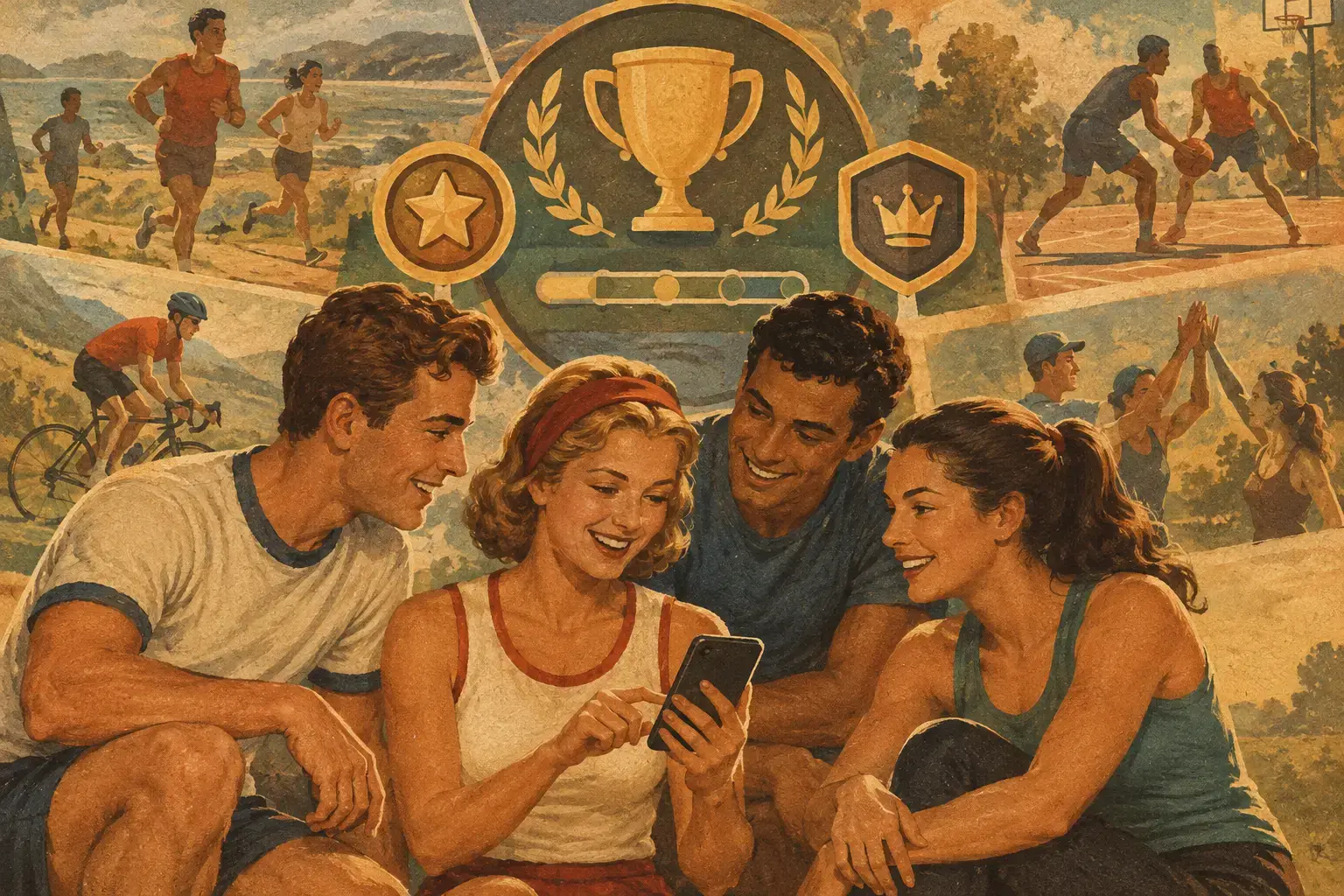
A player downloads a sports app because they want a game this week. They stay when the app gives that game meaning next week. That is the real lesson behind any useful gamification case study: points and badges are not the product. A stronger reason to show up is.
For community sports, the challenge is bigger than getting a tap or a sign-up. People need to leave the sofa, coordinate with strangers, travel to a venue, and play. A good gamification system respects that effort. It makes participation visible, turns improvement into something players can track, and gives every match a small reason to matter.
What this gamification case study reveals
The best sports gamification does not treat every action as equal. Signing in should not earn the same recognition as organising a five-a-side match, welcoming a newcomer, completing a challenge, or returning after a difficult loss. If rewards feel disconnected from real effort, they become background noise fast.
A better model starts with the behaviour a community needs more of. For a sports network, that usually means creating events, joining reliably, playing fairly, inviting others, forming teams, and keeping a regular routine. These are not vanity metrics. They are the actions that make a local sports scene feel alive.
That distinction matters because many gamified products fail in a predictable way. They make users chase the system rather than enjoy the sport. Players click through tasks for a badge, but no one gets a better game out of it. Community-led gamification should do the opposite: reward the actions that create more opportunities for everyone else.
Start with the journey from intent to attendance
Most people do not need to be told that sport is good for them. They already know they would feel better after a run, a tennis session or a game of basketball. The gap is practical and social: who is playing, where is it happening, will the level be right, and does anyone actually need them there?
Gamification can narrow that gap by making progress feel immediate. A newcomer could set a simple goal to play twice this month. A regular player could work towards a consistency streak. Someone travelling could earn credit for trying a new venue or joining a different local crew. Each prompt is small, but it gives a vague intention a visible next move.
The trade-off is pressure. Streaks can motivate a player who wants routine, yet they can make sport feel like homework when work, injury or family life gets in the way. A thoughtful system leaves room for real life. It celebrates returns, not just uninterrupted perfection. Missing one week should not make someone feel they have failed.
Recognition works when it is earned in public
Sport is naturally social. Players remember the person who made the extra pass, organised the booking, kept spirits up after a loss, or gave a beginner a proper welcome. Digital recognition can bring those contributions into view, particularly when people are new to a local group.
Trophies and achievements work best when they have a story behind them. “First Match” is a useful milestone because it marks a genuine step into the community. “Reliable Teammate” can mean something if it reflects confirmed attendance and positive feedback. A challenge trophy is more compelling when it records a real contest, not an arbitrary button press.
Ratings need more care. They can help players find an appropriate level and encourage respectful behaviour, but they can also create anxiety or exclusion if they become a social hierarchy. The answer is not to remove all feedback. It is to design for context. Rate reliability, sportsmanship and communication alongside performance. Make room for casual players, beginners and people trying a new sport. A community grows when joining feels possible before someone feels elite.
Competition needs more than a leaderboard
Leaderboards are the obvious tool in sports gamification, and they can be brilliant. A weekly table can turn an ordinary Tuesday fixture into a talking point. A team league can make people commit to a season. Personal bests can give solo or improving players a reason to keep going.
But one global ranking rarely serves everyone. The same handful of highly active players stay at the top, while everyone else learns that their effort will never be seen. Local, time-limited and skill-aware competitions create a fairer field. A monthly venue table, a team challenge between friends, or a league division based on form can give more players a realistic shot at recognition.
The strongest competition also gives people choices. Some players want a serious league campaign. Others want a low-stakes pickup game after work. Both should feel like valid ways to participate. When every feature pushes users towards relentless competition, the app loses the people who play for connection, fitness or simply the joy of a decent match.
Make progress personal, not generic
A footballer, a climber and a padel player may all use the same platform, but they do not measure progress in the same way. That is where an all-sports community has an advantage and a design problem. The core progression loop can stay consistent - play, improve, contribute, be recognised - while the goals need to fit the activity.
For some sports, stats are central: wins, assists, points, sessions or personal records. For others, the most valuable signal may be attendance, skill confidence or the number of new people met through play. The system should let players decide what progress means to them rather than pretending there is one universal measure of sporting value.
Crewters is built around this broader view of participation, with events, challenges, teams, leagues, stats and trophies across 122 sports. The point is not to make every player behave the same way. It is to give more people a reason to find their crew, create a game and return to it.
Design rewards that strengthen the community
The most durable rewards are often not virtual. Early access to a new event format, the chance to captain a team, a featured community role, or influence over what gets built next can carry more weight than another digital badge. These rewards say: your contribution changed the experience for other players.
That is especially powerful for an early-stage sports product. Players are not just users consuming a finished service. They can test features, call out what is confusing, vote on priorities and help shape the rules of the community. Gamification becomes less about extracting attention and more about recognising builders.
There is a useful test here. Ask whether a reward creates a better next game for somebody. Rewarding event organisers can lead to more fixtures. Recognising reliable attendance can make teams easier to form. Celebrating constructive ratings can help newcomers choose where to play. If a mechanic does none of these things, it may be decoration rather than motivation.
Measure behaviour, then listen to the stories
A gamification system should be measured by what happens off-screen. Are more events being created? Do players who join once come back? Are teams filling faster? Do newcomers feel comfortable joining a first session? Are organisers seeing fewer last-minute dropouts?
Numbers tell part of the story, but sports communities also need direct feedback. A fall in event creation might mean a reward is poorly designed. It might also mean venue availability has changed, the weather has turned, or players are finding the sign-up flow confusing. Product decisions get better when data and community conversation sit together.
Run small experiments. Test whether a weekly goal improves attendance without increasing cancellations. Compare a local leaderboard with a personal progression view. Ask players whether a trophy felt motivating, irrelevant or oddly stressful. Then keep the mechanics that make sport more social and remove the ones that get in the way.
The best gamification does not make a match feel like an app. It makes the app fade into the background while more people get on court, on the pitch, at the park or into a team. Build for that moment: the one where a player looks at their calendar, sees a game with their name on it, and knows they belong there.