
The Future of Community-Led Sports Tech
August 13, 2026 · Chris Palmer
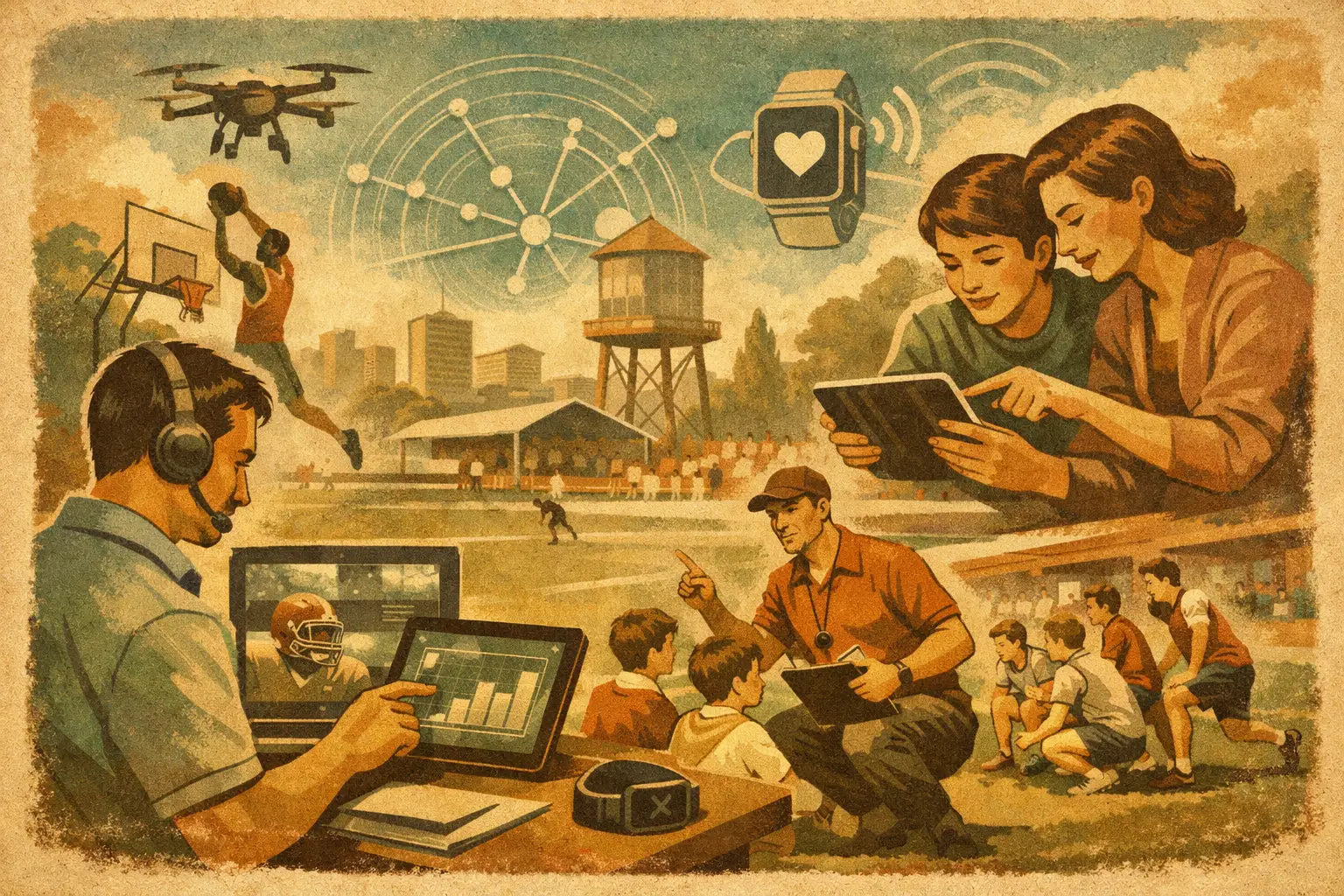
A five-a-side group chat with 38 people is not a sports community. It is usually a trail of thumbs-up reactions, late drop-outs and a pitch that may or may not be booked. The future of community led sports tech starts by replacing that friction with a place where people can actually play, improve and belong.
The winning sports apps will not simply show scores, sell bookings or count steps. They will help someone new to an area find a game tonight, help a regular organiser fill the final two spaces, and give players a reason to return next week. Most importantly, they will let the people using the product help decide what it becomes.
Community-led sports tech is a participation engine
A community-led product does more than add comments under a feature announcement. It gives players a meaningful role in the loop: they surface problems, test ideas, vote on priorities and show the team where participation gets stuck.
That matters because sport is intensely local, even when the technology is global. A basketball player in Manchester may need a nearby indoor court after work. A tennis newcomer in Bristol may want an opponent at their level, not a formal club commitment. Someone on holiday may want a low-pressure run, a padel match or a casual kickabout without needing to know the local scene.
No generic product roadmap can predict every one of those situations. Communities can. When players have a direct route to shape discovery, event formats, safety tools and progression systems, the app becomes more useful in the moments that determine whether a person plays or stays home.
This is also why an all-sports network has real potential. People do not organise their lives in separate app silos. The person playing midweek football may be looking for a weekend badminton session, while a friend might be trying climbing or volleyball for the first time. A shared network makes it easier for communities to grow across 122 sports without making every user start from zero.
The future of community-led sports tech is built around action
The best community features lead to a real-world outcome. They get a game created, a challenge accepted, a team assembled or a venue discovered. Social feeds alone can create attention, but attention is not participation.
Events should make a vague plan playable
Pickup sport works when the barrier between “we should play” and “we are playing” is small. Players need to see what is happening, where it is happening, who is joining and whether the session fits their ability or mood. Organisers need a straightforward way to set numbers, manage attendance and avoid chasing people individually.
The detail matters. An event for experienced 7-a-side players needs a different expectation from a beginner-friendly basketball shootaround. Clear formats and player context make joining feel less intimidating, especially for people who have not yet found their crew.
There is a trade-off. Too many rules can make casual sport feel like admin; too little information can leave players unsure whether they belong. Community feedback is the quickest way to find the right balance for each sport and local scene.
Challenges can make motivation social
A direct challenge is a small but powerful prompt. It turns “we should get a match in” into a plan with a date, opponent and result. For friends, it adds stakes. For newcomers, it can offer a more approachable route into competition than joining a full league immediately.
Sports tech should keep those challenges friendly, fair and easy to understand. A ladder can be motivating, but not if it only rewards the people who already play most often. Players should be able to choose casual challenges, competitive formats and goal-based sessions that suit where they are now.
Teams and leagues create the return habit
One-off events are valuable, but belonging is what turns participation into routine. Teams give players a shared identity. Leagues create a reason to show up, track a season and bring friends back when the weather is poor or motivation dips.
The next generation of leagues will need more flexibility than the old model. Some groups want a fixed weekly commitment. Others need rolling squads, short seasons or formats built around shift work, study and family life. Community-led sports tech can test those models in public, then build around the formats people repeatedly choose.
Recognition should reward participation, not just winning
Most recreational players are not chasing a professional contract. They are chasing better habits, a stronger social circle, a close match and the satisfaction of seeing improvement. That is where stats, goals, trophies and achievements can make sport feel more rewarding without turning every session into a pressure cooker.
A good progression system recognises more than goals scored or matches won. It can celebrate a first event, a five-week streak, trying a new sport, organising a game, supporting teammates or returning after time away. Those actions build communities just as much as a match-winning performance.
Ratings need even more care. Player feedback can help others know what to expect and can reward reliability, fair play and good energy. But poorly designed ratings can become cliquey, overly harsh or biased against beginners. Context, moderation and an emphasis on behaviour over pure ability are essential. The goal is trust, not a popularity contest.
Live streaming adds another layer. For some communities, sharing a local final or a hard-fought challenge creates excitement and gives players recognition beyond the court or pitch. For others, a camera changes the mood completely. Consent, privacy settings and a clear opt-in should be standard, not an afterthought.
Venues are part of the network, not just a pin on a map
Every game needs a place to happen. Yet venue discovery is often treated as a static directory problem: here is a court, here are the opening hours, good luck. That misses the useful questions players actually ask.
Is the surface decent? Are the lights on after work? Can a solo player turn up? Is there a regular group that welcomes beginners? Is the venue suitable for a competitive league night or a casual family session?
A living community can answer those questions better than a database alone. Reviews, event history and player recommendations make venue information practical. In return, venues can see what sports are gaining demand, which time slots need activity and how to build relationships with regular communities rather than relying on occasional bookings.
That creates a healthier network effect. More players make events easier to fill. More events make venues more valuable. Better venue information makes it easier for the next player to join. The technology does not manufacture community, but it can give community momentum.
Build in public, but make the feedback count
“Built with the community” is easy to say and hard to prove. The difference is visible in the process. Are early users invited to test unfinished features? Can they vote on what should be prioritised? Do product decisions come back with a clear explanation, including when an idea cannot be built yet?
A transparent roadmap does not mean every request gets shipped. Sometimes the most requested feature serves one sport but creates confusion across the wider network. Sometimes safety, reliability or core event tools must come before a flashy new mode. Being honest about those choices earns more trust than pretending every suggestion is a promise.
Crewters is built around that invitation: players can find venues, create events, challenge friends, join teams and compete in leagues while helping shape what comes next. Early adopters are not just an acquisition channel. They are the people who can spot the gaps between a good-looking feature and one that gets more people playing.
What players should demand next
The future is not an app that keeps people scrolling about sport. It is one that helps them take part in it. That means low-friction discovery, inclusive entry points, credible community signals and progression that makes every kind of player feel seen.
It also means resisting easy shortcuts. More notifications do not automatically create a better community. More data does not automatically create better motivation. The right feature depends on whether it helps a real person commit to a real session with people they want to see again.
If you want better sports tech, do not wait for a finished product to appear. Join the conversation, test what is being built, create the game you wish existed and vote for the tools that would make your local sports scene stronger. Your next crew may be one event away.