
How Do I Find Padel Players in London Islington?
August 27, 2026 · Chris Palmer
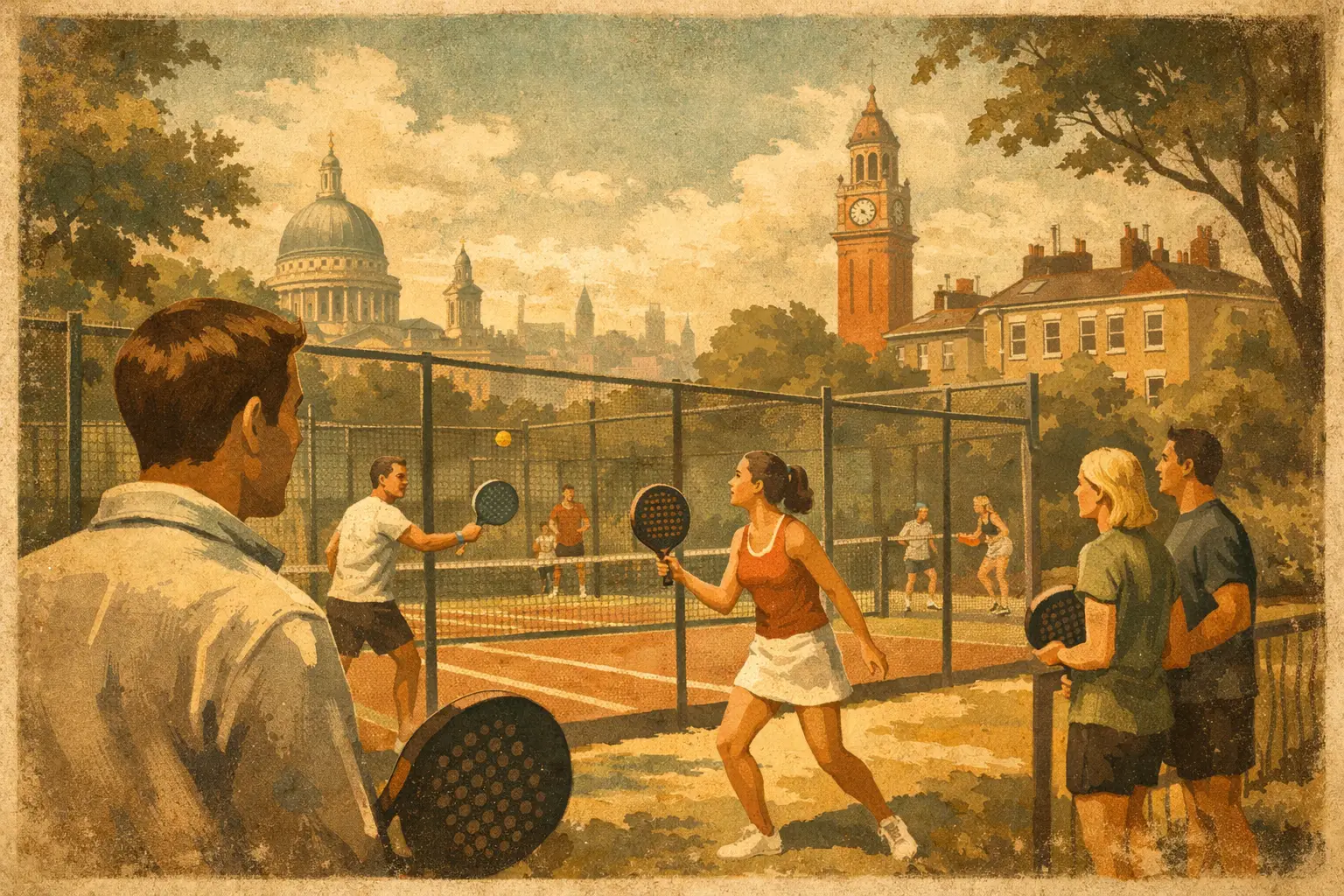
A padel court with an empty fourth spot is one of the most frustrating sights in recreational sport. You are ready to play, the booking is there, but group chats have gone quiet and everyone is suddenly busy. If you are asking, “how do I find padel players in London Islington?”, the answer is not to wait for one perfect group to appear. Build a small, active pool of people with different schedules, levels and reasons for playing.
Padel is naturally social, but that does not mean finding a game is automatic. In Islington, availability can be as much of a challenge as ability. The players who get regular matches are usually the ones who make it easy for others to say yes.
Start where players are already booking courts
Your closest padel venue is the obvious first move, not only because it is convenient but because it has a concentrated group of people who have already chosen to play. Check whether the venue runs social sessions, matchplay evenings, coaching clinics or beginner mixers. These sessions remove the hardest part of arranging a first game: deciding who plays with whom.
Turn up a little early and stay for five minutes afterwards. Ask players whether they have a regular group, how often they play and whether they ever need a fourth. It sounds simple, because it is. A friendly post-match conversation is often more useful than joining a huge online group full of messages from across London.
Be specific when you introduce yourself. Rather than saying, “Let me know if you want a game,” try: “I’m around Islington, play at an improver level, and can usually do Tuesday or Thursday evenings.” Specific availability gives someone a reason to save your number.
Use social sessions as your entry point
Social play is particularly valuable if you are new to padel, returning after time away or unsure how your level compares with other players. You may not win every set, and pairings can be mixed, but you will leave with a better idea of who suits your game.
The trade-off is that organised sessions are less predictable than arranging your own foursome. You may get a shorter match or play with people at a different standard. Treat the first few sessions as scouting, not a final verdict on your padel community.
Post a game people can actually join
A vague request creates admin. A clear game creates a decision. Whether you post in a local group, your workplace chat, a university network or a sports app, include the day, start time, venue area, playing level, cost split and whether you need one, two or three players.
For example: “Need two for social improver padel near Islington, Wednesday 7pm, 90 minutes, roughly £12 each. Friendly competitive game, happy to rotate partners.” That tells a potential player everything they need before replying.
Avoid presenting every game as a high-stakes trial. Plenty of capable people will skip a post that says “advanced players only” because ratings are inconsistent and no one wants an awkward mismatch. If the standard genuinely matters, say what you mean: consistent rallies, serving confidently, competitive sets, or beginner-friendly. The right wording attracts the right crew.
If you cannot fill a game immediately, keep the booking if the cancellation policy makes sense and post again closer to the time. Last-minute players exist, especially in London. They are often looking for exactly the same thing: an easy route from a free evening to a match.
How to find padel players in London Islington without endless chats
The goal is not 200 contacts. It is a reliable rota of 8 to 16 people. That gives you enough options when work runs late, someone is injured, or your usual partner is away.
Start with three groups: people who can play after work, people who can play at weekends, and people open to daytime or flexible sessions. A player who is not available on your favourite night is still useful if they help you keep a Saturday morning game alive.
Create a simple WhatsApp group once you have met a handful of decent people. Keep its purpose clear: filling local padel games, not forwarding every sports meme ever made. Set a basic expectation that anyone can post a game, but they should include the details and confirm the booking. That small bit of structure prevents the group becoming noise.
You can also use Crewters to create a pickup event, find people who want to play locally and turn a one-off match into a repeat crew. It is built for more than a single sport, which matters if the people you meet on court also want a five-a-side game, tennis hit or another way to stay active together.
Follow up while the game is still fresh
After a good session, send a short message that same day: “Good game tonight. I’m booking again next week, want me to add you?” This is far more effective than assuming everyone will remember you later.
Do not only follow up with the strongest player. The best long-term group is made of reliable, good-natured people whose level is close enough for competitive matches. Someone who replies quickly, shows up on time and is enjoyable to play with is a huge asset to any local sports community.
Make your level clear, then let it evolve
Padel levels can be messy. One player’s intermediate is another player’s beginner with a powerful smash. Rather than arguing over labels, describe what a match with you feels like. Can you sustain rallies? Are you comfortable serving and returning? Do you know court positioning and use the glass? Are you looking for relaxed rallies or scored sets?
Be honest at the beginning. It protects everyone’s time and makes it more likely people invite you back. If you are learning, ask for social games and tell people you are keen to improve. Many regular players are happy to include a newer player when expectations are right.
As you play more, keep track of the partners and opponents who produce the best games. Ratings and post-game feedback can help, but your own notes matter too. You might play your sharpest padel with an aggressive net player, or prefer someone who keeps points steady from the back. Finding players is one task; building balanced pairings is the next level.
Be the person who makes playing easy
The quickest way to become part of an Islington padel circle is to organise consistently. Book a recurring slot if you can, even if it is only every other week. Regularity turns a loose chat into a habit, and habits are what keep a sports community alive through busy periods.
You do not need to carry every booking forever. Rotate responsibility once the group has momentum. One person books the court, another tracks numbers, someone else suggests a backup date. A little shared ownership means no one burns out and more people feel that the group belongs to them.
Competition can add energy too. Try a monthly ladder, rotating partners, a short points table or a friendly challenge between regulars. Keep it welcoming. The aim is to give people a reason to return, not to make a casual Wednesday night feel like a professional selection camp.
Give it four weeks, not one evening
Finding your people rarely happens in a single match. Commit to four weeks of showing up, posting clear games and following up with players you enjoyed meeting. By then, you will know which sessions are worth repeating, which times fill fastest and who turns a booked court into a proper game.
The best padel group is not necessarily the one with the highest level. It is the one where people reply, turn up and leave already talking about the next match. Start the invitation, make it easy to join, and help build the crew you want to play with.