
Community Sport Makes Showing Up Easier
October 26, 2026 · Chris Palmer
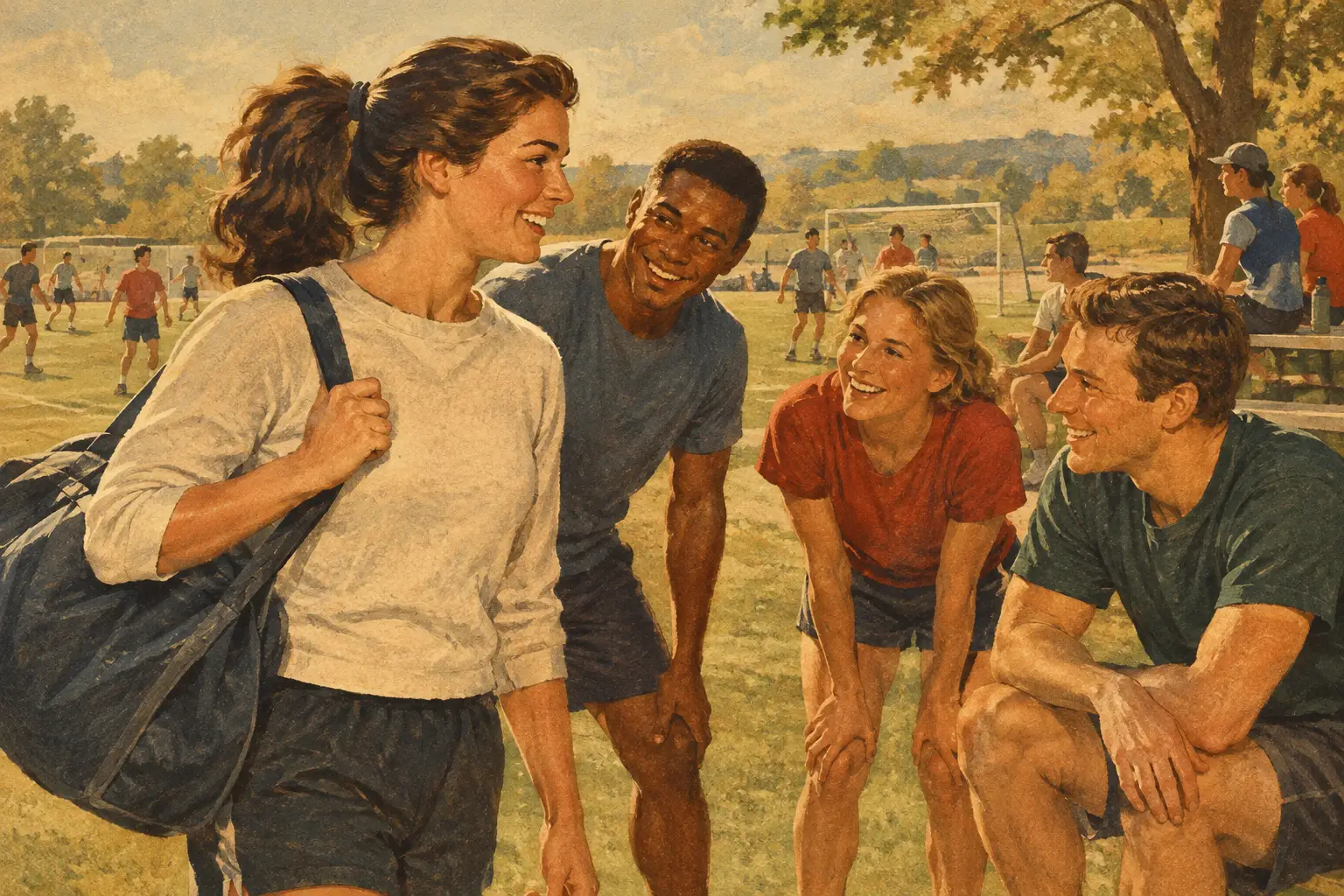
A spare Tuesday evening is where community sport either wins or loses. You might genuinely want a game, a run or a session at the court, but wanting to play is not the same as having people, a venue and a plan. When those three things are hard to line up, sport becomes something we mean to do rather than something we actually do.
That gap matters. Community sport is not only about exercise or filling a fixture list. It is how strangers become regular teammates, how a newcomer learns the unwritten rules, and how a local venue becomes part of someone’s week. The best communities make participation feel normal: send a message, join the game, turn up, play again.
Why community sport needs fewer barriers
Most people do not stop playing because they suddenly dislike sport. They stop because the admin gets tiring. The group chat goes quiet. The pitch is booked at an awkward time. Everyone assumes somebody else will organise it. Or a player who is new to the area feels they need an invitation before they can join.
Traditional clubs and leagues remain brilliant for committed players, especially when coaching, regular competition and a strong identity are the goal. But they can be a big first step. Membership fees, fixed seasons, established squads and uncertain standards can make casual players hesitate. A person who has not played in years may not be ready to sign up for a full campaign. They may just want 60 minutes of five-a-side on Thursday.
That does not mean lowering standards. It means creating more ways in. Pickup games, short-format leagues, beginner-friendly sessions and open challenges give people a route from interest to action. A good community has room for the player chasing promotion and the person who only wants a reliable weekly game after work.
The real job: turn intent into a fixture
A thriving sports community makes the next action obvious. Where can I play? Who is going? Is the standard right for me? What happens if I come alone? These are simple questions, but unanswered questions create drop-off.
The strongest organisers remove uncertainty before a player has to ask. They state the sport, venue, start time, cost, format and expected level. They explain whether players should bring equipment and whether newcomers are welcome. If teams are picked on arrival, say so. If there is a waitlist, make it visible. Clear details are not boring admin. They are what give someone confidence to commit.
Consistency is just as valuable. A brilliant one-off event can be memorable, but a regular Wednesday basketball run builds a habit. People begin to protect the time in their calendar. They bring a mate. They know the faces. The game becomes less dependent on a heroic organiser chasing replies at 4pm.
Make the first game feel safe to join
The hardest game to attend is usually the first one. New players worry about arriving late, being the weakest person there or finding a group that already knows one another. Experienced players can forget how intimidating that feels.
Small choices change the atmosphere. Welcome people by name. Introduce solo players before the session starts. Mix teams rather than leaving new arrivals to choose sides. Be clear that hard competition and poor behaviour are not the same thing. A close game is fun; being frozen out after one missed pass is not.
This is especially relevant for sports-curious people and anyone returning after injury, university, parenthood or a move to a new town. A community that only rewards confidence will keep attracting the same confident players. A community that rewards showing up will grow.
Competition is better when it gives something back
Community does not mean every game has to be gentle. Plenty of players want a scoreline, a rivalry and the right to talk about a last-minute winner for the rest of the week. Healthy competition gives a session energy and gives people a reason to improve.
The trade-off is that competition can quickly become exclusionary when the same people control teams, results are treated as life-or-death, or weaker players are made to feel like a problem. The answer is not to remove the competitive edge. It is to organise it fairly.
Structured leagues, clear rules and balanced teams help. So do player ratings that focus on respect as well as ability, and statistics that recognise more than goals or wins. Attendance streaks, personal targets, assists, defensive effort and improvement can all make participation visible. Trophies and achievements work best when they celebrate commitment, not just the already talented.
That is where digital tools can add real value rather than simply adding another feed to scroll. An event should make it easier to gather players. A challenge should make it easy to set up a rematch. A team should give people a shared identity. Stats should help players see progress over time. If a feature does not help somebody play, improve or feel part of the group, it is probably noise.
Build around venues, not just conversations
A local sports community needs a home base. For some groups, that is a leisure centre. For others, it is a park court, an indoor climbing wall, a school sports hall or a five-a-side pitch. The venue affects who can join, what it costs and how reliably the group can meet.
Venue discovery is therefore more than a map problem. Players need useful context: surface, lighting, changing facilities, accessibility, booking rules and whether a place is genuinely suitable for their sport. A tennis player looking for a casual hit has different needs from a group arranging wheelchair basketball or a late-night padel match.
Venue operators benefit too. Empty slots are a lost opportunity, while an active community can create dependable demand and a better atmosphere on site. The relationship works when organisers respect booking policies, leave spaces in good condition and communicate quickly when numbers change. Communities that treat venues as partners tend to last longer.
One network, more ways to belong
People rarely fit into one neat sporting category. Someone might play football with colleagues, take tennis seriously, try bouldering on weekends and join a social run while travelling. Splitting every interest across separate groups creates friction, particularly for people who want to meet active friends rather than only find opponents for one sport.
An all-sports network can make local participation feel connected without flattening what makes each activity different. Basketball needs a different event format from cycling. A beginner yoga class is not managed like a competitive cricket league. Yet the underlying need is shared: find a place, find people and have a reason to return.
Crewters is being built around that reality, covering 122 sports while giving players ways to create events, issue challenges, join teams and compete in leagues. The useful part is not the number on its own. It is the chance to keep your sporting life in one community while helping decide what gets built next.
Give members a stake in the community
The best community sport organisers are not gatekeepers. They are facilitators. They invite people to suggest a new session, lead a team, test a format or flag a problem before it becomes the reason someone leaves. That approach is especially powerful when an app is involved. Players know where the friction is because they feel it every week.
Ask direct questions. Would people use a Sunday morning mixed-level session? Is the venue too far from the station? Do players want a social league, a knockout tournament or both? Does a live stream add excitement for friends who cannot attend, or does it make some players uncomfortable? There is no universal answer, and pretending there is leads to features nobody uses.
Build feedback into the rhythm of the group. Recognise the person who organises, the player who welcomes newcomers and the teammate who keeps a match positive. Community is not a marketing line. It is a set of repeated behaviours that make another person think, ‘I’ll come back next week.’
The next great local game probably does not need more motivation. It needs one clear invitation, a fair place to play and a crew willing to make room. Create the event, bring one person who has been meaning to start, and help shape the kind of sport community you would want to join.