
Best Sports for Meeting People and Finding Your Crew
November 7, 2026 · Chris Palmer
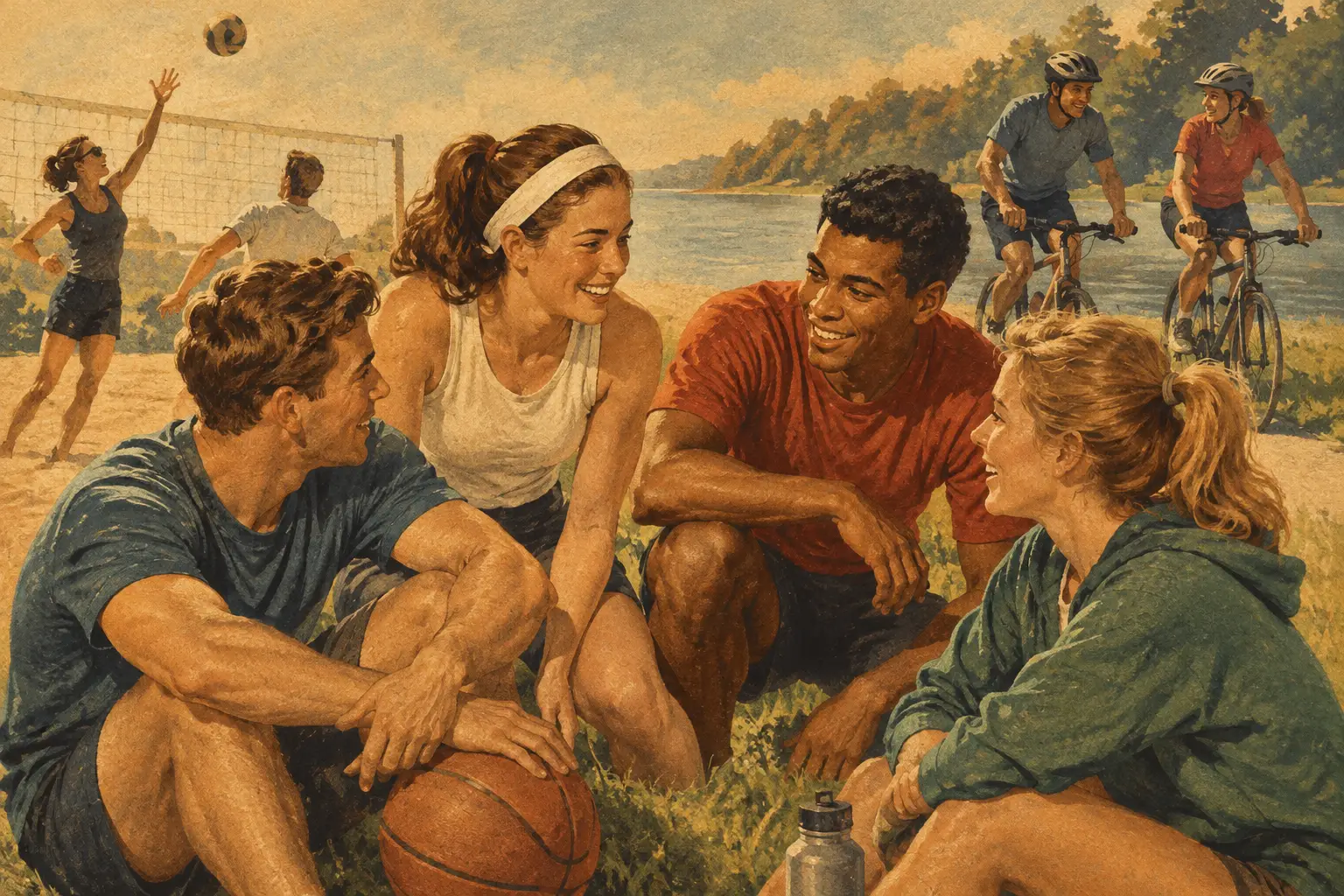
A good game gives you something better than a forced icebreaker: a shared job to do. Win the next point. Mark your player. Get the ball back. That is why the best sports for meeting people are not always the biggest or most fashionable. They are the ones that create repeat encounters, leave room for chat, and make it easy for one person to say, “Same time next week?”
For adults trying to build a social life around work, study, a new neighbourhood or a move to another city, sport removes much of the awkwardness. You do not need to arrive with a ready-made group. You need a beginner-friendly session, a willingness to introduce yourself, and enough consistency for familiar faces to become your crew.
What makes a sport sociable?
The social side of a sport is less about the rulebook and more about its format. A brilliant social sport has short breaks, changing partners or teams, and a regular local scene. It welcomes drop-ins without making newcomers feel as though they have ruined a carefully balanced squad.
Skill matters, but accessibility matters more at the start. Sports with mixed abilities tend to create better conversations because experienced players can offer a quick tip, newcomers can improve fast, and nobody expects a flawless performance. The best sessions have a little friendly competition and very little ego.
It also depends on what kind of people you want to meet. Team sports often build quick bonds through shared pressure. Racquet sports offer one-to-one conversation and recurring partners. Running and climbing can attract people who like routine and gradual progress. There is no single winner, only the format you will actually return to.
The best sports for meeting people
Five-a-side football
Five-a-side is one of the fastest routes into a local sporting circle in the UK. Teams are small, matches are high-energy, and one missing player can change whether a game happens. That means organisers are often actively looking for players rather than treating newcomers as outsiders.
You will talk naturally before kick-off, while sorting bibs, during substitutions and after the final whistle. Even if your first match is a frantic lesson in chasing the ball, you will have made an impression simply by turning up and putting a shift in.
The trade-off is that established groups can be cliquey and the pace can intimidate complete beginners. Look for casual, mixed-ability pickup games rather than a polished league side. Say clearly that you are keen to play regularly. Reliability is social currency in five-a-side.
Pickleball and tennis
Pickleball has grown because it is quick to learn, social by design and usually played in doubles. You meet several people in a short session, swap partners often, and get plenty of chances to chat between games. For someone who wants low-pressure competition without needing a full team, it is hard to beat.
Tennis can be just as effective, particularly through social doubles, ladders and club nights. It has a stronger skill barrier than pickleball, and arranging a court can take a little planning. But a regular tennis partner can become a real friend because you see each other repeatedly, track improvement together and often have time for a coffee afterwards.
If you are new, do not wait until you can serve perfectly. Find a beginner group, ask for doubles, and be upfront about your level. Most decent players would rather have an enthusiastic partner who communicates than a silent ringer who never comes back.
Volleyball
Volleyball is a standout choice for meeting lots of people at once. Recreational sessions tend to rotate teams, celebrate small wins loudly and make communication part of every rally. You cannot play well without calling the ball, encouraging teammates and resetting after mistakes.
Indoor volleyball has a learning curve, especially with serving and timing. That is also what makes it useful socially: everyone remembers learning the basics, and teammates are often happy to help. Beach volleyball can feel even more relaxed in summer, though it is less reliable as a year-round routine.
Look for open socials rather than competitive squads at first. A regular weekly session gives you enough repetition to move from “What is your name again?” to being invited into a team chat.
Basketball
Basketball works when games are organised fairly. A good pickup run has rotating sides, short matches and players willing to pass the ball. You can join on your own, get involved quickly and meet people across a wide range of ages and ability levels.
Its social advantage is speed. You are immediately part of a five-person unit, even if you only met four minutes ago. The banter between games tends to be easy, and regular courts often have a strong local identity.
The downside is that some pickup courts can be intense, with unwritten rules and players who value winning over welcoming. Choose sessions advertised as recreational or beginner-friendly. If the atmosphere feels hostile, it is not a test of your ability. Find a better court.
Running clubs and run crews
Running may look individual, but a run club turns it into a weekly social appointment. The best groups split by pace, have a clear route, wait for people at regroup points and make room for post-run conversation. You are not expected to entertain anyone while breathless, which is a relief for shy newcomers.
Running creates friendship through consistency. You see the same people at 7am in the rain, celebrate a first 5K or a faster parkrun, and gradually become part of the routine. It suits people who value structure and want fitness to stay in their week.
Choose a group that publishes pace guidance. Joining a too-fast session can make the first experience miserable, while a group with no social pause may feel like a crowd rather than a community.
Climbing and bouldering
Bouldering is one of the best solo-entry sports. Turn up alone and you will often find yourself discussing a tricky route with the person next to you. People naturally share beta - climbing language for ideas about how to complete a problem - and celebrate when someone finally sticks a move.
You do not need a fixed team, and you can go at your own pace. That makes bouldering ideal for people with changing schedules. It is also a good fit if football-style competition is not your thing.
The trade-off is that the social step requires a little initiative. Ask someone how they approached a route, offer encouragement, or join an introductory session. A nod from across the mat is not always an invitation, but most climbers are happy to talk about the wall.
Martial arts
Brazilian jiu-jitsu, boxing fitness, kickboxing, judo and taekwondo can create unusually strong bonds. You train alongside the same people, learn difficult skills together and see each other's progress week by week. Respect, trust and encouragement are built into a well-run class.
The right gym matters enormously. A welcoming club will explain the etiquette, pair new starters thoughtfully and treat safety as non-negotiable. The wrong one may feel intimidating or overly macho. Take a trial class and pay attention to how coaches and regulars treat beginners.
Martial arts are not the easiest option for everyone, especially if close contact is not appealing. But for people who enjoy goals, discipline and visible improvement, the community can become a serious anchor.
Turn one game into actual friendships
Joining a session is the first win. Returning is what changes it from an activity into a social circle. Go to the same game or club for four to six weeks before deciding whether it is for you. Familiarity is doing more work than charisma here.
Make small, practical connections first. Ask whether anyone needs a player next week. Offer to bring a ball. Congratulate someone on a good game. If there is a team chat, join it and respond when you can play. These tiny actions show that you are part of the group, not just passing through.
After a few sessions, make the invitation specific. Suggest a drink after the match, ask whether someone fancies a practice hit, or create a casual game for the following week. “We should play sometime” disappears. “Tuesday at 7?” gets people moving.
This is where a sports network can help. On Crewters, players can discover venues, join pickup events, create their own games, challenge others and build teams around the sports they genuinely enjoy. The goal is not to collect contacts. It is to make showing up easier, then give your new crew a reason to keep playing.
Start with the sport you will show up for
Do not choose volleyball because it is supposedly social if you dread every session. Pick the game that makes you want to leave the house, then choose the most open version of it: a beginner social, a pickup event, a doubles night or a group that rotates teams.
Your first game does not need to produce a new best mate. It only needs to put one more familiar face in your week. Turn up again, learn a few names, make the next plan, and let the crew build from there.