
Pickup Sports App Review for iPhone
March 31, 2026 · Chris Palmer
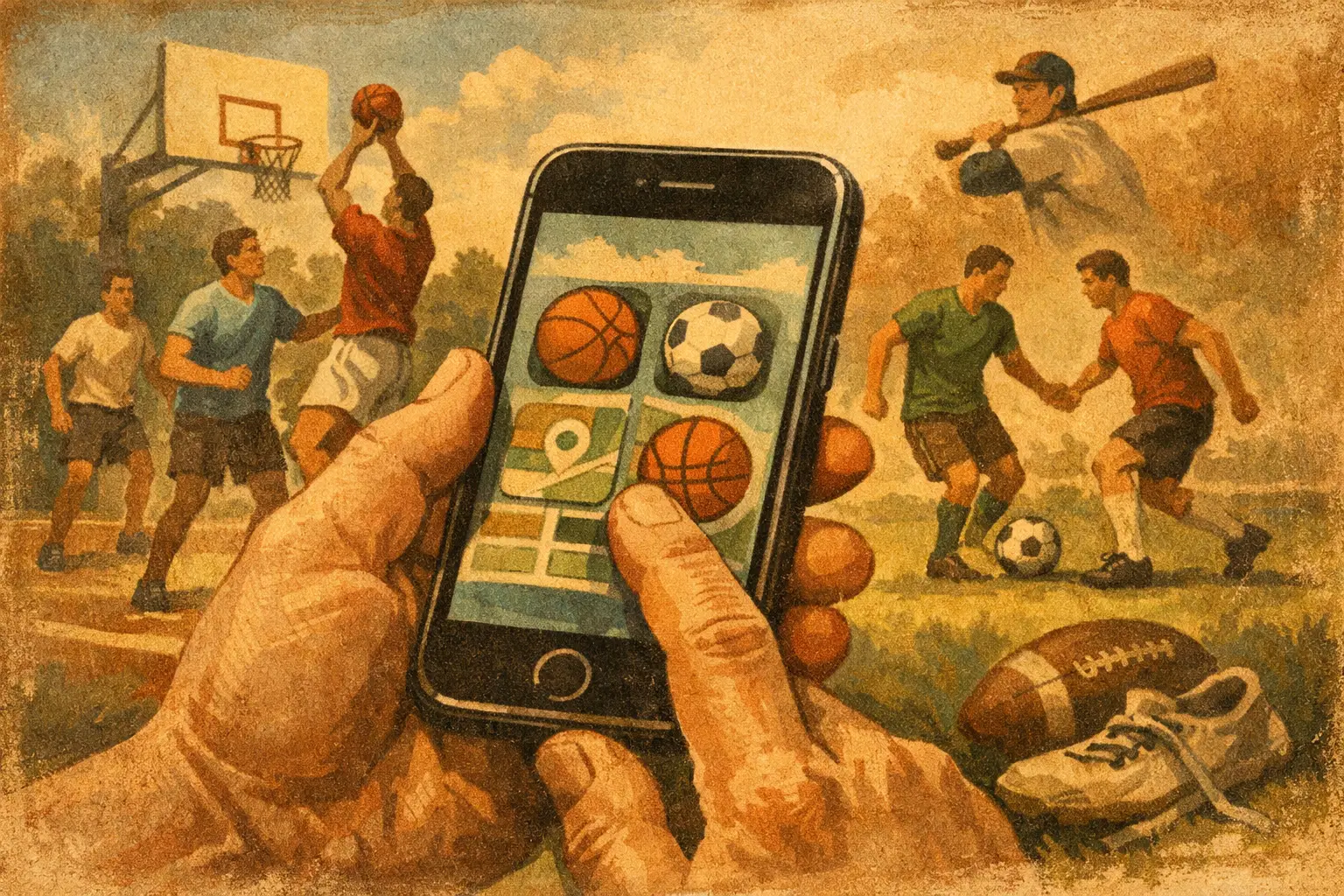
You do not need another sports app that looks good in the App Store and dies the moment you try to find a real game. That is the standard any pickup sports app review for iPhone should start with. For most players, the job is simple - find a place, find people, get a game on the calendar, and make it easy enough that you actually show up.
That sounds obvious, but plenty of apps miss it. Some are basically chat tools. Some are event boards with no real community behind them. Others lock you into one sport, one city, or one style of play. If you are on iPhone and trying to play more often, especially across different sports or while traveling, the real question is not whether an app has a clean interface. It is whether it turns intent into action.
What a pickup sports app review for iPhone should judge
A useful review should focus less on polish screenshots and more on repeat use. Can you open the app and quickly answer three questions: where can I play, who can I play with, and what happens after the game? If an app fails one of those, it usually becomes dead weight after the first week.
For iPhone users, speed matters. So does trust. You want native-feeling performance, location-aware discovery, and enough social context to know whether joining a game will be worth your time. A random open run sounds great until you realize there is no skill context, no attendance confidence, and no follow-up system to help you keep momentum.
That is where the better sports apps separate themselves. They do not just help you discover activity. They help you build a playing habit.
The core features that actually matter
Start with venue discovery. If a pickup app cannot help you find courts, fields, gyms, and play spaces near you, it is already limiting your options. This becomes even more important for people who travel for work, school, or weekend tournaments. You want an app that knows sports happen everywhere, not just in the same few metro hotspots.
Next is event creation and joining. This is the heartbeat of any pickup ecosystem. The best apps make it easy to spin up a game, set time and location, invite others, and get a clear sense of attendance. Too much friction and nobody posts. Too little structure and games become unreliable.
Then there is identity. Pickup is social, but it is also competitive. Players want to know who they are meeting, what they play, how active they are, and whether they actually show up. Ratings, reviews, stats, and activity history can help here, as long as they are used to build accountability rather than gatekeep newcomers.
Finally, there is progression. This is where many apps stop short. They help organize one game but do not give you a reason to come back. If an app tracks your activity, rewards consistency, or helps you move from casual games into teams and leagues, it starts becoming part of your sports life instead of a one-time utility.
Where most iPhone pickup sports apps fall short
The biggest issue is fragmentation. One app handles soccer. Another is decent for basketball in a few neighborhoods. Another works for tennis but feels empty unless you already know people. If you play more than one sport, or if your friend group does, that setup gets old fast.
There is also the cold-start problem. A lot of apps feel empty because they are built like directories instead of networks. They can list venues or let you post an event, but they do not create the loops that keep players returning. No social recognition, no competition layer, no reason to build a profile, no feedback after the game.
And then there is the experience gap between casual and serious players. Some apps lean so competitive that newer players feel shut out. Others are so loose that committed players do not trust the quality of games. A strong pickup app needs to support both. It should help someone find their first run without making organized players feel like they are using a toy.
What stands out in this pickup sports app review iphone analysis
If we look at what an iPhone-first sports network should be doing right, the most compelling model is broader than simple event coordination. It combines venues, events, challenges, teams, leagues, and personal progression in one place. That is a stronger setup because it matches how people actually participate in sports.
You might start by looking for a nearby court. Then you join a pickup game. After that, you challenge someone you met. Then you get invited onto a team. Then that team enters a league. The best product path follows the player journey instead of treating every game like a disconnected transaction.
That is why an all-sports approach has real upside. Instead of forcing players into separate app silos, it creates one network that can support basketball on Tuesday, soccer on Thursday, tennis on Saturday, and whatever niche sport your local crew is trying next. For users, that means less restarting. For communities, it means stronger network effects.
One platform built around that idea is Crewters, an iOS-first sports social network built for discovering venues, creating pickup events, issuing direct challenges, joining teams, and competing in leagues across 122 sports. The interesting part is not just the feature set. It is the product philosophy. This is clearly aimed at people who want sports apps to feel alive again, with trophies, achievements, stats, and player ratings that add accountability and momentum after the game ends.
That said, there are trade-offs. A bigger all-sports network has to balance breadth with depth. If you only care about one sport in one tight local scene, a niche app may sometimes feel more specialized. But if you are the kind of player who wants flexibility, travels, experiments with different sports, or wants one place to build your activity graph, the broader model makes a lot of sense.
iPhone experience: what users should expect
For iPhone users specifically, the bar is higher than “it works.” The app should feel responsive, intuitive, and built for quick action. You should be able to check nearby play, create an event, and respond to a challenge without tapping through five layers of setup.
This matters because pickup decisions are often made in short windows. You are leaving work. A friend texts. Weather changes. A court opens up. If the app is slow or cluttered, people default back to group chats and loose plans. The winning product on iPhone is the one that makes spontaneous organization feel easy while still preserving enough structure to avoid flaky games.
A social layer also matters more on mobile than many builders realize. Profiles, ratings, game history, and visible progress create confidence. They help answer whether this is a real community or just another install-and-forget app. Features like live streaming and post-game reviews can add energy, but only if they support the community rather than distract from play.
Who this kind of app is best for
If you are a student, young professional, traveler, or organizer constantly trying to rally games, a well-built pickup app can save serious time. It replaces scattered texts with a repeatable system. It also lowers the barrier for newcomers who want to play but do not already have a locked-in crew.
If you are highly competitive, the added layers matter even more. Stats, trophies, achievements, and structured teams turn casual participation into something you can build on. That is the difference between “I played once this month” and “I am part of something.”
If you are sports-curious, the ideal app is one that does not punish you for being new. It should let you discover low-pressure events, meet players, and grow into more competitive formats over time. That balance is hard to get right, but when it works, it expands the community instead of shrinking it.
The real test for any pickup app
A good review should always come back to one thing: does the app create more actual play? Not more browsing, not more profiles, not more promises. More games, more consistency, more connection to places and people that make sports part of your routine.
That is the standard iPhone users should hold. If an app helps you discover venues, organize games fast, build social trust, and keep momentum through stats or competition, it is doing the job. If it also lets the community shape what gets built next, even better. Sports apps do not need more passive users. They need active crews who want to help build the network they wish already existed.
If you are trying to play more, do not just ask whether an app looks modern. Ask whether it gives you a reason to come back tomorrow, a crew to meet next week, and a clearer path from “anyone down to play?” to “game on.”