
How an Amateur Sports League Builds Your Crew
September 3, 2026 · Chris Palmer
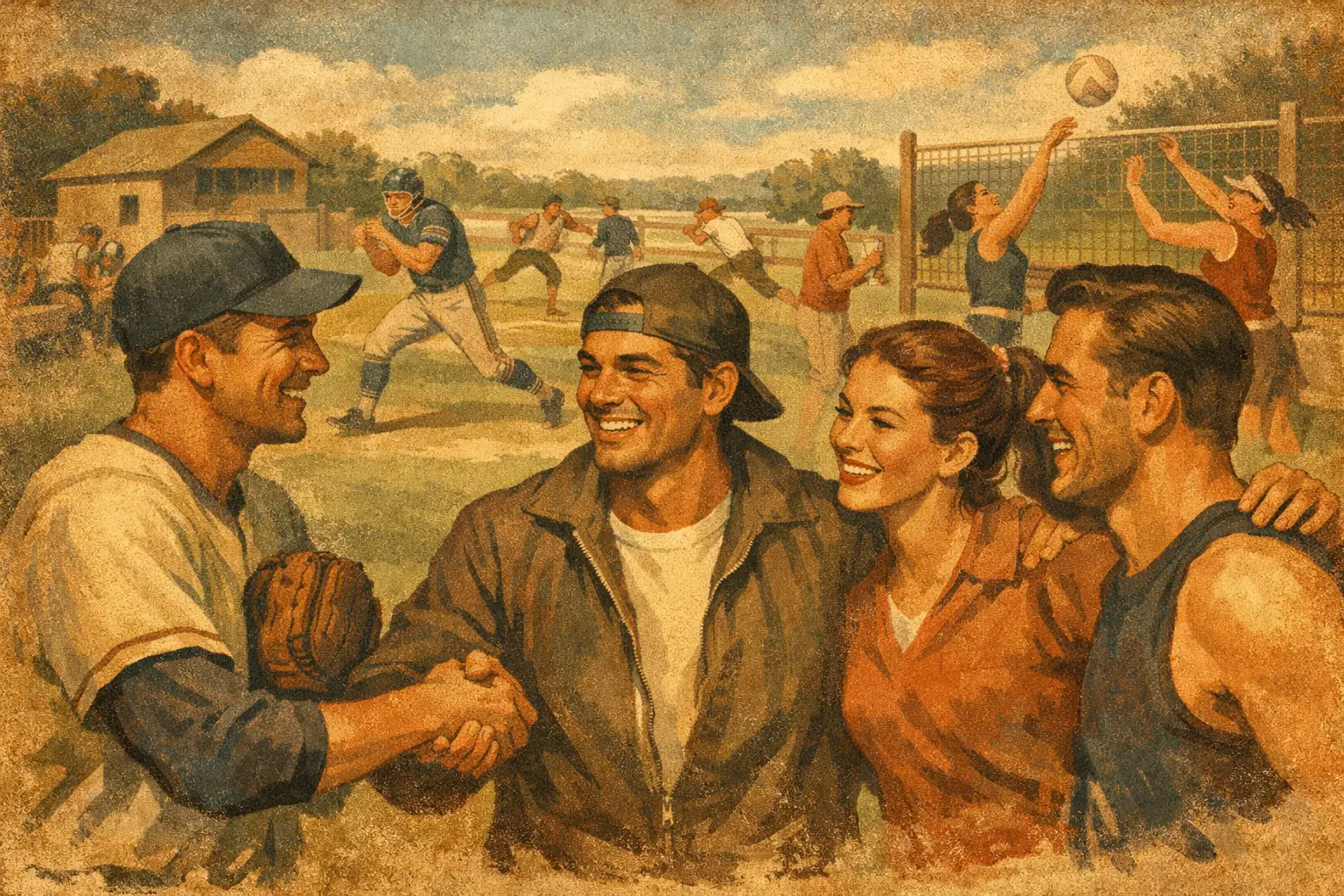
A last-minute five-a-side game can be brilliant. But when the group chat goes quiet, the pitch is booked and only seven players reply, motivation disappears fast. An amateur sports league solves that problem by giving your games a rhythm: teammates expect you, fixtures have meaning, and your progress has somewhere to go.
That does not mean every match has to feel like a cup final. The best local leagues make room for the player returning after years away, the student looking for a new social circle, the competitive regular chasing a title, and the organiser trying to keep a team together. The point is not to turn casual sport into a second job. It is to make playing easier to sustain.
Why an amateur sports league gets people playing
The hardest part of recreational sport is rarely the sport itself. It is coordination. Finding enough people, agreeing on a time, choosing a venue, collecting payments and working out whether the game is still on when the weather turns can drain the fun before anyone has kicked off or served.
A league removes much of that repeat admin. There is a schedule, a place to be and a reason to show up. That structure matters because routine beats good intentions. If you play every Wednesday evening, it becomes part of your week in the same way as seeing friends or going to the gym.
There is also a healthy kind of pressure in representing a team. Missing one pickup game may not affect anyone. Missing a league match can leave your mates short. For many players, that accountability is exactly what turns “I should play more” into actual minutes on the court, pitch or tennis court.
Competition helps too, provided the standard and culture are right. A league table, a rematch against a close rival or a personal goal such as scoring more regularly gives players something to chase. It creates stories that last beyond the final whistle: the comeback, the stoppage-time equaliser, the teammate who suddenly found form.
What makes a good amateur sports league?
A strong league is not defined only by polished facilities or a perfectly run website. Those things help, but people stay because the experience feels fair, social and dependable.
First, the standard needs to be clear. “All abilities welcome” can be genuinely inclusive, but it can also mean a beginner is thrown into a match with players who have competed for years. Better leagues offer divisions, grading, friendly entry points or clear descriptions of the pace and level. Nobody needs to be elite. Everyone deserves a game where they can contribute.
Second, reliability is non-negotiable. Fixtures should be confirmed early, rules should be easy to understand, and organisers should communicate quickly when something changes. Players can accept the odd rain-off or venue issue. What loses a community is confusion, late cancellations and rules applied differently from one match to the next.
Third, culture matters more than most organisers expect. Recreational sport is competitive, but it should not be hostile. The best teams welcome new players, respect officials and opponents, and make sure a mistake does not become a reason for someone to stop coming. A team can want promotion and still be a good place for a newcomer.
Choose the format that matches your life
Not every league will fit every player. Weekly evening leagues suit people who want a reliable routine. Short-format tournaments can work better if your calendar changes often. Seasonal leagues create longer rivalries and more meaningful tables, while rolling ladders are ideal for sports such as tennis, padel or badminton where players want flexible challenges.
Travel time is another real trade-off. A league across town might have stronger competition or better facilities, but a local one is often easier to maintain through winter, work deadlines and busy weekends. The best option is usually the one you will still attend six weeks from now.
Building a team people want to return to
You do not need a complete squad of mates before entering a league. In fact, joining with two or three people and recruiting the rest can be one of the quickest ways to build a proper local crew. The key is setting expectations before the first fixture.
Be honest about what your team is there for. Are you chasing results, getting fit, meeting people, or a mix of all three? A competitive team can still rotate fairly. A social team can still play with intent. Problems begin when one player treats every match as a trial for the pros while another thought it was simply a fun hour after work.
Give the team a simple system for availability. Ask early, confirm the night before, and keep substitutes involved rather than messaging them only when someone drops out. If there are fees, explain how they work. Tiny bits of organisation prevent the awkwardness that breaks teams apart.
A captain does not need to do everything. One person can handle fixtures, another can bring the kit, and someone else can sort post-match plans. Sharing the load makes the team more durable, especially when the original organiser is away or injured.
If you are new to a city, university or workplace, do not underestimate the social value of this. League sport offers repeated contact, shared effort and an easy reason to talk after a match. Friendships form more naturally when there is a next fixture already in the diary.
Make progress visible, not obsessive
Scorelines alone do not tell the whole story of amateur sport. A goalkeeper who makes two crucial saves, a tennis player who finally wins a set against a familiar opponent, or a basketball beginner who starts calling plays with confidence has improved even if their team loses.
That is why useful league experiences make room for stats, goals and recognition. Track what motivates you, but keep it proportionate. For some players, goals and assists add fuel. For others, attendance streaks, completed sessions or personal milestones are more meaningful. The right metric is the one that gets you back out there.
Recognition also strengthens a team. Celebrate the player who filled in at short notice, not only the top scorer. Mention smart defending, good communication and the person who brought a new teammate into the group. These are the habits that keep a league welcoming.
Crewters is being built around that wider view of participation: create events, form teams, take on challenges, compete in leagues and record the moments that show your game moving forward. It covers far more than one sport because local sport communities should not have to live in separate silos.
If there is no league for you, start the first step
Sometimes the right league already exists nearby. Sometimes it is missing because nobody has made the first move. You do not need to launch a huge competition with sponsors and twenty teams. Start smaller: invite players for a regular session, find a reliable venue, set a basic format and see who returns.
After a few weeks, give the games a little more shape. Keep scores, rotate teams, run a short round robin or let players nominate captains. Once demand is consistent, a proper league becomes less of a leap. You have already proved there are people who want to play.
Ask the group what would make it better. Earlier kick-offs? A beginner division? Mixed teams? More substitutes? This is where community-led sport wins. Players are not just customers of a fixture list. They are the people who know what would make the next season work.
An amateur sports league is at its best when it gives people a place to belong, not just a result to chase. Find a team that suits your level, bring someone who is unsure about joining, and keep one space open for the next person looking for a game. That is how a weekly fixture becomes a crew.