
Sports Team Finder App Review That Matters
April 10, 2026
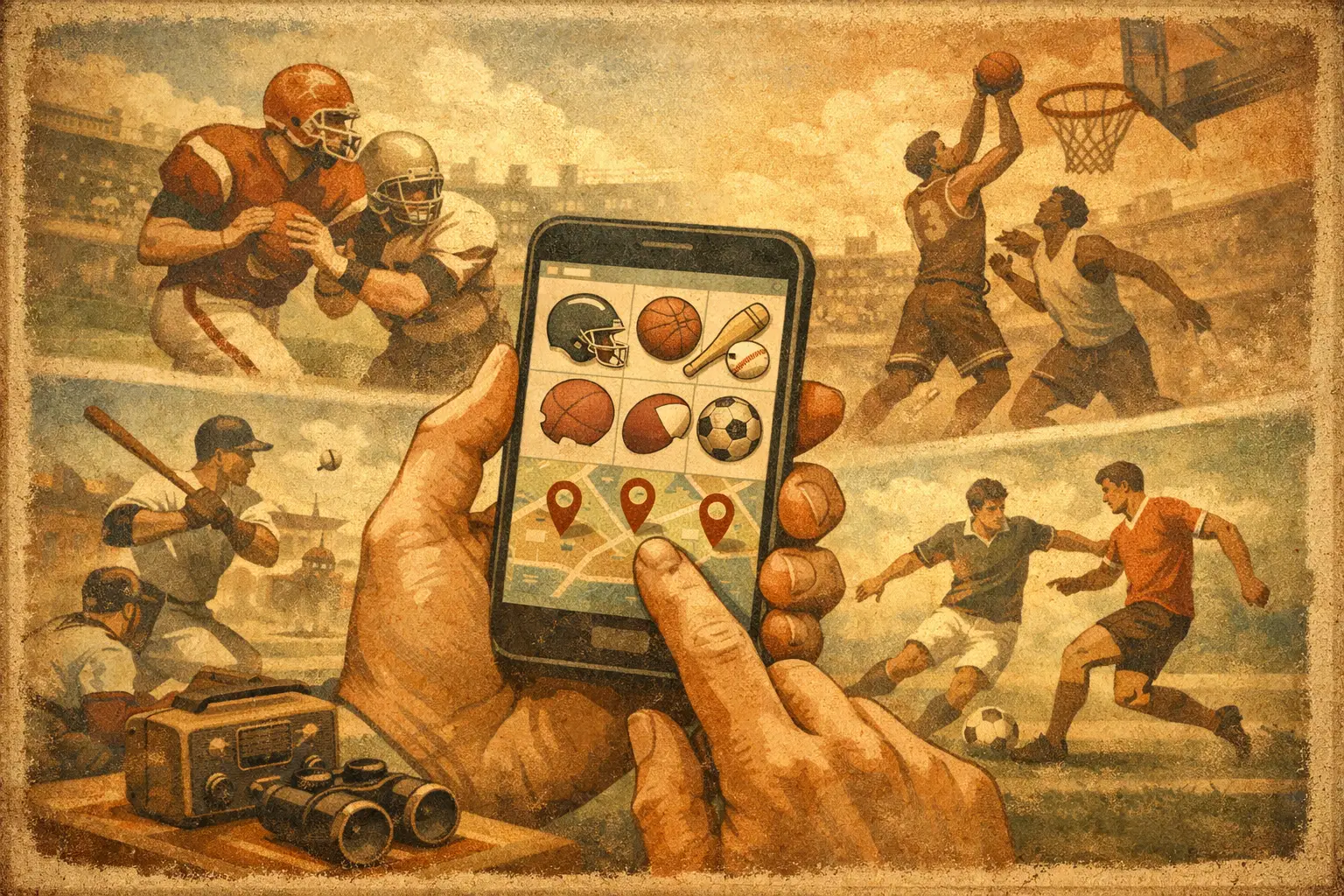
You can tell within five minutes whether a team-finding app was built by people who actually play. Either it gets you from “I want to hoop tonight” to an actual game, or it turns into another dead feed full of stale events, empty groups, and profiles that haven’t moved in months. That’s the lens for this sports team finder app review: not flashy screenshots, not feature stuffing, but whether an app can consistently turn intent into participation.
For most players, that’s the whole game. You are not looking for a social app with a sports theme. You are looking for enough trust, enough activity, and enough structure to help you find people, find a venue, and get on the field, court, or pitch without texting ten friends and praying somebody commits.
What a sports team finder app review should actually measure
A lot of reviews miss the point because they treat sports apps like generic marketplaces. That’s not how this category works. A team finder app lives or dies on coordination pressure. Can it help users organize quickly? Can it reduce no-shows? Can it make new players feel welcome without making competitive players feel held back?
That means the real benchmarks are pretty specific. First, discovery has to work. If you cannot find nearby games, teams, or venues without digging through clutter, the app is already losing. Second, the app needs social accountability. Sports plans fall apart when there is no reason to commit, no visible attendance, and no reputation tied to showing up. Third, the app needs enough flexibility to work across casual pickup, recurring teams, and more competitive league play.
That last point matters more than most product teams admit. Plenty of people do not fit neatly into one box. Someone might want a low-pressure soccer run on Tuesday, a doubles tennis match on Thursday, and a serious league team on the weekend. An app that only handles one of those use cases creates friction fast.
The best team finder apps solve a motivation problem, not just a search problem
Search is table stakes. Motivation is the hard part.
The strongest apps understand that finding a team is only the first step. What keeps players coming back is momentum. Stats, streaks, ratings, achievements, and visible progression can sound like extras, but they often make the difference between an app people try once and an app that becomes part of a sports routine.
This is where many products split into two camps. One group focuses on utility. They help you locate games, then step out of the way. That can work if the local community is already strong. The other group tries to build a real sports network, where your activity, results, and reputation carry over from one game to the next. That second model has more upside, but it is harder to execute because it requires active community building, not just software.
For users, the trade-off is simple. A pure utility app may feel easier at first, but it can also feel disposable. A networked sports app asks for more participation, yet it can return more value over time because your profile actually means something.
Where most sports apps fall short
The category has a few recurring problems.
The first is fragmentation. Basketball lives in one app, tennis in another, soccer in another, and niche sports often get nothing at all. That creates a weird experience for multi-sport players and makes travel harder than it should be. If you move between sports or just want options based on season, weather, or who is available, fragmented communities become a real constraint.
The second issue is empty-network syndrome. A lot of apps launch with good design but weak local density. They look polished, but there is not enough happening near you to matter. This is why community strategy matters as much as product design. A sports app does not become useful because it exists. It becomes useful when enough players, organizers, and venues are actively shaping it.
The third issue is that many apps stop at event listings. They can show you a game, but they do not help you build continuity. There is no path from one-off runs to teams, from teams to leagues, or from participation to visible progress. That keeps the experience shallow.
A better standard for a sports team finder app review
If we set a higher bar, the ideal app should do four things well.
It should help users discover where to play. It should help them organize who is playing. It should create enough recognition and accountability that people actually show up. And it should reward players for staying active instead of treating every game like an isolated transaction.
That broader model is where newer sports platforms are pushing the category. Rather than acting like a bulletin board, they are trying to become the place where local sports life happens. Events, direct challenges, team formation, leagues, ratings, and progression all start to connect.
That approach makes sense because real sports participation is connected. You meet someone at a pickup run, challenge them later, join a team together, then end up in a league. Good product design should reflect that journey.
What stands out in a modern sports network
The most interesting shift in this space is the move from single-purpose apps to all-sports ecosystems. That model is more ambitious, but it reflects how a lot of players actually live. People do not only identify as “a rec soccer user” or “a weekly basketball user.” They identify as active people who want more ways to play.
An all-sports approach also gives niche communities a better chance. If a platform already has venue discovery, event creation, team tools, and social features built in, smaller sports do not have to wait for their own standalone app to matter. They can plug into a larger network and start building participation faster.
That is one reason platforms like Crewters are worth watching. Instead of narrowing the product around one sport, the model is built around a larger sports community with support for 122 sports, plus venue discovery, pickup events, direct challenges, teams, leagues, stats, trophies, player ratings, and livestream rewards. The idea is not just to help you find a game once. It is to help you find your crew, keep score in a broader sense, and help shape what gets built next.
That builder angle is a real differentiator. Most consumer apps ask for passive use. Community-led product development asks users to participate in the roadmap itself. For some people, that will be a major plus. For others, it may not matter. But for early adopters and sports-tech users who like helping shape products before they go mainstream, it adds energy that most apps do not have.
The trade-offs users should think about
No sports platform is perfect for every player, and that is where honest reviews need to be clear.
If you want an app with years of mature density in one very specific sport and city, a more specialized product may still feel stronger in the short term. Focus can create local depth. On the other hand, if you want one network that can support multiple sports, casual and competitive play, and a stronger sense of progression, a broader platform may be more useful over time.
There is also a difference between passive browsing and active participation. Some users want to scroll, lurk, and maybe join later. Others want to create events, challenge players, build teams, and compete. The best team finder apps increasingly reward the second group because they create the community everyone else benefits from.
That means the right app partly depends on how you play. If you are the friend who always organizes the run, you need creation tools and accountability features. If you are newer to sports and want a lower barrier to entry, you need welcoming discovery and simple joining flows. If you are competitive, you probably care more about ratings, stats, and league structure. A strong platform should support all three without making the experience feel split apart.
So, what should users look for next?
The category is moving away from static directories and toward living sports communities. That is the direction that makes sense. People do not need another app that tells them sports exist nearby. They need one that helps them participate regularly, get recognized, improve over time, and feel part of something bigger than a one-night game.
If you are comparing options, ask a practical question: does this app help me play this week, and does it give me a reason to come back next week? If the answer is no, the rest of the feature list does not matter much.
The strongest products in this space will be the ones that blend utility with energy. They will make it easy to discover venues and teams, but they will also make sports feel social, competitive, and worth returning to. That is the standard we should expect now.
And if you are tired of sports apps that feel like ghost towns or glorified calendars, raise the bar. Join the platforms that are actually building with their communities, test what works, vote on what comes next, and help create a better way to play.