
Sports Gamification That Gets People Playing
March 20, 2026
Some people do not need motivation to play. Most people do. They need a text from a friend, a booked court, a score to settle, or a reason not to skip Tuesday night. That is where sports gamification actually works - not as a gimmick, but as the layer that turns “I should play sometime” into “I’m in.”
The best sports gamification does not cheapen competition. It gives it structure. It creates small moments of progress between big wins, and it helps casual players, regulars, and organizers stay connected to the habit of showing up. If we want sports apps to be fun again, they have to do more than list venues or host schedules. They have to make participation feel rewarding from the first game, not just after a championship.
What sports gamification really means
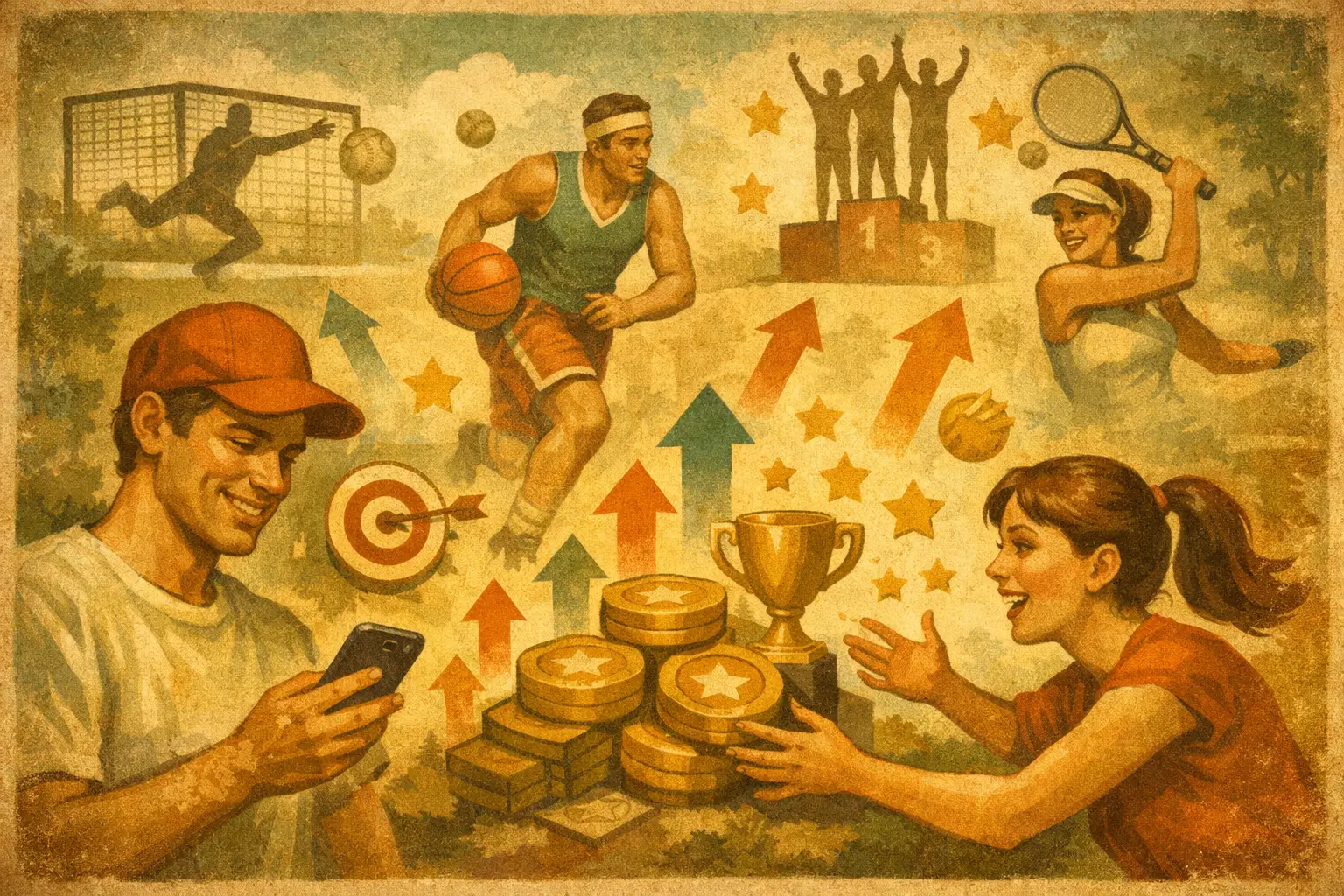
At its simplest, sports gamification is the use of game mechanics inside sports experiences to drive participation, consistency, and improvement. Think stats, streaks, trophies, ratings, goals, challenges, levels, leaderboards, and rewards. These are not new ideas. Sports have always had scoreboards and bragging rights. What has changed is where those signals live and how often people see them.
A good digital layer brings the energy of live competition into the everyday gaps between games. You play basketball on Thursday, issue a rematch on Friday, check your progress on Saturday, and join another run next week because your streak is alive and your crew is active. The product is not replacing sport. It is extending the reasons to return.
That distinction matters because bad gamification feels fake fast. If every action gets a badge, the system starts to feel childish. If the rewards are disconnected from real effort, players ignore them. But if the system reflects what athletes already care about - getting games in, improving, earning respect, finding rivals, building a team - then the mechanics feel native to sports culture.
Why sports gamification works when it is tied to behavior
A lot of fitness apps are built around private discipline. Sports are different. They are social, visible, and often messy. You need enough people, the right time, a place to play, and some reason everyone commits. That makes sports participation fragile. One no-show can kill momentum.
This is where sports gamification earns its keep. It gives players social accountability and short-term goals that support the bigger objective of actually playing. A challenge is not just a feature. It is a nudge with stakes. A trophy is not just decoration. It is recognition that someone kept showing up. A player rating is not just data. It can build trust in pickup communities where people do not know each other yet.
There is also a big difference between motivating elite performance and motivating repeat participation. Most users are not training for a scholarship or trying to go pro. They want games that fit real life. They want visible progress without needing a coach, a league office, or a spreadsheet. Smart products understand this middle ground. They reward momentum, not just mastery.
The mechanics that make sports gamification useful
The most effective systems usually combine several simple mechanics instead of leaning on one flashy idea. Stats tracking is one of the strongest examples because it gives people proof of progress. That proof can be competitive, like win rate or scoring average, or personal, like games played this month. Both matter.
Challenges work because they create direct social action. It is easier to accept a challenge than to organize a game from scratch. The same goes for teams and leagues. People are more likely to stick with a routine when they feel part of something that continues with or without them.
Achievements and trophies can be powerful too, but only when they are grounded in meaningful behavior. Rewarding a player for their first event, their tenth game, a comeback win, or a month of consistent participation makes sense. Handing out endless digital confetti for basic taps does not.
Leaderboards are useful in some communities and toxic in others. That is the trade-off. In highly competitive groups, rankings can fuel activity. In beginner-friendly spaces, they can scare people off if they only spotlight top performers. The fix is not to remove competition. It is to design more than one path to recognition. Let people compete on consistency, improvement, community contribution, and sportsmanship too.
Sports gamification is not just for hardcore athletes
One of the biggest misconceptions is that gamified sports products are built mainly for serious players. In reality, casual athletes often get the most value from them. Experienced players already have routines, networks, and identity tied to their sport. Newer or less consistent players need help crossing the gap between interest and action.
That gap is where many sports communities lose people. Someone wants to play soccer after work but does not know who is organizing games. Someone is traveling and wants a tennis match in a new city. Someone played volleyball in college, then stopped for five years, and now wants a lower-pressure way back in. In these cases, game mechanics are not just engagement tricks. They reduce friction.
A visible progression system can make the first step less intimidating. Joining one pickup event feels manageable. Earning a first badge or completing a first challenge makes that action feel recognized. Once users can see their activity, they are more likely to repeat it. That is how habits form.
What brands and platforms usually get wrong
The most common mistake is building rewards around app activity instead of sports activity. If users get more recognition for checking notifications than for playing, the whole thing loses credibility. Sports people can tell when a product is gaming their attention instead of supporting their goals.
Another mistake is forcing one model across every sport. Basketball, tennis, soccer, running clubs, and niche sports all have different rhythms. Some are team-based and recurring. Others are flexible and one-on-one. Sports gamification should reflect that. A direct challenge system may be perfect for racket sports, while team progression and league tables matter more in field sports. One network can support many sports, but only if the mechanics adapt to each use case.
There is also a balance issue. Too little structure and users drift. Too much structure and pickup starts feeling like homework. Good products give people enough goals to stay engaged without overcomplicating the fun. The point is to get more people into more games, not to bury play under dashboards.
Building sports gamification around community
This is where the category gets more interesting. The strongest sports products are not just tracking individuals. They are shaping local ecosystems of players, venues, organizers, and teams. That changes the role of gamification.
When a player earns recognition, it can increase trust in the community. When teams build records, rivalries start to matter. When events are streamed and reviewed, participation becomes more visible and more social. When users help decide which features come next, they are not just consuming a product. They are helping build the culture around it.
That builder mindset is a real advantage in sports-tech. Communities know what they need because they feel the pain points every week. They know whether ratings are useful or annoying. They know if rewards should emphasize attendance, performance, or organizing. They know whether leagues need more structure or whether pickup needs less friction. The smartest platforms listen and ship accordingly.
That is also why an all-sports network has real upside. Most people do not live inside one athletic identity forever. They hoop, then start playing pickleball. They run, then join a soccer league. They travel and try something new. A broader platform can make sports gamification more durable because progress is tied to an active lifestyle, not one narrow lane. That is part of what we are building at Crewters.
What better sports gamification looks like next
The next wave will likely reward more than wins. It will recognize consistency, improvement, organizing, streaming, hosting, and being a good competitor. That is healthier for communities and better for growth. Not everyone can be the best player in town. A lot more people can become the most reliable teammate, the toughest rematch, or the person who always gets games going.
It will also get more contextual. A beginner should not see the same goals as a league veteran. A traveler should not have the same journey as someone building a weekly crew. Better systems will adapt based on sport, skill level, frequency, and intent.
Most of all, sports gamification will keep proving one simple point: fun is a retention strategy. People come back when the experience feels alive, social, and worth talking about. Stats help. Trophies help. Challenges help. But the real win is this - more games happen, more people feel included, and the path from wanting to play to actually playing gets shorter.
If a product can do that, it is not adding game mechanics to sports. It is helping sports fit real life, which is exactly where more people need the assist.