
Pickup Games vs Recreational Leagues
March 25, 2026
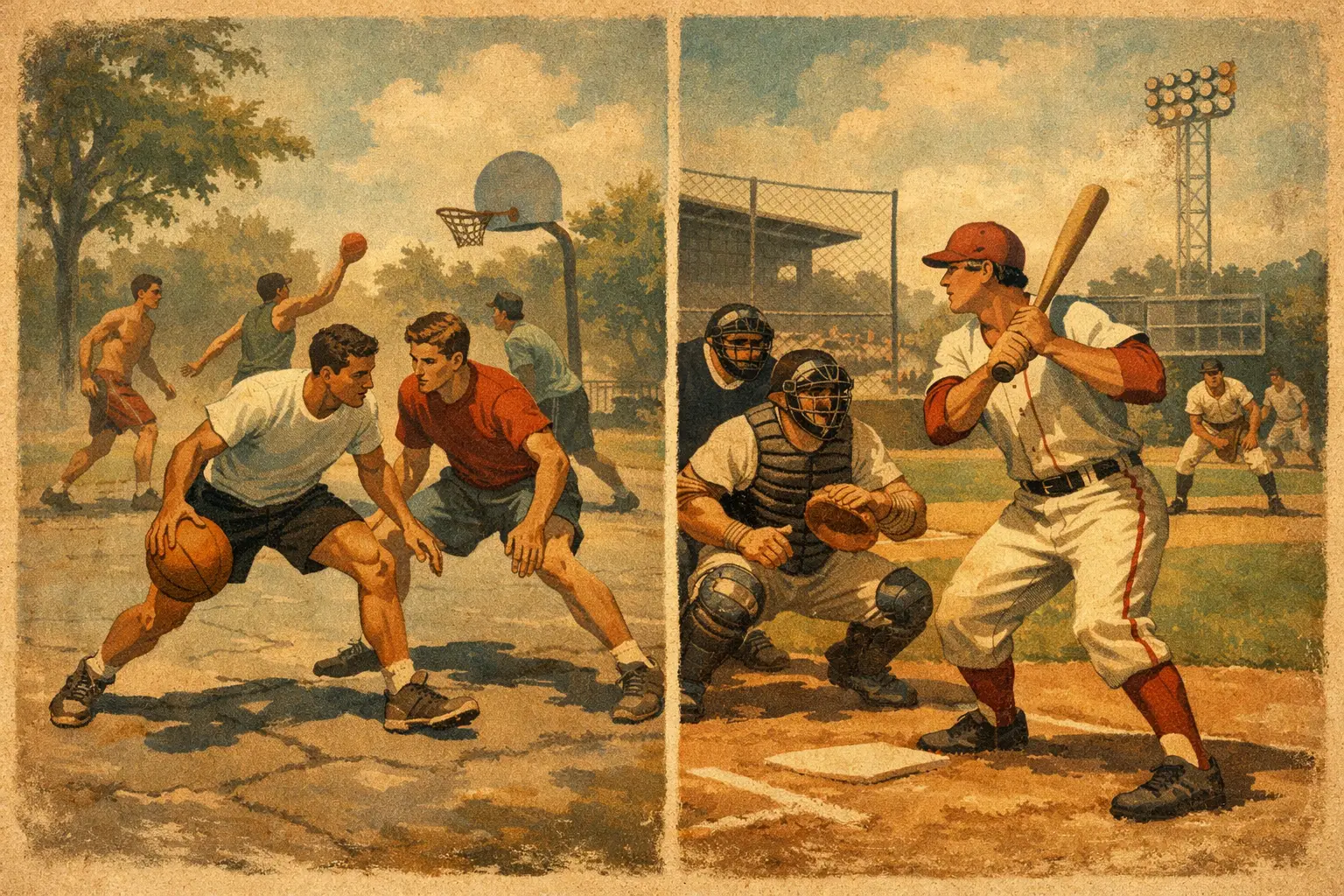
You’ve got an hour after work, your shoes are already in the trunk, and one question decides whether you actually play this week: do you jump into open run or commit to a team schedule? That’s the real tension in pickup games vs recreational leagues. Both get you on the court, field, or court-adjacent patch of space, but they create very different sports habits, social circles, and levels of accountability.
For a lot of players, this is not a one-time choice. It changes with your job, your fitness, your budget, your city, and even your mood. Some seasons call for chaos and spontaneity. Others call for structure, standings, and a reason not to bail when the couch looks better than the game.
Pickup games vs recreational leagues: what actually changes?
The simplest version is this: pickup is flexible, leagues are structured. But that undersells the difference.
Pickup games usually start with whoever shows up. Teams get made on the spot, rules are often adjusted to the space and the group, and the main goal is simple - get reps in and play. That makes pickup great for squeezing sports into real life. If you travel, have an unpredictable schedule, or play more than one sport, pickup is often the fastest path from “I want to play” to “game on.”
Recreational leagues work differently. They ask for commitment upfront. There’s a roster, a schedule, a season, and usually some layer of standings or playoffs. Even in casual leagues, the format changes behavior. People show up more consistently. Roles get clearer. Chemistry builds. If pickup is high-access sports, rec leagues are high-context sports.
That difference matters because the best format is not always the one with the highest level of play. It’s the one you’ll actually keep showing up for.
When pickup games are the better move
Pickup works best when access is the main problem you’re trying to solve.
If you’re new to a city, new to a sport, or coming back after time away, pickup lowers the barrier. You don’t need to know the full local scene. You don’t need a full season of availability. You just need a place, a time, and enough people willing to run. That makes pickup especially strong for basketball, soccer, tennis meetups, volleyball, and niche sports where league infrastructure can be spotty.
There’s also a freedom in pickup that leagues can’t really replicate. You can test your game without feeling locked in. Try a new position. Play at half speed if you’re shaking off rust. Leave room for experimentation. For sports-curious people, that matters. A league can feel like a commitment contract. Pickup feels like an invitation.
The trade-off is that pickup can be inconsistent in ways that frustrate serious players. Skill levels may vary wildly. Effort can swing from highly competitive to barely organized. Rules get fuzzy. Some runs are amazing because the chemistry clicks. Others are messy because one player dominates possessions, another argues every call, and two more show up late.
Still, if your biggest issue is simply finding enough chances to play, pickup usually wins. More reps often beat perfect organization.
Pickup is strongest for busy schedules
A lot of adult athletes don’t quit sports because they stop caring. They quit because coordination becomes its own sport.
Pickup respects that reality. It lets students, young professionals, parents, and shift workers participate without promising the same night every week for two months. If your schedule changes often, the ability to join when you can is not a nice-to-have. It’s the difference between staying active and drifting out of sports entirely.
When recreational leagues make more sense
Recreational leagues shine when consistency is the goal.
If you want steady competition, familiar teammates, and a measurable season arc, leagues give you that. You’re not just showing up to play. You’re building something over time. Teams develop patterns. Players learn each other’s tendencies. Rivalries emerge. The games start to matter a little more, even when the vibe stays social.
That structure is also useful for improvement. Pickup gives volume, but leagues give feedback. When you play the same format repeatedly, weaknesses become obvious. Maybe your team struggles on defense. Maybe your conditioning drops late. Maybe your serve holds up in casual play but breaks down under pressure. League play exposes habits that random runs can hide.
For some players, accountability is the whole point. Knowing seven other people expect you there changes your behavior. You train a little more. You plan ahead. You show up on nights when motivation is low. That’s where rec leagues become more than entertainment. They become routine.
Leagues build stronger team identity
There’s a reason people remember league teams years later.
Shared schedules, wins, losses, group chats, and inside jokes create stickier community than most one-off games do. Even if the league is clearly recreational, people still buy into the identity of being on a team. That matters if what you want from sports is not just exercise, but belonging.
The downside is obvious: leagues ask more from you. There’s usually a fee. Missing games can hurt your team. If the skill division is off, a season can drag. And if your teammates are unreliable, the structure that looked appealing at signup can turn into frustration by week three.
Cost, competition, and commitment
This is where pickup games vs recreational leagues gets practical.
Pickup is often cheaper, or at least easier to enter in small increments. You might pay a gym day pass, a court fee, or nothing at all if it’s a public space and an informal run. That makes it easier to play now instead of waiting until you can justify a season fee.
Leagues usually cost more upfront, but they may deliver better value if you know you’ll attend regularly. You’re paying for scheduling, administration, refs in some cases, field or court reservations, and a more dependable experience. The question is less “which is cheaper?” and more “which format matches how often I really play?”
Competition level is similar. Pickup can be surprisingly intense, especially in established runs where regulars know each other and the court hierarchy is real. Rec leagues can be casual to the point of chaos or competitive enough to feel one step below club play. Labels don’t tell the whole story. The local community does.
That’s why players should stop thinking in binaries. Pickup is not automatically casual. Leagues are not automatically better organized. Every sports scene has its own culture, and the best move is often finding the format that fits your local crew, not the one that sounds better on paper.
A smarter way to choose
Ask yourself what problem you’re trying to solve.
If you mostly need convenience, variety, and low-pressure access, start with pickup. If you need accountability, recurring teammates, and a clearer path to progression, start with a rec league. If you’re rebuilding confidence after time off, pickup is usually the easier re-entry point. If you’re tired of random attendance and want a stable group, leagues are the stronger bet.
You should also think about your sport itself. Basketball and soccer often have healthy pickup ecosystems in many cities. Softball and kickball lean more naturally toward leagues. Tennis can sit in the middle, depending on whether you want challenge matches, social doubles, or formal team competition. Niche sports may rely heavily on community organizers who mix both formats.
The strongest setup for a lot of players is not choosing one forever. It’s combining them.
Why the best answer is often both
Pickup keeps your volume up. Leagues give your play direction.
That combination works because each format covers the other’s weaknesses. Pickup helps you stay active between league games, sharpen specific skills, and meet new players outside your current team. Leagues give those reps context. They turn random play into something you can measure over time.
This is also where modern sports communities are getting more interesting. Players don’t want to live in silos anymore. They want to create an event on Tuesday, challenge another player on Thursday, and suit up with a team on Sunday. They want stats, progress, and community without needing three different apps and ten different group chats to make it happen.
That’s the bigger shift. Sports participation is becoming more fluid. The old model said you were either a pickup player or a league player. Real life says you might be both in the same week.
If you’re building a better sports routine, start with the format that gets you off the bench fastest. Then layer in the one that keeps you coming back. That’s how more people keep playing, meet their crew, and actually build a sports life that lasts. If you want one place to create games, find teams, and help shape what sports tech should look like next, Crewters is building for exactly that future.