
Pickup Event App vs Facebook Groups
March 28, 2026 · Chris Palmer
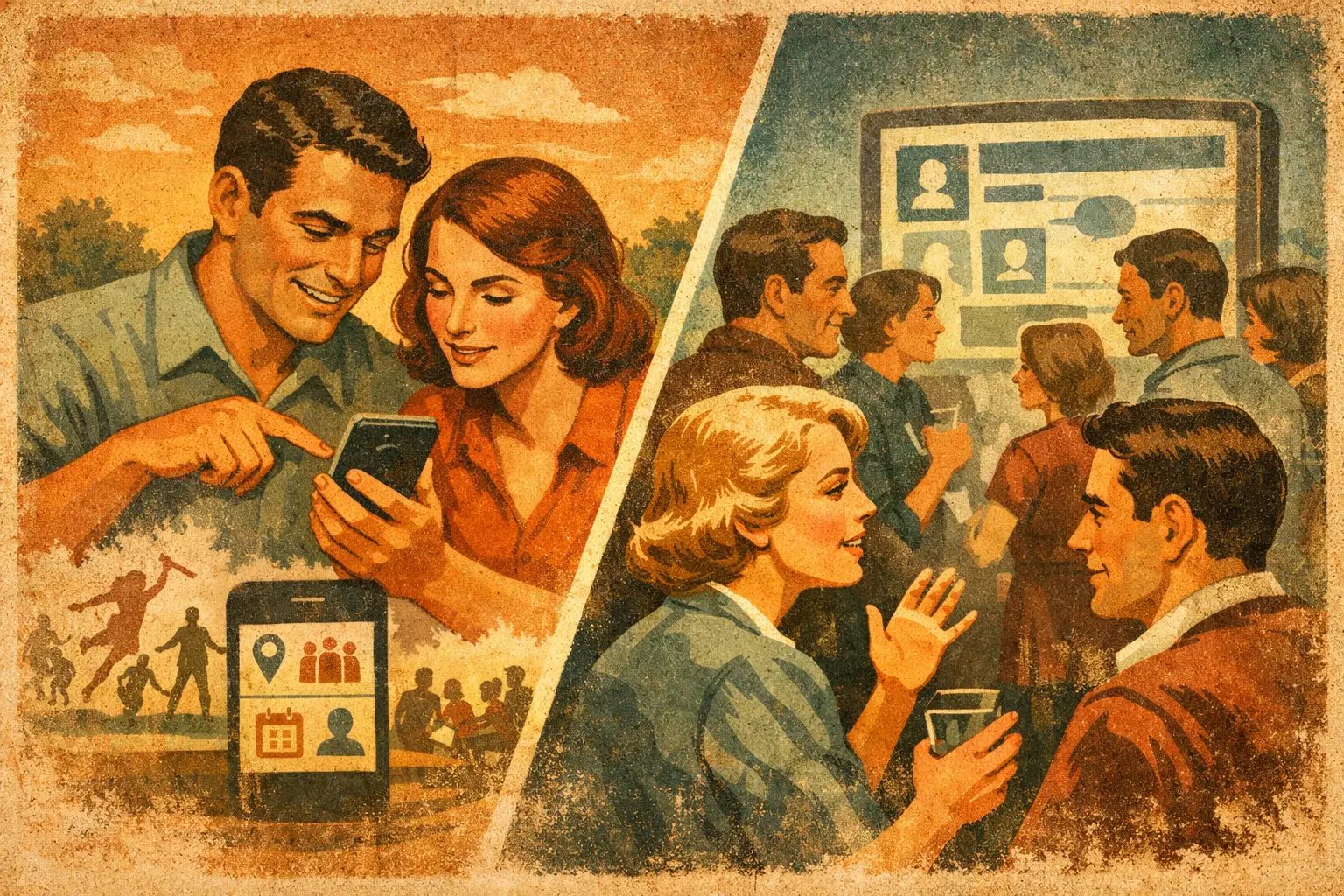
You’ve seen the pattern. Someone posts “Who’s down for hoops at 7?” in a Facebook group, a few people reply, three more message separately, one says “maybe,” and by late afternoon nobody knows if there’s a real game. That’s the core problem in the pickup event app vs Facebook Groups debate: one is built for conversation, the other is built for actually getting people on the court, field, or track.
Facebook Groups still have reach. A lot of local sports communities started there, and plenty still live there. But if your goal is to move from interest to attendance, the cracks show fast. Pickup sports need speed, clarity, and accountability. A group feed is good at chatter. It’s much less reliable at commitment.
Pickup event app vs Facebook Groups: what are you really comparing?
This is not just a product comparison. It’s a workflow comparison.
Facebook Groups are general-purpose social spaces. They’re made for discussion, updates, photos, and broad community interaction. That makes them useful for announcements, neighborhood buzz, and keeping a local sports scene loosely connected. If you run a long-standing soccer community or a citywide basketball page, a Facebook Group can act like the public square.
A pickup event app is different. It is designed around a single outcome: helping people discover a game, join it, show up, and come back for the next one. The difference sounds small until you’re the person trying to lock in enough players by 6 p.m.
That’s why this comparison matters. Most players are not looking for more posts to scroll through. They want to know where to play, who’s in, what level the game is, whether the run is full, and whether it’s worth leaving work early to make it.
Where Facebook Groups still work
Let’s give Facebook its due. If you already have a big local community, Groups can be a cheap way to gather attention. People are already on the platform. Organizers can post once and potentially reach hundreds or thousands of members. For casual communities, that top-of-funnel visibility still matters.
Groups also work well when the event structure is loose on purpose. Maybe it’s an informal Saturday skate meetup, a recurring cycling roll-out, or a beach volleyball crowd that operates mostly on local familiarity. In those cases, the social layer can be enough because the community itself carries the logistics.
There’s also a trust factor. People may already know the names in the group, recognize regulars, and feel comfortable jumping into a thread. That existing network effect is real.
But reach is not the same thing as reliability. And reliability is what makes pickup sports sustainable.
Where Facebook Groups break down for pickup sports
The main issue is that Facebook Groups are feed-first, not event-first. Posts compete with everything else: memes, photos, league updates, random questions, and older threads. A game invite can disappear in hours.
Then there’s the mess around commitment. Comments like “I’m in,” “maybe,” “if enough people go,” and “bring me if you need one” all look active, but they don’t create a dependable headcount. Organizers end up copying names into notes, replying to DMs, and posting follow-up comments just to confirm what should have been obvious from the start.
Skill level is another problem. A Facebook post rarely gives enough structure to answer the questions players actually care about. Is this beginner-friendly? Full-court or half-court? Indoor or outdoor? Competitive run or casual cardio? Open to solo signups or only full squads? The less defined the event, the more likely people bail.
And after the game, the thread usually dies. There’s little continuity around stats, attendance history, player ratings, achievements, or progression. That matters more than people think. Pickup communities grow when players feel recognized and when organizers can see who actually shows up.
Why pickup event apps feel better for action
A good pickup event app compresses the time between “I want to play” and “I have a game.” That’s the real advantage.
Instead of burying logistics in comments, the event itself becomes the source of truth. Time, location, sport, format, player count, and attendance status are all visible in one place. That reduces the usual friction and lets players make a quick decision.
It also changes behavior. When people join an event through a dedicated flow, they are making a clearer commitment than leaving a comment in a group. That doesn’t guarantee attendance, but it usually improves it because the system is built around participation, not conversation.
The best apps also make discovery better. Rather than joining one group for basketball, another for soccer, another for tennis, and hoping each one stays active, players can search across sports, venues, and nearby opportunities. That matters for travelers, multi-sport athletes, and anyone whose schedule changes week to week.
For organizers, structure means less chasing. For players, structure means less guessing.
Pickup event app vs Facebook Groups for organizers
If you organize games regularly, this choice becomes even clearer.
Facebook Groups force organizers into manual labor. You write the post, answer repetitive questions, bump the thread, monitor replies, field private messages, and try to figure out who is real and who is just reacting. If someone drops late, you often restart the scramble from scratch.
A pickup event app gives organizers a cleaner operating system. You create the event once. People join through a defined path. Capacity is easier to manage. The event can stay discoverable without relying on the feed gods. Over time, you can build consistency, not just occasional turnout.
That consistency is what grows a real sports community. Not just a page with members, but a habit people trust.
There is a trade-off, though. Facebook has built-in audience size. An app may require behavior change, especially early on. If your community is deeply rooted in Facebook, moving people over takes work. You may need to seed events, educate regulars, and prove that the app saves time before adoption clicks.
That’s normal. Better infrastructure often asks for a short transition period.
What players care about most
Most players don’t care about platforms in the abstract. They care whether they can find a game fast, know what they’re walking into, and avoid wasting a night.
That’s why dedicated sports products tend to win once people try them. Clarity feels better. Seeing an actual event with a set venue, enough joined players, and some signal around competition level is simply more useful than reading a comment thread.
It gets even stronger when the app includes surrounding tools like challenges, teams, leagues, stats, trophies, and attendance history. That turns pickup from a one-off scramble into an ecosystem. You’re not just finding a game. You’re building momentum.
That’s especially relevant for players who want more than open gym chaos. Some people want regular runs, measurable improvement, and a sense that showing up counts for something. General social platforms rarely support that well.
The smart answer is often both, at first
For many communities, the most realistic answer is not either-or on day one. It’s staged adoption.
Facebook Groups can still work as the awareness layer. Post the game, talk trash, share photos, rally the locals. But use a pickup event app as the action layer where players actually join, confirm, and track participation. That gives you the reach of the group without forcing the event itself to live inside an unreliable thread.
Over time, if the app creates a better experience, behavior shifts naturally. People stop asking “Is this still on?” because the event page already answers it. Organizers stop managing comments like a part-time job. The community gets cleaner signals and stronger habits.
That’s where the future is heading. Sports communities do not need more noise. They need better systems for showing up.
If you’re building or joining local games, this is the better question to ask: what helps our crew play more often with less friction? For a lot of groups, Facebook still starts the conversation. A pickup event app finishes it. And if you want to help shape what that next generation looks like, that’s exactly what we’re building at Crewters - with players, organizers, and venues all pushing the roadmap forward together.