
How to Track Match Progress Without Killing Flow
July 19, 2026
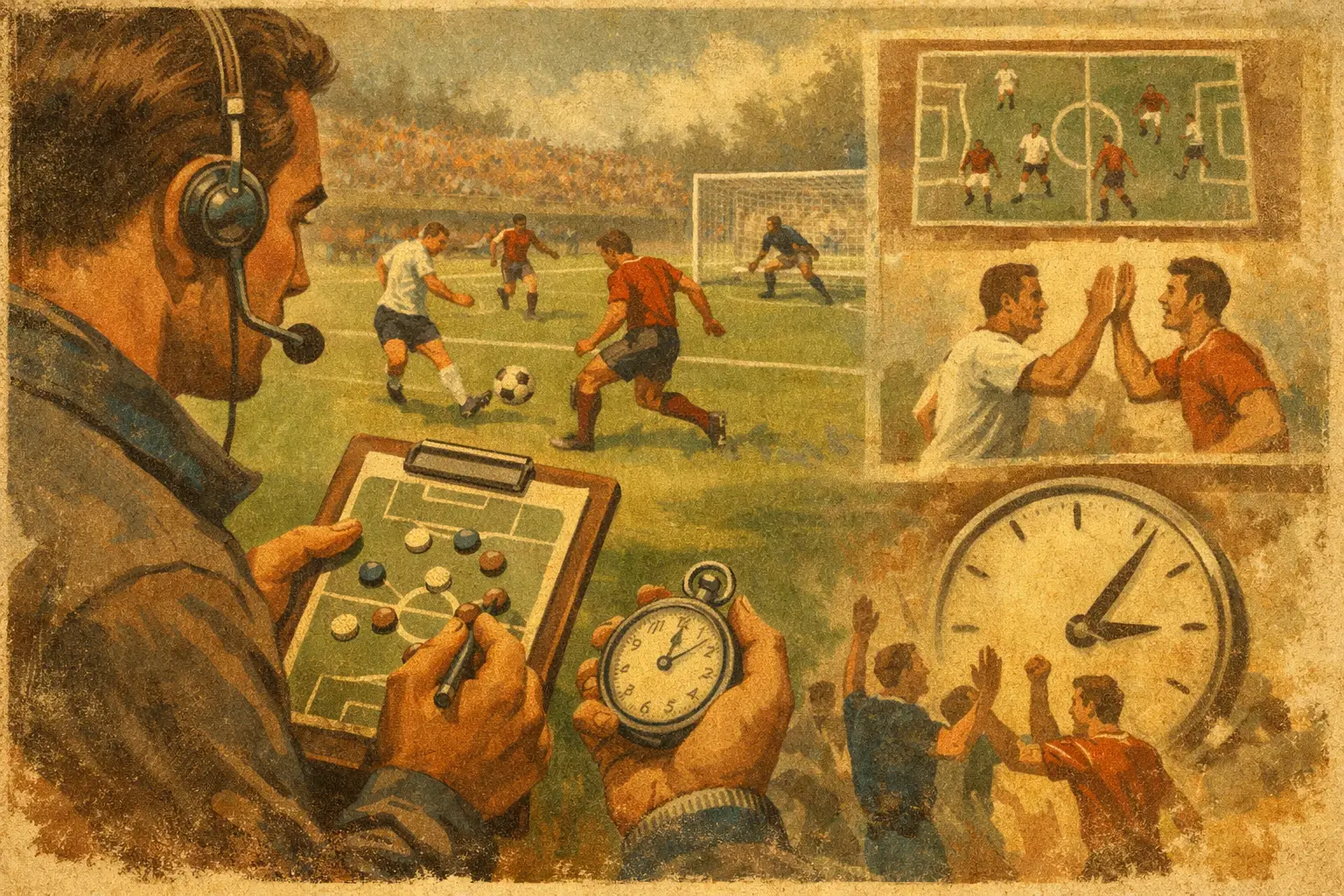
A close game can turn on one run of points, one saved penalty or one change in energy that nobody writes down. By the final whistle, the score tells you who won. It rarely tells you why. Knowing how to track match progress gives players something more useful: a shared record of the moments, habits and performances that shaped the game.
That does not mean turning a Saturday five-a-side session into a spreadsheet. The best match tracking feels light enough to keep play moving, but clear enough to settle questions, fuel better banter and show improvement over time. Whether you are running a basketball pickup, a tennis ladder, a football challenge or a league fixture, the principle is the same: track what your crew can actually use.
Start with the question your match data should answer
Before anyone records a score, decide why you are tracking the match. A casual game may only need a reliable score and winner. A team preparing for a league match might want to understand whether it loses momentum after substitutions, concedes from set pieces or creates enough chances without finishing them.
Trying to record everything is the quickest way to stop recording anything. Pick one main purpose for the session. Are you keeping the game fair? Comparing performances? Building a season table? Working towards a personal goal? Your purpose decides the level of detail.
For example, a quick tennis challenge could record the set score, service breaks and a player of the match. A five-a-side team may track goals, assists, clean sheets and the point when the opposition went ahead. In basketball, scoring runs, rebounds and turnovers can reveal much more than the final score alone.
The rule is simple: if a stat will not change a conversation, a decision or a goal, leave it out.
How to track match progress from the first minute
Good tracking starts before the first whistle. Confirm the format, teams, scoring rules and who is responsible for updating the match. This takes less than a minute and avoids the classic argument halfway through a game: “Was that first to 10 or first to 11?”
Choose one person to log the basics. They might be a substitute, a captain, an injured teammate or a player taking quick notes between points. For fast, casual games, update only when the score changes. For longer fixtures, use natural breaks: quarter-time, half-time, end of a set or after each game.
Keep each update short. Record the current score, the time or period, and any moment worth remembering. “18-14, end of Q2, blue team on an 8-0 run” is enough to bring the match back to life later. So is “2-1 at half-time, conceded from two corners”.
Live tracking should support the match, not steal attention from it. If logging an event takes longer than a few seconds, simplify the system. Nobody joined a pickup game to watch a mate tap at their phone from the sidelines.
Use checkpoints rather than constant updates
A checkpoint gives your match a useful shape. In football, that may be 15-minute intervals and half-time. In tennis, it might be every two games or at the end of each set. In a race-to format, check progress at five-point gaps.
Checkpoints make momentum visible. A team that led 3-0 but lost 4-3 does not just need the final result logged. It needs the story of where control slipped. Did the tempo drop? Did the teams become unbalanced? Did one player start forcing passes? Those are practical details your next game can improve.
For a close match, mark the turning point. It could be a timeout, a disputed call, a substitution, a missed chance or a brilliant defensive play. Keep it factual first. The post-match chat is where your crew can add context.
Track stats that suit the sport and the group
The useful stats are not always the most advanced ones. For newer players, a basic record of appearances, wins, scores and player ratings can create the motivation to return next week. For a more competitive group, the right stats can expose patterns that instinct alone misses.
Start with outcome stats: score, winner, format, date and venue. Then add contribution stats that matter in your sport. Goals and assists work for football. Aces, double faults and break points suit tennis. Points, rebounds and steals can work for basketball. For niche sports, your crew may define different measures entirely.
Context matters as much as totals. Ten goals across a month sound impressive, but were they scored in even games, mismatches, league fixtures or relaxed warm-ups? A rating also means more when players know the match format and opposition level behind it.
Avoid using individual stats as a public judgement board. Numbers can build confidence, but they can also make a newcomer feel they are only one bad game away from being excluded. Track effort and contribution where possible. A player who makes smart runs, communicates well or brings the group together may not top the scoring chart, yet they are often the reason the game happens.
Make the score social, not just official
Match progress is more engaging when everyone can see it and trust it. A shared score creates accountability, especially in pickup games where teams change each week. It also gives people a reason to talk after the game beyond “good run”.
Use the record to recognise moments. Call out the comeback, the first goal for a new player, the defensive shift that changed the match or the mate who kept organising the team when everyone else was tiring. Trophies, achievements and streaks work best when they celebrate real participation, not empty taps on a screen.
There is a trade-off here. Public leaderboards can bring out healthy competition, but they can distort behaviour if every player starts chasing the stat that gets attention. A footballer who refuses a simple pass to chase a goal is not helping the team. Balance individual recognition with team outcomes, sportsmanship and consistency.
For organised groups, agree on how disputes are handled. If the score is unclear, pause at the next natural break and settle it together. If player ratings are part of the format, keep them constructive and based on the game. A rating system should help people find reliable opponents and teammates, not become a way to punish someone after a loss.
Turn match records into progress between games
The real value appears after the match. Take two minutes to review what happened while it is still fresh. You do not need a formal team talk. One question is enough: what should we repeat next time, and what should we change?
A player might notice they are strong early in games but fade late on. A team might see that it starts well when it has clear positions, then loses shape when people rotate without calling it. A tennis player may find that most lost games come from rushed second serves. These are specific observations, which makes them easier to act on.
Set one small goal for the next match. It could be to communicate on every defensive transition, make five successful first serves in a row, record two assists or simply turn up for three consecutive sessions. Match tracking becomes motivating when the next action is visible.
Over several games, patterns become more reliable. One bad night is just one bad night. Five matches showing the same issue are a signal. That is why consistency beats perfection. A simple scorecard completed every time is far more useful than a detailed analysis completed once and forgotten.
Build a record your crew wants to contribute to
The strongest sports communities do not treat data as admin. They use it to make participation feel seen. A match record can help someone remember their first win, prove a team has earned its place in a league table, or show a player that the work they put in is paying off.
Crewters is being built around that kind of momentum: create events, challenge players, join teams, compete in leagues and keep the stats, goals and achievements that make showing up feel worthwhile. The best version of match tracking is not one imposed on players. It is one shaped by the people who play.
Keep it fair, keep it quick, and keep it connected to the next game. When your crew can see the progress, they are more likely to make the call, book the venue and come back ready to compete again.