
7 Best Ways to Discover Courts Near You Fast
July 20, 2026
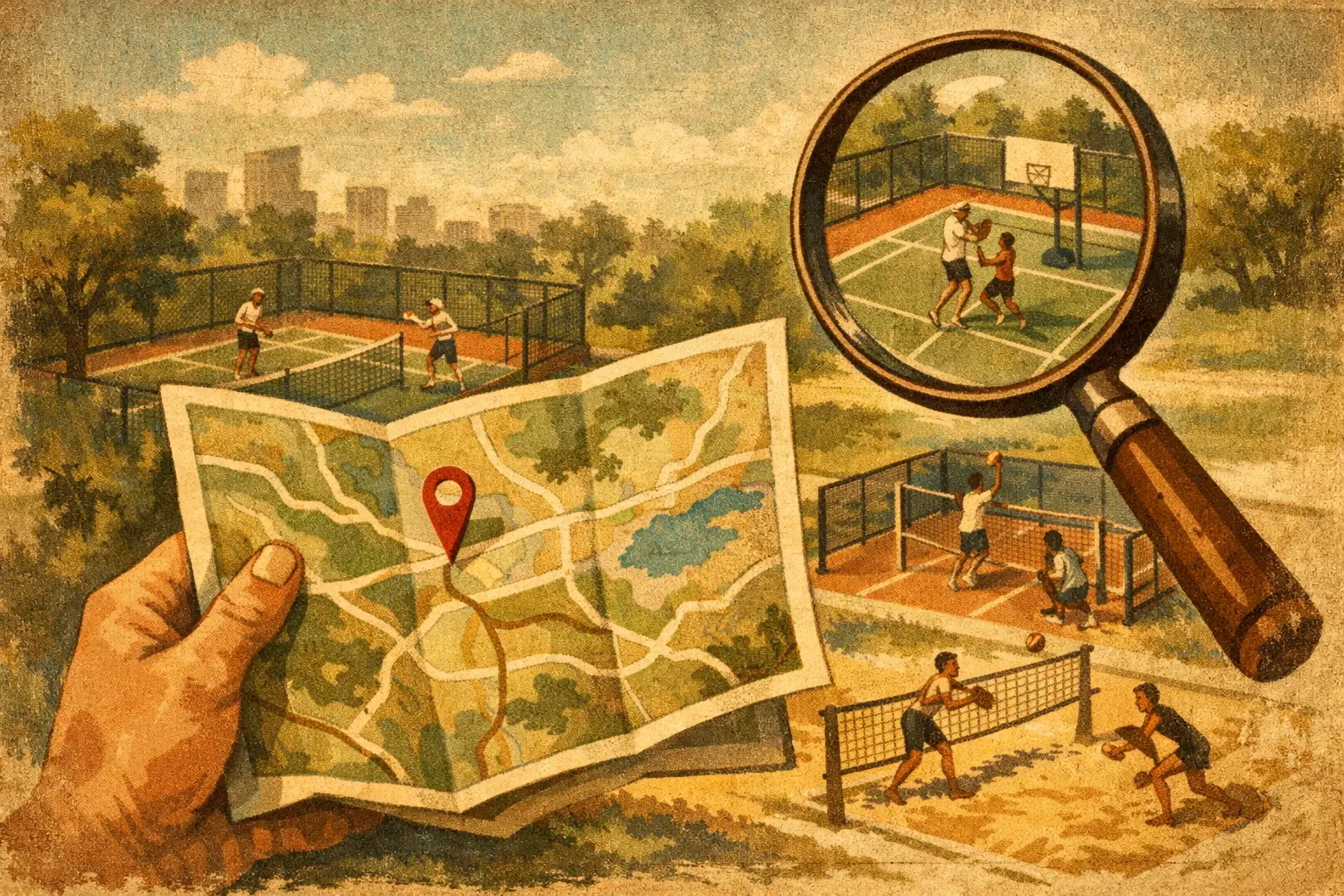
A good court can change the shape of your week. It is the outdoor hoop with lights after work, the free tennis court near campus, or the five-a-side pitch that finally gets your group playing regularly. The best ways to discover courts are not just about finding a pin on a map. They are about working out whether you can actually play there, when it is busy, and who is up for joining you.
For casual players, that difference matters. A venue listing without access details can lead to a locked gate. A brilliant-looking court can have worn lines, no lights, or a queue that makes a quick session impossible. Use a few smart checks and you can spend less time hunting, more time playing, and build a reliable local routine.
1. Start with the sport, then widen the search
Searching for “courts near me” is useful, but too broad when you know what you want. Search for the specific sport and venue type instead: basketball court, padel court, tennis court, netball court, squash court or multi-use games area. Add the neighbourhood, postcode district, university, park or station you will be travelling from.
Then widen the net. Many of the best places to play are labelled as recreation grounds, leisure centres, sports hubs, school facilities or community clubs rather than the sport itself. A multi-use games area may have hoops and five-a-side markings. A leisure centre may have indoor courts that never appear in a generic outdoor-court search.
This is especially useful when you are new to an area. Search around the places already fixed in your routine - home, work, campus or the gym - rather than chasing a court across town. The court that is ten minutes away and available twice a week is usually worth more than the perfect one that needs a 45-minute journey.
2. Check the details that decide whether a court is playable
A location is not a plan until you know its conditions. Before setting off, look beyond the first photo and check recent reviews, venue updates and images posted by players. Courts change: fencing breaks, resurfacing starts, floodlights fail and access rules tighten.
Four details make the biggest difference:
- Access: Is it public, bookable, members-only or part of a school site? Check whether the gate is open at the time you want to play.
- Surface and markings: Tarmac, concrete, acrylic and indoor flooring all play differently. Look for clear lines, safe footing and the right markings for your sport.
- Equipment: A basketball hoop without a net may be fine; a tennis court without a usable net is not. Confirm goals, rings, lights and changing facilities where relevant.
- Busy periods: After-school hours, sunny weekends and weekday evenings can transform a quiet court into a wait-list.
If you are planning a competitive session, do a quick scouting visit first. It is a small investment that prevents cancelled games and frustrated teammates. For a casual shootaround, flexibility is easier. For a six-person basketball run or a doubles match with a booked time slot, certainty wins.
3. Use local knowledge, not just venue directories
Directories are a starting point. Players know the reality on the ground. Ask in local sports groups, university societies, workplace chats and neighbourhood communities where people actually play. The best answer is often more specific than an address: “Go before 6pm”, “use the side entrance”, or “the second court has the better surface”.
This is also how you find courts with a real playing culture. Some spots are ideal for solo practice. Others are where regular pickup games form, new players get included and someone is always willing to run the next match. If your goal is to meet people as well as exercise, choose a court with activity over one that simply looks impressive online.
Be direct when you ask. Say what sport you play, your level, the days you are free and whether you are looking for a regular group or a one-off game. It helps people connect you to the right court and avoids the awkward mismatch of turning up for a serious session when you wanted a relaxed run.
4. Find courts through games and events
One of the fastest ways to find a court you will genuinely use is to join an existing game. Instead of researching every venue alone, see where people are already organising basketball, football, tennis, padel or niche-sport sessions. The event reveals the court, the timing, the standard and the social side in one move.
This approach lowers the barrier for newcomers. You do not need to arrive with a full team, know every local rule or persuade five mates to commit. Join a pickup session, meet the regulars, and decide whether the venue works for you. If it does, you have also found people to play with next time.
Crewters is built around that shift from intention to participation. You can discover venues across sports, join or create events, issue a direct challenge and form teams for leagues - all while building a record of the games you actually play. A court becomes far more useful when it connects to your crew.
5. Look beyond the obvious public park
Public parks are a strong option for free, spontaneous play, but they are not the whole picture. Leisure centres can offer dependable indoor courts and facilities when the British weather turns. Community sports clubs may have bookable slots that are better maintained than free courts. Universities and colleges sometimes open facilities to the public at particular times. Schools, meanwhile, may hire out courts outside teaching hours.
Each option has a trade-off. Public courts are usually flexible and free, but availability is uncertain. Private or bookable venues cost more, but you can organise a proper game with less risk of being moved on or waiting around. Indoor courts are more reliable, while outdoor courts often bring the atmosphere and accessibility that make pickup sport feel alive.
Do not dismiss a venue because it charges a small fee. Split between players, a booked court can be cheaper than a wasted journey, and it makes it easier to commit to a weekly session. On the other hand, if cost is the main obstacle, focus on public facilities and build a group that can adapt to quieter times.
6. Time your search like a player
The best court at 2pm on a Tuesday may be unusable at 7pm on Thursday. Availability is part of discovery, so test the times you are most likely to play. If your routine only allows evenings, check venues then. If you work flexibly, an early morning or lunch break can give you quieter courts and a more consistent habit.
Weather matters too. For outdoor basketball, tennis and netball, recent rain can leave surfaces slippery or puddled. In winter, daylight and floodlights determine whether an after-work session is realistic. For football and other pitch sports, wet ground can affect whether a venue remains open. Build a simple backup plan: one outdoor court, one covered or indoor option, and one friend who is up for a short-notice switch.
Regular players also learn the local rhythm. School holidays may empty some facilities and fill others. League nights can make sports halls unavailable. Major matches, university term dates and even nearby events can change traffic and parking. You do not need a spreadsheet, but noticing patterns turns court-finding from luck into routine.
7. Build your own reliable court network
Once you have tried a few places, keep a short personal list. Include the venue name, sport, travel time, booking method, cost, lighting, peak hours and who you usually play with there. A notes app works, but shared groups and sports platforms make it easier to turn that knowledge into actual games.
Rate courts fairly after you play. Mention practical details that help the next person decide: whether there is a working water point, if the hoops are regulation height, how secure the changing rooms feel, or whether beginners are welcomed into pickup games. Honest reviews make local sport easier to enter for everyone.
Then create momentum. Set a recurring event, challenge another group, invite one new player or start a team around a venue that suits you. Consistency creates community. The more people who know a court is active on a certain night, the less effort it takes for every player to show up.
The next time you spot a court, do not just save it for later. Check whether it is playable, choose a time, send the invite and put a game on the calendar. Your local sports scene grows every time someone turns an empty court into a reason to play.